skip to main content
Feature

How to support young people on the road to adulthood

High housing costs, a tough labor market, and a climate of uncertainty cause many to delay classic adult milestones

APA Style leaf logo Cite This Article in APA Style
Abrams, Z. (2026, June 1). How to support young people on the road to adulthood. Monitor on Psychology, 57(4). https://www.apa.org/monitor/2026/06/emerging-adulthood-housing-labor-market-climate

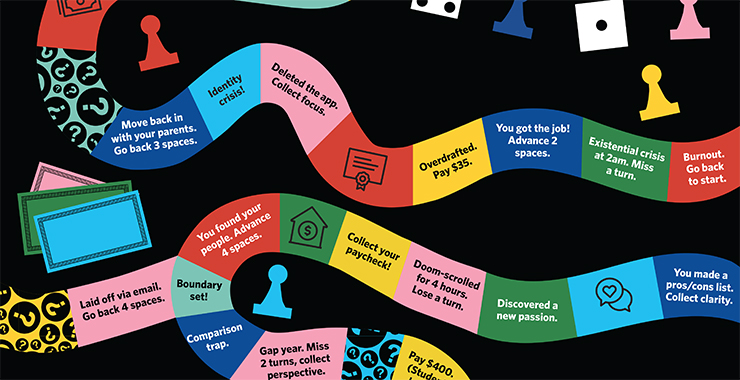
graphic of a gameboard and game pieces

Key points

  • The modern concept of emerging adulthood, the period from ages 18 to 29, has arisen in part because of changing economic and social conditions.
  • Psychologists who are focused on emerging adulthood support healthy parent-adult child relationships as well as resilience and skill-building that can benefit young people well beyond their 20s.

What does it mean to be an adult? Society’s views on that have changed over the past half century. At least 95% of Americans say finishing school and gaining financial independence are key markers of adulthood, but as of 2017, more than half say marriage and parenthood are not very important (Vespa, J., The Changing Economics and Demographics of Young Adulthood: 1975–2016, U.S. Census Bureau, 2017opens in new window).

No matter how it is defined, becoming an adult is a process. Psychologists think about this period, spanning roughly ages 18 to 29, in various ways, including young adulthood, late adolescence, and the transition to adulthood. But one term—emerging adulthood—captures something distinct: an extended period of exploration and uncertainty shaped by today’s social and economic realities.

“This demographic space has opened up where people are less dependent on their parents but have not yet entered the settled roles of adult life, making the 20s different than they were before,” said Jeffrey Jensen Arnett, PhD, a professor of psychology at Clark University in Worcester, Massachusetts, and the author of Emerging Adulthood: The Winding Road From the Late Teens Through the Twenties (Oxford University Press, 2014), who proposed the term “emerging adulthood” in 2000 (American Psychologist, Vol. 55, No. 5, 2000).

Cultural narratives often frame this decade as life’s peak, but today’s emerging adults face a different reality. High housing costs, a tough labor market, and a broader climate of uncertainty are causing many to delay classic adult milestones, including marriage, home ownership, and independent living. In 2023, 18% of 24- to 35-year-olds lived with a parent, up from 11% in 2005 (Fry, R., “The Shares of Young Adults Living With Parents Vary Widely Across the U.S.,” Pew Research Center, April 17, 2025opens in new window; Hemez, P., & Vespa, J., Changes in Milestones of Adulthood, U.S. Census Bureau, 2025opens in new window).

This group reports elevated rates of loneliness and mental health concerns that often surpass those of other age groups (Witters, D., Gallup, April 4, 2023; “Mental Illness,” National Institute of Mental Health, 2024opens in new window). In response, psychologists are working to understand both the vulnerabilities and opportunities of this life stage—how young people develop, what healthy transitions look like, and how families and institutions can offer better support.

An in-between phase

In the 1990s, Arnett conducted systematic interviews with people in their 20s. He documented their ideas about the transition to adulthood, which differed from the prevailing views of psychologists at the time, and used the data to formulate his theory on emerging adults (American Psychologist, Vol. 55, No. 5, 2000).

“Rather than relying on milestones like marriage and parenthood to define adulthood, emerging adulthood focuses on developing capacities—things like emotion regulation, tolerating ambiguity, and exercising self-restraint in high-stress situations,” said Abby Goldstein, PhD, an associate professor and chair of the Department of Psychology and Human Development at the University of Toronto and past president of the Society for the Study of Emerging Adulthood (SSEA).

Arnett suggests this stage arose amid societal shifts, including the women’s movement and the knowledge economy, which led more Americans to prioritize education above other markers of adulthood. Based on his research, he proposed five features that define emerging adulthood: identity exploration, self-focus, instability, a feeling of being “in between” adolescence and adulthood, and a sense of optimism and possibility. With fewer responsibilities, this period offers a chance to explore capabilities and opportunities. It often involves numerous changes in love, work, and living arrangements.

“Emerging adults struggle with difficult identity questions, which can make this a lonely time of life,” Arnett said. “They may not necessarily be happy during this decade, but there’s a widespread sense that no matter how hard life is now, it will get better.”

Research on brain development supports the notion of an “in-between” period bridging adolescence and adulthood, said developmental psychologist Laurence Steinberg, PhD, a professor at Temple University in Philadelphia and the author of You and Your Adult Child: How to Grow Together in Challenging Times (Simon & Schuster, 2023).

At least until age 25, the brain continues to develop in both structure and functional connectivity. Steinberg and others have shown that those changes are accompanied by parallel increases in impulse control, self-regulation, and other capacities (Developmental Science, Vol. 21, No. 2, 2018opens in new window). Global longitudinal studies, drawing on both self-reports and computerized tests of executive function, suggest self-control and other skills progressively improve across populations between ages 18 and 25 (Developmental Science, Vol. 28, No. 4, 2025opens in new window).

What researchers don’t yet know are the psychological consequences that may result from the growing number of young adults living with parents or relying on them for financial support. To support research on that and other questions, APA has partnered with SSEA to launch a new journal, Applied Studies in Emerging Adulthood, which will accept submissions starting this summer and publish its first volume in 2027.

“This is new, uncharted territory,” Steinberg said. “We know that these changes are happening, but we don’t yet know whether they’re significant for psychological development.”

Emerging adults today

Today’s emerging adults face considerable challenges. According to the National Institute of Mental Health, people ages 18 to 25 have higher rates of mental illness than any other age group—36.2%, compared with 23.1% in the overall population (“Mental Illness,” National Institute of Mental Health, 2024). A meta-analysis of 124,855 emerging adults suggests that loneliness levels have steadily increased over the past 4 decades (Buecker, S., et al., Psychological Bulletin, Vol. 147, No. 8, 2021).

The COVID years hit this group particularly hard, Arnett said, disrupting a key period of identity exploration that many have struggled to resume. His analysis of U.S. Centers for Disease Control and Prevention data shows that 18- to 29-year-olds had the highest spikes in anxiety and depression during the pandemic—and they have not yet returned to baseline (Journal of Adult Development, Vol. 32, 2025opens in new window).

“The theory is that development was profoundly disrupted during a period when young people are meant to be physically and socially connected to others,” said Carolyn McNamara Barry, PhD, a professor of psychology and dean of the College of Arts and Sciences at the University of Scranton in Pennsylvania and president of SSEA.

But the pandemic was hardly the first anomaly for this generation. In her book Generation Disaster: Coming of Age Post-9/11 (Oxford University Press, 2021), Karla Vermeulen, PhD, an expert in disaster mental health and an associate professor of psychology at the State University of New York at New Paltz, argues that today’s emerging adults came of age under a unique and sustained set of stressors. Those include climate change, school shootings, the war on terror, the opioid epidemic, and growing political polarization, among others.

“Their lives are vastly more complicated than any previous generation’s lives have been at this age and in ways that have far outpaced the conditions our brains evolved to deal with,” Vermeulen said.

Social media and smartphones have also left many young adults craving real-world connection but struggling to find it, said Barry, who monitors the popular app Yik Yak to track what topics emerge pertaining to academic life on her campus. In her clinical work, Goldstein sees emerging adults plagued by constant online social comparison—that is, feeling that their peers are doing well and they need to catch up.

At the same time, these challenges have spurred many emerging adults to develop resilience and self-awareness, Goldstein said. Many are deeply invested in understanding themselves and learning to thrive amid uncertainty. Declining stigma around mental health care is helping them explore those questions in therapy.

Emerging adults are also searching for meaning in new places, Barry said. As religious affiliation declines, those questions are increasingly explored in secular settings, from philosophy classrooms to student organizations (Emerging Adults’ Religiousness and Spirituality: Meaning-Making in an Age of Transition, Oxford University Press, 2014opens in new window).

“While many people immerse themselves in religious communities, many others have moved away from religion. Regardless, this continues to be a normative time for emerging adults to take a breath and figure out what they believe,” Barry said.

Context and culture

While some experience a prolonged transition to adulthood, many face pressures that accelerate it. Those who live below the poverty line, take on caregiving roles or financial responsibility early in life, suffer traumatic life events or illness, or experience racism or disability often have little time or space to explore questions of identity and purpose.

“These individuals may lack the safety nets that provide stability after a period of instability, making it far more difficult to focus on oneself or recover quickly from setbacks,” Goldstein said.

Given that disadvantage and hardship press some people into adulthood sooner than others, some psychologists warn against framing emerging adulthood as a developmental stage.

“Calling this a developmental stage implies a universality or normalcy that we should all experience,” said Nancy E. Hill, PhD, a developmental psychologist and professor at the Harvard Graduate School of Education. “It suggests there are developmental tasks or expectations that are necessary to encounter or achieve in order to move on to another stage.”

Hill argues that an extended transition to adulthood is largely a product of the residential college experience, an opportunity available to a small subset of the population. On campus, students often get second chances when it comes to drinking, plagiarism, and other rule-breaking activities, unlike people of the same age in other settings. These and other benefits of a slower transition to adulthood are available to only a privileged few.

In The End of Adolescence: The Lost Art of Delaying Adulthood (Harvard University Press, 2021), Hill and Alexis Redding, EdD, of the Harvard Graduate School of Education, also argue that today’s emerging adults are not dissimilar from those of past generations. They compare 2015 student interviews with interviews conducted by psychologist William G. Perry, Jr., PhD, with Harvard’s class of 1975.

“When you look at aspects of coming of age—things like identity formation and balancing parent expectations with personal goals—many of them are fundamentally the same,” Hill said.

Outside the college setting, the transition to adulthood unfolds differently across contexts—such as within the military or highly structured religious communities—and across cultures. Through his cross-cultural research and the founding of SSEA, Arnett helped build an international field devoted to understanding these variations.

In one study, Juan Zhong, PhD, an associate professor of psychology at Springfield College, interviewed young women in China who migrated from rural villages to cities for factory work. They often worked 10-hour days, 6 days a week, yet viewed the move as a profound step forward, one that offered financial independence, autonomy, and renewed hope for the future (Emerging Adulthood, Vol. 14, No. 1, 2025opens in new window).

“The research repeatedly shows that the challenges of leaving and returning home are consistent across cultures,” Goldstein said.

Support without control

With more emerging adults living with their parents or relying on them for financial support, the parent-child relationship often requires renegotiating. Steinberg’s book You and Your Adult Child addresses common dilemmas parents face. For example, if parents provide financial assistance, should they have a say in how that money is spent? When an emerging adult moves home, are they given a curfew? Are they expected to join family meals?

“This is a new phenomenon, so nobody knows what the rules are,” Steinberg said.

When it comes to financial support, he recommends starting with an agreement about how much, for how long, and for what purpose. The book also provides guidance on how to respond in helpful ways around romantic relationships, education, career, and mental health while still supporting emerging adults’ autonomy.

Research shows that authoritative parenting, where parents offer support while setting firm boundaries, works well with emerging adults. Parental warmth and involvement are linked to less psychological distress and greater flourishing; psychological control is linked to lower self-esteem and life satisfaction (Steele, E. H., & McKinney, C., Personality and Individual Differences, Vol. 146, 2019opens in new window; Faherty, A. N., et al., Journal of Social and Personal Relationships, Vol. 37, No. 2, 2020opens in new window). Goldstein’s daily diary studies show that even on a day-to-day basis, perceived criticism from parents can decrease well-being for emerging adults (Journal of Family Psychology, Vol. 36, No. 8, 2022).

“The goal should be to help parents scaffold their emerging-adult children to make good decisions, which requires biting your tongue sometimes,” Barry said.

In her private practice in Avon, Connecticut, Holly Schaff, PsyD, works with emerging adults, helping them navigate uncertainty, find social belonging, and establish their own daily rhythms. But she increasingly also supports parents who often arrive with a mix of confusion, resentment, and fear.

“Finding a way to engage parents early on can be tricky because, understandably, they often feel like they should be doing less—not more—at this point,” Schaff said. “In many ways, this is true. However, parents often need someone to attend to their own internal experience.”

She does that through a psychoanalytic and developmental lens, combining psychoeducation, practical advice, and therapeutic support to help parents uncover and manage feelings such as worry, guilt, embarrassment, anger, and grief, as well as how their own histories shape their parenting. She also distinguishes between physical separation—such as living independently—and psychological separation, emphasizing that the latter is often a prerequisite for independence and greater responsibility in other areas of adult life.

“We want them to grow up, but we don’t want them to grow away,” Schaff said. “But the two are intertwined.”

Many of the same tensions also show up on the other side of the relationship. In therapy, clinicians help emerging adults tolerate psychological separation—learning to make decisions and manage discomfort without input or reassurance from a parent. In her practice, Goldstein also supports emerging adults in shifting their focus from pleasure-seeking to longer-term fulfillment, purpose, and meaning. Over time, many develop resilience and flexibility that serve them well beyond their 20s.

Psychologists say systems can do more to support this process. On college campuses, mental health services that focus on building resilience rather than crisis response can play a key role. As the transition to adulthood continues to evolve, understanding what constitutes healthy development, as well as how to support it, remains a pressing priority.

“We want to understand how 18- to 29-year-olds function, how they can thrive, and what support they need,” Barry said, “especially given that the world they grew up in is complex—and only becoming more so.”

Further reading

Recommended Reading

Speaking of Psychology

Subscribe to APA’s audio podcast series highlighting some of the most important and relevant psychological research being conducted today.

Subscribe to Speaking of Psychology and download via:

Appleopens in new window
Apple podcast logo

Spotifyopens in new window
Spotify logo

Related and recent