
The United States Food and Drug Administration (FDA) cleared transcranial magnetic stimulation (TMS) for major depressive disorder in 2008, yet skepticism among clinicians lingered for years.
But evidence for its benefits has continued to grow as the treatment has evolved and expanded in new directions. Now, clinicians view neuromodulation—the process of delivering targeted electrical stimulation to the brain to normalize abnormal neural circuitry—as a valuable tool for understanding and treating a growing list of neuropsychiatric disorders.
Today’s newer TMS technologies can reach more deeply into the brain, and updated protocols are shrinking treatment times from weeks to days. TMS has also been extended to other conditions beyond depression in adults. The therapy is now approved for obsessive-compulsive disorder (OCD), migraines, and smoking cessation, and in 2024 it was cleared as an adjunctive treatment for depression in adolescents starting at age 15. Meanwhile, researchers are exploring TMS as a tool in other mental health disorders, such as eating disorders and post-traumatic stress disorder (PTSD), and even in neurological conditions such as mild cognitive impairment, Alzheimer’s disease, and autism.
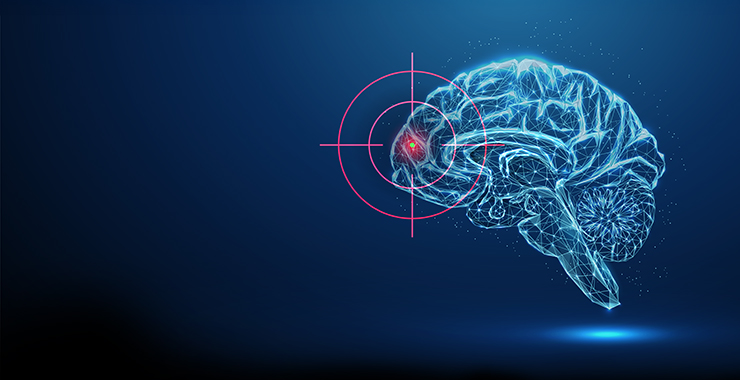
Clinicians and patients are drawn to TMS for a variety of reasons. It is noninvasive, administered through an electromagnetic coil placed on the scalp. The devices deliver magnetic pulses that generate an electric current in the brain. While the practice can cause transient headaches and scalp discomfort, the risk of serious complications—such as seizures—is very low. And TMS can be effective when other treatments, such as antidepressants or psychotherapy, have failed.
TMS requires a prescription and is therefore typically provided by medical professionals, although clinical psychologists with specialized training may be able to offer the procedure in states that grant them prescription privileges. Yet psychologists come into contact with TMS in many other ways—referring patients for TMS, engaging in research to better understand and improve the treatment, and as a part of the multidisciplinary teams that deliver it.
“This is a treatment that really does well with interdisciplinary, integrated health care teams,” said Shawn McClintock, PhD, a clinical neuropsychologist, professor of psychiatry, and scientific director of the Perot Foundation Neuroscience Translational Research Center in the O’Donnell Brain Institute at University of Texas Southwestern Medical Center. “Psychology is a discipline that has a lot to offer for the continual evolution and use of TMS.”