
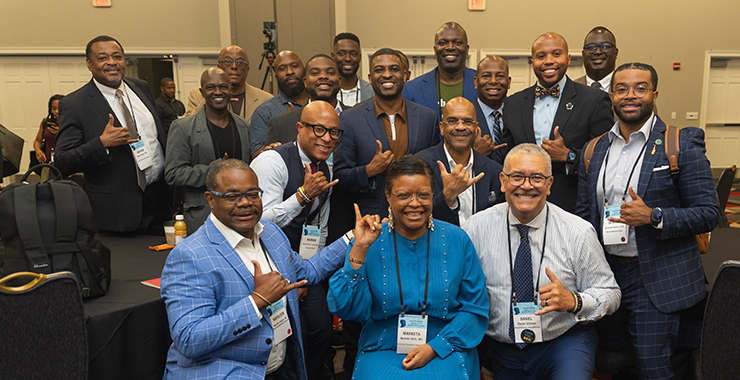
The inaugural Black Boys and Men Mental Health Summit this past July (see Black Boys and Men Mental Health Summit pushes for national action) brought together more than 150 people to reimagine how we support Black boys’ and men’s mental health. The convening was significant in its own right. But I left recognizing it as something more: an exemplar of the principles needed to guide our work with any population psychology has not effectively understood or served.
Meeting this obligation requires courage and intentionality at every level: as individuals, as a field, and as a society.
- As individuals, we cannot be passive participants in a field that inadequately serves any one group. We owe active attention to every population we support and study—not only those closest to our own experience or expertise. Throughout my career, I have recognized it is critical to go beyond typical approaches to meet the needs of frequently misunderstood or overlooked populations, like rural and LGBTQ+ communities. Health inequity, whether by neglect or convenience, is not something any of us can accept as someone else’s problem to solve.
- As a field, we must be willing to reject our own orthodoxies. Serving all populations well requires challenging long-standing, often unspoken assumptions we treat as settled—for example, that the medical model is the singular framework for addressing health, when it does not adequately reach all populations or address the range of factors that shape health and well-being. This also means owning psychology’s contribution to approaches that fall short, not just pointing to systems beyond our field. APA endorsing a population health approach (PDF, 149KB)opens in new window is one example of how we move in this direction.
- As a society, we must reject perpetuating the stereotypes that directly and indirectly undermine health and well-being. I rarely talk about Black boys’ and men’s mental health from a deficit perspective; I talk about their mental strength and how we build upon it, which opens more opportunities to promote behavioral activation, resilience, and well-being. But rejecting false narratives takes more than understanding. It takes the willingness to see people differently and the courage to transform systems and structures so they reflect people’s realities and strengths.
None of this is easy, and none of it is optional. We must be vigilant, intentional, and willing to question what we know. The summit illustrated what this looks like in practice. The work now is to carry that example forward, for this population and for every population psychology is called to understand and serve.