skip to main content
In brief

People may overlook unlikely events in financial forecasts, and more scientific findings

Highlights of recent research from psychology and related fields

APA Style leaf logo Cite This Article in APA Style
American Psychological Association. (2026, October 1). People may overlook unlikely events in financial forecasts, and more scientific findings. Monitor on Psychology, 57(7). https://www.apa.org/monitor/2026/10/financial-forecasts-research-findings

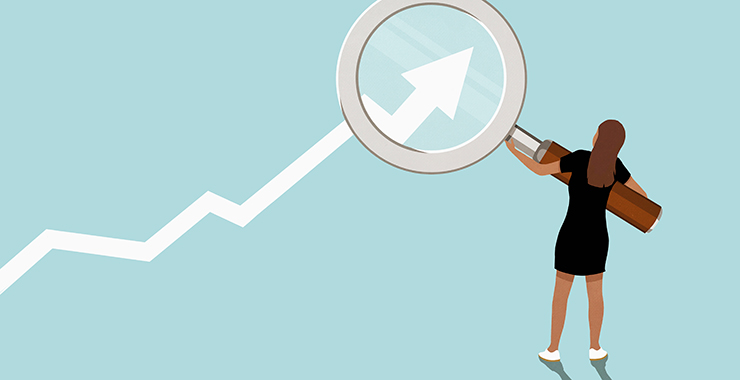
graphic of a magnifying glass

People may overlook unlikely events in financial forecasts

When making predictions about financial and economic outcomes, people tend to neglect low-probability events, according to research in the Journal of Experimental Psychology: Applied. Findings indicate that people create simplified financial forecasts, treating the most probable events as near certain while underestimating the potential impact of less probable events. In four online experiments, participants read scenarios about a foreign government that was considering increasing its public spending. The scenarios included information about how changes in public spending might affect economic outcomes like stock market values. For example, in one scenario, participants learned that a 70% chance of increased public spending was unlikely to lead to higher stock value, while a less likely 30% chance of decreased public spending was likely to raise stock value. When asked to predict future stock values, participants, including financial experts, essentially ignored the less probable event—even though it was the one likely to move the market. According to the researchers, additional studies can help us understand this cognitive bias and ways to overcome it, supporting more informed financial and economic decision-making.
DOI: 10.1037/xap0000576

Learning about risks before rewards can shape people’s choices

When we have to make a decision, we often gather information and weigh the risks and benefits before making it. Does the order in which we learn about risks and benefits matter? A series of experiments in the Journal of Experimental Psychology: General suggests most people tend to seek out information about potential risks first, and this preference may shape the decisions they make. In one experiment, 288 participants received $1 that they could use to buy a lottery ticket. They then selected what to see first, either the lottery amount (reward) or the odds of winning (risk). About 74% of participants opted to see the odds first, and those who did so were less likely to buy a ticket. In another online experiment, people who chose to see risk information first were more likely to withdraw from the decision-making process early, without seeing all the available information. The researchers posit that seeing risks first may make an opportunity seem less valuable and, therefore, less appealing. 
DOI: 10.1037/xge0001941

Ingroup bias sways children’s preference for native speakers

Research suggests that English-speaking children tend to favor English speakers over people who speak other languages. Researchers wondered if this was because the participants actively liked the people who spoke their native tongue or because they actively disliked people who did not. In a study in Developmental Psychology, 82 English-speaking 6-year-olds listened to clips of people speaking either English or Korean, a language they did not know. They rated how much they liked each speaker and whether the speaker would know about familiar and unfamiliar objects. Although the 6-year-olds tended to like English speakers more and considered them more knowledgeable, they did not dislike Korean speakers. Their liking for Korean speakers was associated with how knowledgeable they thought the speakers were. The findings provide evidence for ingroup favoritism rather than outgroup bias as the reason for children’s preference for native speakers. The researchers note that early childhood may offer a critical developmental window for shaping inclusive attitudes before outgroup biases take root. 
DOI: 10.1037/dev0002198

Math anxiety is linked with social context across countries

Math anxiety is both an individual response and a social phenomenon, according to data from 371,019 15-year-olds in 69 countries. The findings, published in the Journal of Educational Psychology, are based on data from the 2022 Programme for International Student Assessment (PISA). Researchers examined how teens’ math anxiety related to their own performance as well as to their peers’ math anxiety and performance. Analyses indicated that teens with higher levels of math anxiety tended to have lower performance; they also tended to have peers with greater math anxiety and higher levels of performance—a combination that can arise in high-achieving, high-pressure classrooms. These links were especially strong for girls. Students in high-income and high-performance countries tended to have lower math anxiety overall, but their performance was more strongly linked to that of their peers. The findings suggest that addressing math anxiety may require interventions that go beyond the individual to address broader classroom, school, and social environments. 
DOI: 10.1037/edu0001023

For older children, friendship and loyalty go together

Children’s understanding of the obligations of friendship appears to evolve over time, shaping the dynamics of their relationships and interpersonal conflicts. In one study, published in Developmental Psychology, 124 children ages 4 to 11 heard a story about a child, Alex, who had a kite. Alex declined to let friends and acquaintances use the kite at recess. Older children tended to think that Alex’s friends would be more upset by Alex’s decision than the acquaintances would be, suggesting that they saw Alex’s decision as a breach of loyalty owed to one’s friends. In a different study, older children also reasoned in the opposite direction—from feelings back to the relationship: In that study, 10- and 11-year-olds tended to infer that a child who was upset that a peer treated them no better than anyone else was probably a friend rather than an acquaintance, reasoning that only a friend would expect that kind of loyalty; 6- and 7-year-olds did not make this inference.
DOI: 10.1037/dev0002205

Mixed learning may feel easier when it matches learning goals

If you want to learn to differentiate items that are easily confused for one another, research suggests that you may do better if you study items from different categories mixed together rather than studying items category by category. However, learners often find that this mixed, or interleaved, approach feels more difficult. To help it feel less difficult, research in the Journal of Educational Psychology suggests that giving learners a targeted learning goal—to look for the differences between categories—can help them reap the benefits of interleaved sequences, thereby making the learning feel easier. In one online experiment, 142 participants were tasked with learning the styles of six artists based on 36 landscape paintings. Some participants studied the paintings grouped (“blocked”) by artist (each batch consisted of paintings made by a single artist); others saw the paintings interleaved (each batch consisted of paintings that were each made by a different artist). Overall, participants who studied the interleaved batches were better at matching the artists to their paintings. Furthermore, those who were told to pay attention to the artists’ differences found the interleaved sequence to be less difficult and the blocked sequence more difficult. The findings suggest that aligning a learning goal with the approach may make learning feel easier.
DOI: 10.1037/edu0001028

People often try multiple strategies to regulate emotions

Deploying emotion regulation strategies can help us adjust our thoughts, feelings, and behaviors according to a specific goal or situation. While studies typically examine emotion regulation strategies separately, people often call on multiple strategies at a time or in sequence, a phenomenon called polyregulation. To understand polyregulation in everyday life, researchers prompted 179 adults to report on recent events and their responses to those events multiple times a day over a 14-day period. The findings, published in Emotion, indicate that the participants used multiple regulation strategies regularly and slightly more often than they used a single-strategy approach. Specifically, they were more likely to use polyregulation when they felt greater negative emotion, when the event felt important, and when they were around others. Although polyregulation was common, participants found it more effortful and more difficult, but not more successful, than single-strategy emotion regulation. Additional studies can clarify whether individual differences in emotion-regulation flexibility play a role in polyregulation use and experiences. 
DOI: 10.1037/emo0001684

Identity-based mindsets shape our perception of difficult tasks

When we encounter a difficult task, we might interpret difficulty as a signal of how important and relevant the task is to us, or we might see difficulty as a signal that the task is not worth our time and is thus irrelevant to us. A series of experiments in the Journal of Personality and Social Psychology suggests that the two interpretations have different consequences for how we think about time and subsequent goal-related behavior. In two online experiments, some participants thought about a time when they felt a difficult task was important and worthwhile, while other participants thought about a time when they felt a difficult task or goal was not for them and not worth their effort. The participants who thought about difficulty as a signal of irrelevance were more likely to think about time as a limited resource; they were also less engaged and performed worse on a subsequent reading comprehension task. The findings suggest that the identity-based mindset we bring to a difficult task may influence whether we feel we have time for it and want to engage with it.
DOI: 10.1037/pspa0000487

How do baseball batters coordinate rapid responses in real time?

Skilled baseball players make hitting look easy, coordinating sophisticated sensorimotor responses to variable inputs under incredible time pressure. How does this happen? To find out, researchers designed a realistic virtual reality batting task in which 18 college baseball players hit pitches of varying speeds and locations. The batters wore head-mounted displays and used regulation bats with 14 reflective markers, allowing for real-time movement tracking. Analyses indicated that the batters consistently hit the ball when they had at least 425 milliseconds (ms) to respond; their hit rate and timing accuracy decreased noticeably when time-to-contact (the time left before the ball reaches the plate) dropped below 400 ms. With faster pitches, batters tended to start their swings earlier but did not shorten the length of their swings, suggesting predictive timing adjustments. While batters’ swing trajectories tended to align with the location of the pitch, the trajectories diverged later and more widely with faster pitches, indicating mid-swing corrections. The findings, published in the Journal of Experimental Psychology: Human Perception and Performance, point to rapid integration between predictive processes and visuomotor feedback (the split-second adjustments the batter makes based on what they see), with a threshold at around 400 ms. The researchers suggest that training around this threshold may boost real-time performance. 
DOI: 10.1037/xhp0001436

Our ability to recognize things may transcend modalities

Recognizing that something is a chair or a car is typically easy to do, but distinguishing between similar-looking chairs or cars requires fine-grained recognition abilities. Research indicates that people who are good at this type of visual recognition for one category of object tend to be good at it for other types of objects, suggesting a domain-general ability. Findings in the Journal of Experimental Psychology: General suggest this ability may also translate across sensory modalities. Data from 262 participants indicate a strong correlation between participants’ ability to recognize and distinguish similar visual objects and their ability to recognize and distinguish similar sounds. While both abilities were linked with general cognitive ability, the correlation between them remained even after the researchers accounted for cognitive ability. Together, the findings suggest that our ability to recognize and discriminate similar items may reflect a more fundamental ability that emerges across modalities. 
DOI: 10.1037/xge0001931

Why does time boost working memory performance?

On working memory tasks, people tend to perform better when they have some time between the items they are supposed to memorize. Is this because the gap allows them to maintain the items they have already seen? Or does it allow for renewal of cognitive resources, enhancing memory for the items they are about to see? Findings from four experiments, published in the Journal of Experimental Psychology: Learning, Memory, and Cognition, suggest that time has proactive benefits for working memory performance but only when that time is free and unfilled. In one online experiment, 143 young adults memorized a series of English consonants, each of which was displayed for 300 milliseconds (ms). Some participants encountered a gap in the task containing either a separate spatial reasoning task, a short (500 ms) break, or a long (2,500 ms) break. The longer break seemed to improve participants’ recall for consonants that came after the gap, while the separate spatial reasoning task tended to impair memory for the consonants that came before. According to the researchers, the findings suggest that time and cognitive load have interactive effects on working memory. 
DOI: 10.1037/xlm0001635

Personality may influence job satisfaction, and vice versa

Personality traits predict certain work outcomes, but research in the Journal of Applied Psychology suggests that work experiences may also predict changes in personality traits. The researchers conducted a meta-analysis of 11 longitudinal studies with data from more than 142,000 participants. The findings indicate that increases in a person’s job satisfaction were linked with increased levels of two personality traits: conscientiousness and emotional stability. Increases in conscientiousness and emotional stability were also linked with subsequent increases in job satisfaction. The researchers obtained similar findings in their own 3-year longitudinal study of 2,176 participants in Germany, which indicated that job context also made a difference. For example, higher job satisfaction was more strongly linked with emotional stability for people whose jobs required strong social skills or intensive social interactions. The researchers note that fostering work environments that boost job satisfaction may support a virtuous cycle, enhancing employees’ experiences and their job performance. 
DOI: 10.1037/apl0001388

Popular songs reflect cultural differences in emotions

Research has shown cultural differences in people’s ideal emotions, or how they want to feel: While people from European American backgrounds tend to want to feel high-arousal positive emotions, like enthusiasm and excitement, people from Asian American and East Asian backgrounds favor low-arousal positive emotions, such as feeling relaxed and peaceful. Do these cultural differences translate to specific cultural products like pop music? Using natural language processing, researchers estimated the emotional content of song lyrics from the 100 most popular songs in the United States and Japan from 1968 to 2005. Overall, the songs featured higher levels of ideal positive emotions than actual positive emotions. Pop songs from the United States had relatively higher levels of high-arousal positive emotions (ideal and actual), while those from Japan had higher levels of low-arousal positive emotions (ideal and actual). The findings, published in Emotion, indicate that Japanese pop songs increased in both high- and low-arousal positive emotions over time, while American pop songs decreased slightly in high-arousal positive emotions. Future studies can explore whether these emotional differences also translate to other aspects of songs, such as tempo and key.
DOI: 10.1037/emo0001688

Anthropomorphism may drive our gratitude for things

Have you ever thanked your coffee maker for delivering your daily dose of caffeine or a tree for providing a shady canopy to sit under? While a coffee maker and a tree are unquestionably not human, a series of five studies published in Emotion suggests we may feel gratitude for these kinds of nonhuman entities because we anthropomorphize them, endowing them with humanlike agency that includes both intentionality and responsiveness. Study participants who read prompts that anthropomorphized nonhuman entities—including computers, the Amazon rainforest, and the Kuroshio ocean current—were more likely to see these entities as responsive, which was, in turn, linked with their feelings of gratitude and intention to reciprocate. These effects were even stronger when participants read about the benefits the nonhuman entities provided. The researchers note that the study samples were limited to participants from the United States; additional studies are needed to determine how culture influences whether and how people anthropomorphize and feel gratitude for nonhumans.
DOI: 10.1037/emo0001682

Younger adults feel threatened by older adults who feel ‘young at heart’

Research in Psychology and Aging suggests that younger people may feel threatened by older adults who say they feel considerably younger than they are. In one online experiment, 213 participants ages 18 to 34 read vignettes about older adults and rated them on various characteristics. Notably, the older adults’ subjective age varied across vignettes—some said they felt their age, while others said they felt 20 or 40 years younger than their age. Participants considered young-feeling older adults to be more competent, but they also saw them as violating stereotypes about how the participants thought older adults should behave, including the idea that older people, regardless of their financial circumstances, should “make way” for younger workers. Stereotype violation led these young participants to like the older person less, want to interact with them less, and see them as less warm. Another experiment with participants ages 18 to 55 yielded similar results, suggesting these perceptions are not limited to the youngest adults. Understanding this mechanism, one more possible driver of ageist behavior toward older adults, may help researchers design interventions to counter it.
DOI: 10.1037/pag0000994

Cooperation is common, and underestimated, around the globe

Around the world, people show an inclination toward cooperation, but the factors that influence decisions to cooperate vary across countries, according to research in Science. The findings draw on data from 101,123 people in 125 countries, gathered through the 2021–2022 Gallup World Poll. For this study, pairs of respondents from each country completed a simple cooperation task. Each person would earn some money if they chose to cooperate, but they would earn even more if they did not. If both participants chose to cooperate, additional money would be donated to fight climate change. Globally, cooperation was high, with about 69% of participants forgoing additional gain in favor of the common good. The decision to cooperate was linked with the belief that one’s compatriots would do so, although the strength of this association varied across countries. In general, most respondents underestimated the degree to which their compatriots would cooperate; receiving information that highlighted the common good helped shift these estimates slightly higher. The researchers suggest that locally tailored interventions may boost cooperation estimates even more, bringing people’s perceptions in line with reality. 
DOI: 10.1126/science.aec9483opens in new window

Remote jobs linked with more time alone, worse mental health

While the ability to work remotely may hold many benefits for employees, it may also pose risks to their mental health, according to findings in Science. Researchers investigated changes in lifestyle and well-being among 588,322 respondents across five nationally representative surveys, comparing data before the COVID-19 pandemic (2011–2019) and after the height of the pandemic (2022–2024). Using a “remotability” index, they determined which of the respondents’ jobs could probably be done remotely (e.g., software engineering and marketing) and which could not (e.g., mechanical engineering and nursing). Analyses indicated that people in remotable jobs spent an additional hour alone each workday, on average, compared with people in non-remotable jobs. People in remotable jobs were also more likely to spend the day entirely alone, less likely to engage in social activities after work, and more likely to have signs of mental distress. Isolation and mental distress were especially likely among people who lived alone. The researchers suggest that studies investigating the relationship between remote work and well-being may help people decide which types of work and work environments are right for them.
DOI: 10.1126/science.aec7671opens in new window

As tasks become automatic, the brain shifts how it processes them

A study in the Journal of Cognitive Neuroscience suggests that the brain circuits supporting object categorization shift with extended practice, moving away from attention-based prefrontal processing over time. Using a mobile app, participants learned how to categorize morphed car images that they had never seen before. The researchers used brain imaging to examine task-related activity when participants were in the early learning phase (1 to 2 weeks of training) and the later learning phase (4 to 8 more weeks of training). While visual areas in the ventral occipitotemporal cortex (vOTC), a region involved in recognizing objects, were tuned to the car shapes in the early learning phase, they became tuned to the car categories in the later learning phase. The connection between the vOTC and the prefrontal cortex, an attention-related region, weakened with extended training, suggesting lower attentional demands, and this was associated with more accurate categorization while performing a second visual task at the same time. In addition, the connection between the vOTC and the premotor cortex, which helps plan movement, strengthened over time. The findings highlight practice-based shifts in brain processing that may help the task become automatic over time.
DOI: 10.1162/JOCN.a.2618opens in new window

Recommended Reading

Speaking of Psychology

Subscribe to APA’s audio podcast series highlighting some of the most important and relevant psychological research being conducted today.

Subscribe to Speaking of Psychology and download via:

Appleopens in new window
Apple podcast logo

Spotifyopens in new window
Spotify logo

Related and recent