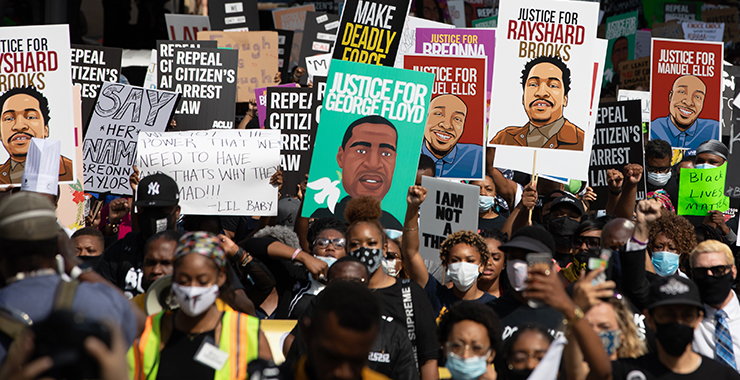
Police brutality may be what sparked a wave of protests across the United States and beyond, but the “racism pandemic”—the term applied by 2020 APA President Sandy Shullman, PhD, for the ongoing harm caused by racism—runs far deeper.
Today’s inequities, psychologists say, are deeply rooted in our past and the status quo is no longer acceptable. “Every institution in America is born from the blood of white supremacist ideology and capitalism—and that’s the disease,” says Theopia Jackson, PhD, president of the Association of Black Psychologists Inc.opens in new window (ABPsi).
Across the country, there’s talk about what it would take to achieve true systemic change. Psychological research, treatment, and leadership can and should be a key part of the solution. But that requires taking a hard look at how the field has overlooked—and even perpetuated—racial injustice in the past, psychologists say.
APA is addressing the issue on three levels: by broadly communicating psychological science on bias and racism, including through media interviews, blogs and podcasts; by developing actionable recommendations through an APA presidential task force related to racial disparities in policing and police-citizen encounters, particularly related to the black community; and by working to dismantle institutional racism over the long term.
That work will rely on extensive input from APA members, a process that started with a series of virtual town halls launched in June. Members’ priorities include establishing a racially diverse psychology workforce and more effectively translating research insights into action.
Psychologists have a role as activists in their own local communities as well. They can make their voices heard by contacting their lawmakers, volunteering for a cause or candidate, raising their voices on social media and more.
“APA has a long history of taking a stand on these issues, but we also know that we have our own issues as an association and as a field,” says APA CEO Arthur C. Evans Jr., PhD. “We have to look at our role as a discipline in perpetuating some of the things that are being protested. That has to be a part of our commitment.”