Kim Mills: From wildfires to hurricanes to heat waves to urban flooding, extreme weather events are on the rise across the U.S. and around the globe. Weather and climate disasters cost the U.S. $115 billion in 2025 and more than $1.5 trillion over the past 10 years, according to an estimate from the climate news organization Climate Central.
Communities and cities are racing to adapt to these increasing risks. To do so effectively, psychologists say, they’ll have to do more than just build new infrastructure. They’ll also need to understand human behavior and how people act when facing environmental change and extreme weather risks. So what does a climate resilient community look like? What factors influence how and when people prepare for disasters and respond to severe weather warnings? How can officials strike the right balance between communicating urgency without causing people to disengage? And what are the biggest challenges in moving this research out of the lab and into the toolkits of planners and officials who need it?
Welcome to Speaking of Psychology, the flagship podcast of the American Psychological Association that examines the links between psychological science and everyday life. I’m Kim Mills.
We have two guests today. First is Dr. Brett Gelino, an assistant professor of psychology at the University of Massachusetts Lowell. His research focuses on designing behavior change strategies to improve sustainability and public health outcomes. Among other topics, he’s looked at how people prepare for severe weather and respond to tornado warnings. Dr. Gelino is a member of APA’s Climate Change Psychology Advisory Group and has authored more than 30 peer-reviewed publications and several book chapters, in areas including Community Disaster Resilience.
Next is Dr. Gabrielle Wong-Parodi. Dr. Wong-Parodi is an associate professor in the department of earth system science at Stanford University. Her research focuses on how people make decisions to address the impacts of climate change and how interventions can help, especially among frontline communities experiencing the first and worst of climate change. Dr. Wong-Parodi has worked with communities experiencing wildfire smoke, flooding, and other climate related threats. She’s also a member of APA’s Climate Change Psychology Advisory Group.
Dr. Wong-Parodi, Dr. Gelino, thank you for joining me.
Brett Gelino, PhD: Happy to be here.
Gabrielle Wong-Parodi, PhD: Thank you so much for having us.
Mills: So let me ask, what does it mean for a community to be climate resilient? What does this look like?
Wong-Parodi: Sure. So when we think about resilience, we think about people’s ability to accommodate, absorb, or adapt to changes in a way that allows them to be resilient or robust in the face of increasing risk or new risks that people are facing because of these extreme events that are becoming more intense in magnitude or frequency. And when we think about that, traditionally we have thought about responding in a way that allows people to go back to status quo when an event has occurred—to withstand headwinds. But because of climate driven extreme events, these are becoming outside the realm of people’s former understanding or expectations for what might happen or what the consequences of those extreme events might be. So it’s both being able to withstand a current shock at the current level that we’re experiencing, but then being able to rally and to accommodate and to adapt to future shocks that are going to become more intense.
And so when we think about resilience, we also think about not just adapting, but being able to preserve livelihood and well-being over the long term in the face of these shocks.
Mills: Dr. Gelino, you spent many years in Kansas and I mentioned in the intro that you’ve looked at how people prepare for tornadoes and respond to tornado warnings. Can you tell us about that work? What are the factors that influence how and whether these warnings work as intended?
Gelino: Sure, of course. A bit of backstory for this as well. I’m actually from the Connecticut shoreline originally, and I moved out to Kansas, just outside of Kansas City for my graduate schooling. I was there about 10 years, but as you might imagine, coming from the Connecticut shoreline, I did not have a lot of experience with tornadoes. It was not something that I had really encountered all that frequently, maybe a severe thunderstorm, but nothing of the magnitude that they experience over in Kansas. And so the first spring that I was there, we received a tornado watch, which I have since learned is not the same thing as a warning. A watch just means that the conditions are there for a possible tornado. A warning means that one has either been sighted or indicated by radar and action should be taken.
But in any case, I received that alert and I panicked. I wanted to find my nearest shelter. I wanted to take action. I wanted to grab my go bag and kind of move to somewhere safe, but nobody else really seemed to be too bothered by the tornado watch that we’d received. Folks were more or less going about their business or in some cases even worse, eager to grab a beverage and head outside and see if they could see the sky turn that nice pea green that it often does before or during foul weather. And so a little bit shaken from this experience, I went back to the lab. My graduate advisor at the time, Derek Reed, and I concluded that there was probably some habituation happening here. In other words, folks had received a lot of these alerts over their time in Kansas or in these tornado-prone states. But because tornadoes are so probabilistic in nature—when you are in their path, they’re devastating, but the odds of being in their path are fairly low. So when you frequently receive these alerts, but these alerts aren’t often followed by an actual impact, they start to mean less to you. They don’t convey or elicit that same urgency as I experienced because I hadn’t had that longstanding history with these alerts and the lack of tornado impacts to follow. So in a sense, I think a lot of the folks around us were almost kind of had this boy who cried wolf feeling, right? The more these alerts happen without consequence, the less I’m going to really care or feel urgency around these alerts. And around this time, the National Weather Service was beginning to sort of roll out in a broader sense what they called impact-based warnings. And this is an initiative that began back in 2012. And these are warnings that you’ve likely experienced. They’re now the standard. So these warnings contain explicit information about the expected impacts of the storm, things like severe damage to roofs and siding, so on and so forth.
And a core value I think that we saw in what these offered was the ability to rotate out language and offer some novelty in these alerts. So we wanted to test. We wanted to see is that novelty actually enough to stimulate action in a way that’s different from the standard alerts? Is there more urgency coming as a result? So we recruited folks using a crowdsourcing platform. We specifically targeted the 20 most tornado afflicted states at that time, primarily in that tornado alley stretch of the country. And we asked them to imagine a time that they were at home on a typical weekend and asked them to imagine that in that sort of scenario they receive a tornado warning. And then we split folks into four groups and we showed them one of four tornado warnings that differed based on whether or not it contained some of that impact-based language.
We then asked them to indicate at increasing lead times, whether they would immediately seek shelter after receiving that warning. And when I say lead time, I mean the amount of time between when they receive a warning and when that tornado is expected to strike. So if we imagine a lead time of say 5 minutes, that means that I have 5 minutes from when I received the alert until when the tornado was likely to be in my area. So 5 minutes of time to prepare. And we found that individuals who received the standard warning language, so no impact-based warning, just very standard language, they exhibited indecision between seeking shelter and doing nothing in around 15 minutes. In other words, lead times of longer than 15 minutes, which would provide more time to prepare, were actually likely to lead to some sort of what we call procrastination.
The warning didn’t convey enough urgency, so folks didn’t necessarily report immediately seeking shelter. They often said that they would just kind of wait and see what would happen. In contrast, folks that received that impact-based warning exhibited point of indecision at around the 30-minute mark. So we had this greater sense of urgency to immediately seek shelter, which by virtue of that provided double the time to prepare for a potential storm, prepare for potential tornado impact. And we concluded that, again, it was some of this novelty effect of these impact-based warnings, and it was kind of a nice little bit of confidence as those alerts were becoming standard protocol for the National Weather Service.
Mills: Dr. Wong-Parodi, let me ask you, with respect to other types of climate disasters, is there kind of a sweet spot, an optimal amount of time to give people to evacuate or take steps to avoid if we’re talking about say a hurricane or a wildfire?
Wong-Parodi: I will answer that, but I also wanted to say one of the experience I had with meteorologists, at a large conference in Norman, Oklahoma, and a tornado watch and the subsequent warning happened. And as I was hiding under a desk, my meteorologist friends were outside looking. That was a conference just about risk communication and seeking shelter, evacuating. And so I was like, Oh, my goodness, no. It was pretty funny.
So to your point, Kim, we do work where we follow people in real time as events are unfolding. So we have a large study that we’ve done where we have followed samples of up to a thousand, maybe up to 1,500 individuals and longitudinal panel studies as they’re experiencing landfalling hurricanes in the South Atlantic areas, also in the Gulf Coast. And we have also followed similar numbers of populations as they’re experiencing atmospheric rivers, and this is on the West Coast. And we survey people in these studies every 12 to 24 hours as the storm is approaching. And then ultimately after it makes landfall, we survey them again maybe four to six weeks later to find out what happened. And we’re looking at a variety of different things, including their risk perceptions, including the information that they’re getting and what type of information that is from what sources, how often they’re getting it.
We’re also looking at behavior of those around them. So we know, for example, from a lot of studies, especially cross-sectional studies that have been done in the past, looking at people’s responses to extreme events, that social cues are very important. And so what we see other people around us can influence our subsequent behavior. So for example, I was sheltering under a desk, whereas my colleagues who are all meteorologists, one started going out, then all of them went outside trying to spot the tornado. It was very exciting. And so we see this also with other individuals. So if you see your neighbors packing up, boarding up their windows, deciding to evacuate, that might be or present a different situation if you see your neighbors staying and sheltering in place, staying in place. So with respect to these longitudinal studies, these panel studies that we have done, we have found, for example, that people are really attending to what others are doing around them and that what is most important is not necessarily that one instance when they see their neighbor packing up, deciding to evacuate, but rather it’s the accumulation of observing the actions of others around you that really makes a difference.
And then there’s some sort of tipping point or threshold over which you’re like, okay, maybe it’s now time for me to do something. And so that has implications for how we message and maybe perhaps even thinking about including social norm behavior in that type of messaging, which I think we can then test in more controlled ways to see how effective that would be.
Mills: What would those messages be? I mean, what would I hear as a citizen?
Wong-Parodi: Yeah, so I think these messages would need to include the risk. It would need to include what people can do, and it might also include something like neighbors around you are also taking action, but then of course that has to reflect reality. So what we say has to be a reflection of what people are also seeing around them. So I think we need to be careful and do some really careful testing around that because we don’t want to inadvertently increase this kind of sense of, ugh, official risk communicators are not either being truthful or they’re not really understanding what’s happening on the ground.
Mills: Given the increasing numbers of natural disasters we’ve been seeing, are people more attuned to being prepared or are we seeing a kind of malaise creeping in as we hear more and more news reports about wildfires, floods and so forth? Dr. Gelino, why don’t you take that one first?
Gelino: I think it goes back to, in a sense, the research I was discussing a moment ago in that there’s habituation kicking in, in a different sense. And I think what you’re mentioning in this malaise is definitely present. When I mentioned the research I did with the tornado alerts, that specifically had concerns because those alerts often weren’t followed by the actual impacts that they predicted. So it was maybe a little bit less habituation, a little bit more oriented toward something akin to mistrust. In the case of, I think, the increasing frequency of these natural hazards, particularly those that progress to a natural disaster, I think there is some more true to sense habituation, this idea that we’re seeing it so frequently that it’s not having the same effect. We’re desensitized in some capacity. And I think there is also an element of some sort of learned helplessness occurring.
When we know that these things, these storms can have the level of impact that they do, it can feel somewhat futile to take personal action against it despite, and as we mentioned, there are really wonderful infrastructural developments that are being implemented in these cities. I think some of the concerns around this habituation, this learned helplessness can be combated with educational campaigns. We oftentimes talk about behavior in my lab, again, driven by the consequences like buying a commodity in the environment or in the economy. And when we think about goods in the economy, particularly the ones that we really want folks to use, we market them heavily and we make sure that we convey very clearly the intended benefit and how to use them and what they will offer in the event that you would like to purchase them. I don’t think we’re always as successful in marketing our infrastructural adaptations in the way that we can offer protective infrastructure.
I don’t think we always market that as well as we could. And so as a result, I’m not sure that there’s always a clear solution that people can arrive at when there are these storms heading their way. And one of the things that we’ve come to find too, and I think this is pretty consistent across this literature, having a plan is one of the best ways that we can see more mobility among folks, preparatory action among folks that are at risk for some of these natural hazards.
Mills: With all of these risks, how can officials strike the right balance between communicating urgency without creating fear that causes people to disengage?
Gelino: I think calm clarity on the risks, but also the potential solutions and the protective measures that should be taken. Delivering that information clearly is just so critical. But I think also having some novelty built in and ensuring that folks aren’t seeing the same information. And I think we’ve both kind of mentioned in our research, we’re finding that the more folks see the same information, the same alert, the less likely it is to convey that urgency. So if we can manipulate those and that’s something that’s already being done and I think it’s having a nice effect. Beyond that, I think just continuing to educate, and I think education is going to be one of our biggest tools as well, ensuring that folks understand why the risk is being conveyed in the way that it is and having more buy-in on the way that those infrastructural benefits are communicated, I think is something that could have some real difference as well.
Wong-Parodi: I just would love to build off of that if I can, Kim. If we think about the different communities of individuals who are at risk, there may be some communities where we need to take different approaches to education and partnership. So for example, we cannot assume that all communities have equal access to smartphones or to other ways of communicating, so unhoused individuals or other sorts of populations, maybe older populations who may have less facility with technology. So really thinking about who in the community can be those messengers and making sure that those individuals have those messages so that they can reach out to appropriate audiences and make sure that the message is being shared.
Mills: Are public safety officials getting better at this game, so to speak? I mean, are they communicating more effectively than say 10 years ago?
Wong-Parodi: Yes. I mean, I would say yes. And I’m also meeting with public officials, emergency responders more often than I had before. And at least in the places that I’m working, I’m seeing a lot of receptivity because there’s an understanding that this is an urgent issue and that individuals and we collectively need to respond in a way to meet this risk.
Mills: I have to put in a plug here for my nephew, whose name happens to be John Mills, who developed a system and an app called Watch Duty that monitors primarily wildfires and gives people real-time warnings based on information that’s provided mostly by people on the ground. And the concept grew out of my nephew’s frustrations with the fact that officials were poorly informed and they were giving residents bad or no information—this is particularly up in Northern California—as fires were approaching. He started this 5 years ago.
Are public officials the best people and the best informed people to keep citizens forewarned? And is the public more likely to follow instructions that they’re getting from public officials or information that might be gleaned from lay people, for example, using something like Watch Duty?
Wong-Parodi: So when we do our work where we have followed cohorts of individuals in near real time as events are unfolding, they indicate to us where they get their information from and how often they engage in that information. And they do get their information from a variety of different sources. They often need to confirm that information with loved ones, so family members, neighbors, friends. And so we also, again, need to be cognizant of that, that people are operating in a very complex informational ecosystem when these events are happening and they often need to iterate and confirm and discuss information as they’re getting it. So I would say, and it’s hard to say when we say sources of information from officials because that is often provided to people, but it’s mediated through other channels. So for example, local news TV stations or their radio or other ways that they get it through social media.
And so people may not know that they’re getting official information, but I do think that being cognizant of that richness of the ecosystem and making sure that whatever information is being conveyed is as accurate as possible as you can be when you’re trying to predict something that’s sometimes hard to predict. So yeah, but it sounds like a tool like that could be helpful for people in terms of understanding maybe what’s happening on the ground and people do tend to trust friends, neighbors a lot, but it’s not to say that they don’t trust, for example, broadcast meteorologists, they actually do. And so I think that’s something to keep in mind. There are other sources of information that they trust less. So they might trust the government less or companies less, but it kind of depends on the context and what’s being communicated.
Mills: Dr. Gelino, does that sound right to you?
Gelino: It does. It does, yeah. And I think when I think of this app and the ability to sort of disseminate information quickly through person to person directly like this, I think it offers an additional source of information that diversifies that ecosystem that Dr. Wong-Parodi mentioned. And I think diversifying that ecosystem provides individuals who might be skeptical of one source, an opinion or a source of information that they might find more trustworthy. So I think it’s a really nice tool that could potentially help that information reach more folks and be more deeply considered. And I think that it also echoes a way that a lot of folks are receiving their information right now when we think about social networking and how a lot of opinions that are found, for better or worse, that are spread on the internet are generally taken to be substantial or have some value to it.
I think those individuals who receive their information in that manner are likely to resonate with that type of app, that information delivery.
Mills: What are the biggest challenges in terms of getting the results of your research out of the lab and into the hands of public officials and planners who can use it?
Wong-Parodi: I think in the past it’s been not having those connections with potential users of the information or the science, the evidence that we’re producing. However, and it sounds like, Dr. Gelino, this is probably the same for you. We partner with the National Weather Service, we partner with the American Red Cross, we partner with those emergency responders who are going to be working in communities and communicating to people during these types of events. And we actually not only do that, but we codevelop the research questions with them and we conduct research in partnership such that insights can be more rapidly deployed and used when events are occurring, maybe not this season, but next season. So that’s something that we have learned to do and I think we’re doing a better job of that.
Mills: And, Dr. Gelino, are you doing that as well? You’re out there meeting with the actual users of the research information?
Gelino: Trying to, and I’ll echo that that’s one of our biggest sort of difficulties is really homing in on whose data that we’re actually trying to bring to policymakers. One of the biggest challenges I think that we’re facing in our research is similarly reach. It can be tricky to engage with constituents in some of the more rural areas of these hazard prone regions, but of course we want to make sure that they’re represented in the research, particularly because they’re often at disproportionately greater risk from the natural hazards that we’re studying. So if we’re not confident that our data actually represent the folks who will be affected by downstream resilience policy, far reaching policy, then it might be kind of dubious or tricky to get those data into the hands of public officials.
Mills: Well, let me just wrap up by asking what you’re working on now, what are the big questions that you’re still trying to answer in these areas? Dr. Wong-Parodi, you want to take that first?
Wong-Parodi: Sure. One thing that we’re working on right now, which we’re very excited about is a project called Climate Ready Rebuilding, where we are thinking about the post-disaster context, and this is often post-disaster in terms of wildfires or hurricanes, where we are seeing this as a window of opportunity to talk about the risks and to work in close partnership with disaster service providers as well as rebuilders in helping families that want to stay, they’ve decided to stay post-disaster, to rebuild in a way that allows them to be more resilient to future disaster. And so we’re doing that with them and we are designing interventions and we’re going to be testing them over time, focusing now in the wildfire context in the American West. And so that’s something that we’re very excited about and we will see these interventions that we’re developing in partnership with our disaster service providers and rebuilders can yield greater resilience, better climate resilient infrastructure because of the households that people are building, the houses that people are building, but then also how this may affect long-term well-being.
We’re really focused on making sure that these interventions are trauma informed as well.
Mills: Dr. Gelino, what are you working on?
Gelino: Actually, something pretty similar. Dr. Wong-Parodi mentioned earlier the importance of staying in your community following a disaster for a quicker rebound for more resilience. And one thing that we’re looking at is new ways that we can measure social connectedness and place attachment. And this idea that when you feel connected to the community in which you live, you’re more likely to stay put after disaster. You’re more likely to check up on the friends, your neighbors, even the grocery clerk that you see on a regular basis. You’re also more likely to return to work more quickly. And when more people return to work in their community following a disaster, we can see essential services remain open. We see the lifeblood of that community continue to flow and we see that community become more resilient and bounce back more quickly.
Mills: I want to thank you both for joining me today. This has been very interesting and thank you for the important work that you’re doing.
Wong-Parodi: Thank you so much, Kim. This has been a real pleasure and I now feel like I need to check out your nephew’s app. I’m excited to take a look at that. I am in Northern California.
Mills: Yeah. It’s free to download. All right.
You can read more about climate resilience in the November issue of APA’s magazine, Monitor on Psychology. Find it online at www.apa.org/monitor. And you can find previous episodes of Speaking of Psychology on our website at speakingofpsychology.org or on Apple, Spotify, YouTube, or wherever you get your podcasts. And if you like what you’ve heard, please subscribe and leave us a review. If you have comments or ideas for future episodes, you can email us at speakingofpsychology@apa.org. Speaking of Psychology is produced by Lea Winerman.
Thank you for listening. For the American Psychological Association, I’m Kim Mills.


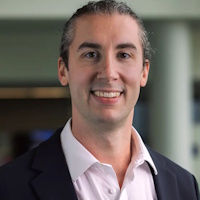 Brett Gelino, PhD, is an assistant professor of psychology at the University of Massachusetts Lowell. His research focuses on designing behavior change strategies to improve sustainability and public health outcomes. Among other topics, he's looked at how people prepare for severe weather and respond to tornado warnings.
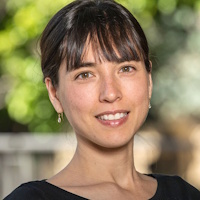 Gabrielle Wong-Parodi, PhD, is an associate professor in the department of earth system science at Stanford University. Her research focuses on how people make decisions to address the impacts of climate change and how interventions can help, especially among frontline communities experiencing the first and worst of climate change.