skip to main content
Feature

How psychological science is revamping severe weather planning

Psychologists help communities use behavioral science to improve severe weather plans

APA Style leaf logo Cite This Article in APA Style
Andoh, E. (2026, November 1). How psychological science is revamping severe weather planning. Monitor on Psychology, 57(8). https://www.apa.org/monitor/2026/11-12/severe-weather-planning-behavioral-science

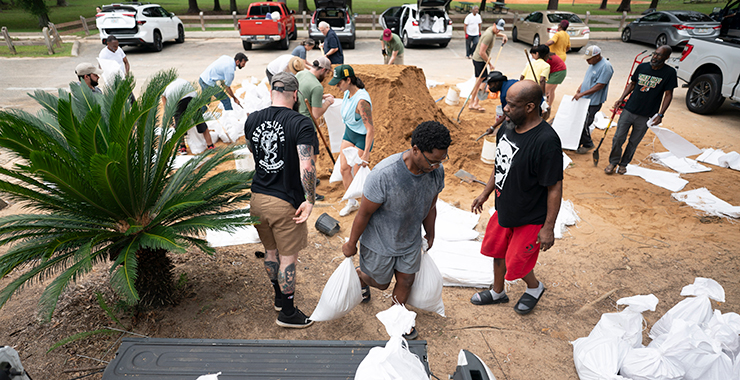
people filling sand bags

Key points

  • Psychologists are helping cities design disaster plans that reflect how people actually perceive risk and make decisions.
  • Behavioral science is guiding how cities design alerts, locate shelters, and equip residents with the skills and tools to prepare for extreme weather.
  • From Kansas safe rooms to California flood kits to psychological first aid in Barbados, psychologists are tailoring plans to local realities.

Imagine this scenario: On a spring evening in southeastern Kansas, a family notices gathering clouds and gusting winds as their phones light up with a tornado warning urging them to take shelter in a nearby public building. Do they evacuate or wait it out at home?

Bridging the gap between what people should do and what they actually do is where psychology comes in. Research on disaster-related decision-making shows that the timing of the alert matters (Gelino, B. W., & Reed, D. D., Journal of Experimental Psychology: Applied, Vol. 26, No. 1, 2020). Other important factors include the distance to the shelter, expectations about shelter conditions, expectations about crowding, and even the alert’s wording.

For example, communicating a 15-minute time window before a tornado’s arrival has proven effective. Providing too long a lead time may give residents a false sense of security, while one that’s too narrow may not allow them enough time to take action. Behavioral psychologists Madison Graham, PhD, at the University of Kansas, and Brett Gelino, PhD, at the Rutgers Robert Wood Johnson Medical School, examine the influence of these factors within Kansas communities through the Adaptive and Resilient Infrastructures driven by Social Equity (ARISE) project.

[Related: Worsening weather is driving smarter behavioral interventions]

ARISE investigates how Kansas residents are adopting protective infrastructure such as home retrofits, residential safe rooms, and community shelters. The need is considerable as Kansas averages more than 80 tornadoes per year. “If we have community safe rooms available, that’s great,” Gelino said. “But they are only as good as people’s willingness to actually use and engage with them.”

By presenting participants with realistic disaster scenarios, Graham and Gelino assess how factors such as financial incentives and perceived social norms influence people’s preparedness decisions. Their findings are already shaping models used by civil engineers to decide where to place community safe rooms—especially in high-risk, lower-income areas where residents may not be able to afford their own residential safe room.

Strategic messaging is another focus, particularly in regions where climate-related language can be polarizing. “We’re trying to dissect what language we should use to speak more clearly to our constituents as well as policymakers,” said Graham. “We want to go under the hood and figure out what framing gets the most effective engagement with these interventions.”

Extreme weather is no longer an infrequent crisis. It has become a recurring strain on human lives, infrastructure, and economic stability. In just the past 2 years, Southern California experienced the costliest wildfire disaster in U.S. history, with an estimated $61 billion in damages. Flash floods in Central Texas claimed more than 135 lives. Meanwhile, the deadliest winter season in 5 years brought 20 major weather events across the continental United States.

Cities and communities are responding by expanding emergency planning and redesigning the built environment to confront worsening heat waves, storms, floods, fires, and droughts. Graham and Gelino’s work is just one example of the various ways that psychologists and behavioral scientists from around the globe are using the tools of their discipline to prepare people, communities, and cities for this new normal.

Across contexts, experts say three ingredients repeatedly distinguish more resilient cities and communities: treating extreme weather as a public-health issue, considering the communities likely to be most at risk, and investing in social and community infrastructure alongside physical defenses (Urban Pulse: Identifying Resilience Solutions at the Intersection of Climate, Health, and Equity, Resilient Cities Network, 2024opens in new window). When preparedness, response, and recovery plans reflect real human behavior, communities are more likely to achieve both short- and long-term resilience in the face of climate catastrophes. Despite this need, psychological science must still be better integrated into disaster planning at the local, state, and federal levels.

Extreme weather as health crisis

“We tend to view extreme weather events as just weather phenomena when, in fact, they represent a health crisis and a growing one. We are organisms in this environment, and we are drastically shaped by it,” said Joseph Taliercio, PhD, an assistant professor of psychology in clinical psychiatry at Weill Cornell Medicine in New York City, whose research focuses on ecopsychology.

Researchers have linked climate disaster exposure to a higher prevalence of symptoms of post-traumatic stress, depression, anxiety, and even suicide (Cuijpers, P., et al., Psychological Medicine, Vol. 53, No. 3, 2023opens in new window). After major wildfires, studies show increased mental health–related emergency visits, particularly among women and children (Jung, Y. S., et al., JAMA Network Open, Vol. 8, No. 4, 2025opens in new window; To, P., et al., Behavioral Sciences, Vol. 11, No. 9, 2021opens in new window).

The effects can also be subtler—and widespread. Taliercio pointed to degraded cognitive performance on high-heat and high-pollution days. This has been detected in population-level data, such as lower academic test scores and reduced stock market returns. For people taking medications for serious mental health conditions, extreme heat poses additional risk as some drugs affect thermoregulation, hydration, or cardiovascular function. “There’s anticipation, there are consequences, and there are direct health impacts that can occur before, during, and after the weather event,” Taliercio said. “There’s both a direct and indirect response that cities, communities, and elected officials have to prepare for.”

[Related: Brett Gelino studies human response times to natural disaster alerts]

Preparedness frameworks that treat behavioral health as an afterthought are ill-equipped to address the full scope of severe weather events. When communities implement public health strategies before disasters strike, much of the harm may be preventable (Ebi, K. L., et al., Annual Review of Public Health, Vol. 42, 2021opens in new window). They may also make their health systems more climate resilient in the long run (Hess, J. J., et al., Annual Review of Public Health, Vol. 44, 2023opens in new window). For example, cities can implement heat action plans that include early warning systems, cooling centers, and urban greening to blunt the effects of extreme temperatures, particularly among vulnerable groups such as children, pregnant women, and older adults. School districts can also put in place measures to help mitigate the negative effects of climate change on students. APA’s 2026 report Schools, Climate, and Health: Responding to Extreme Heat makes several recommendations for school districts, such as pairing National Weather Service HeatRisk forecasts with on-site monitoring, and once heat thresholds are reached, districts can postpone assessments, reduce instructional load, and shift demanding work to cooler hours, essentially creating a “snow day for cognition.”

Understanding how residents interpret warnings and make decisions during extreme heat can significantly improve communication before, during, and after such events (McLoughlin, N., et al., WIREs Climate Change, Vol. 14, No. 2, 2023opens in new window). “Psychologists not only help us understand the ways in which people perceive and respond to risk; they can also describe the potential impacts of extreme weather events on mental health and the interventions that can help to mitigate those impacts,” said Susan Clayton, PhD, a member of APA’s Climate Change Psychology Advisory Group.

Readiness is personal

Experts emphasize that communities are rarely uniform in their readiness for severe weather—some people are eager to act, others skeptical, overwhelmed, or disengaged. Nancy A. Piotrowski, PhD, a member of the APA Board of Scientific Affairs, draws on the stages of change model as a useful framework for tailoring preparedness efforts (Prochaska, J. O., & DiClemente, C. C., Journal of Consulting and Clinical Psychology, Vol. 51, No. 3, 1983opens in new window). “Some people—and communities as a whole—might be more ready to change than others. This means we may need to do a few different things to foster action,” said Piotrowski. She added that this simple reframing can be a “big light bulb” for nonpsychologists planning interventions at the community level.

Piotrowski helped found Fresh Air Vallejo and the Vallejo Citizen Air Monitoring Network, two nonprofits focused on air quality and environmental justice, respectively, and worked with them as a mental health expert and scientific consultant to help community members communicate the practical and mental health impacts of a proposed cement factory in a low-income waterfront neighborhood. This work included collaboration with a multidisciplinary coalition of community activists, engineers, real estate professionals, and public health experts to install air-quality monitors in private homes across the city to create a community-based monitoring network. That network proved invaluable when the Napa wildfires later struck the region. Residents and local agencies suddenly gained access to dense, hyperlocal air-quality data—information that reached local media and informed real-time fire safety decisions.

“We had more air monitors than anybody else in the region to protect their health,” Piotrowski said. Residents who were already in an “action” phase of change—ready to host monitors in their homes—ended up benefiting neighbors who were still in earlier stages of readiness. Psychologists, Piotrowski argued, play a critical role in helping planners recognize where people are in that process, earn community trust, and tailor interventions that bring entire communities along.

The power of community connection

Whether someone prepares for a disaster often depends less on official guidance and more on who they trust and what they see those they trust doing. Psychologists can help city leaders and emergency planners see that disaster behavior is driven by social relationships, said John Fraser, PhD, a social and conservation psychologist and former director of mission impact at the Alaska SeaLife Center.

“It’s really critical for psychologists to help leaders understand how small groups and collectives can lay the foundations for any kind of ­preparedness.” Fraser noted that “people derive their sense of safety and self-worth from the networks that provide them love and protection.” Preparedness leaders would be foolish not to recognize that human beings thrive when they are “activating their individual agency for groups that ­provide them love and support,” he said.

Fraser believes that providing community groups with opportunities to identify and support their most vulnerable members while allowing them to self-organize around preparedness activities enhances collective self-efficacy. By building preparedness through trusted social networks, communities develop the shared knowledge, confidence, and capacity needed to act effectively during severe weather emergencies.

Across contexts and cultures, one finding is consistent: Preparedness is social. A large-scale review of 167 studies across 30 countries that involved more than 110,000 people found that social norms and belief in one’s ability to take specific preparedness actions were among the strongest drivers of natural-hazard preparedness (Skipor, S., & Bergquist, M., Communications Earth & Environment, Vol. 7, No. 132, 2026opens in new window). In a high-risk province in Vietnam, for example, an individual observing their neighbors prepare emergency equipment for a flood—such as life jackets and boats—was the strongest predictor that they would do the same. For major decisions, like switching crops or temporarily relocating for work, family expectations carried particular weight, reflecting Vietnam’s more collective culture. Broad societal approval of flood-adaptive behaviors, by contrast, had the weakest influence (Luu, T., et al., Journal of Environmental Psychology, Vol. 108, No. 102835, 2025opens in new window).

A similar pattern appears in San Bruno, California, where Gabrielle Wong-Parodi, PhD, an associate professor of earth system science at Stanford University and a member of APA’s Climate Change Psychology Advisory Group, leads a flood-resilience pilot project through Stanford’s Sustainable Cities Programopens in new window. San Bruno’s Belle Air neighborhood floods frequently because of aging infrastructure, low elevation, and the nearby San Bruno Creek, which often overtops during king tides. Decades of neglect left many residents wary of institutional outreach.

Wong-Parodi’s team spent 18 months holding more than 80 conversations with residents to build trust before designing the pilot. Drawing on the promotoras de salud public health model (Hilfinger Messias, D. K., et al., Hispanic Health Care International, Vol. 11, No. 2, 2013opens in new window), they partnered with local students and community members to explain the project’s goals, identify needs, and recruit neighbors. They learned that residents wanted near-term, ­household-level help—not sweeping citywide projects beyond their control. The result was a program that provided tailored ­flood-preparedness kits to 30 of the most vulnerable homes. Each $1,500 kit included supplies such as sump pumps, waterproof storage, sealing materials, and flood-alert sensors, along with a visual decision guide in English and Spanish to help residents assess risk and choose appropriate tools.

Delivering the kits required intensive door-to-door outreach and bilingual workshops conducted alongside community leaders and local nonprofits. But that investment was intentional.

“Technology alone won’t solve these problems,” Wong-Parodi said. “It’s about relationships—understanding social networks, what motivates people, and how individual and collective action intersect.” Over time, her team will track whether the approach reduces flood-related damage and, if successful, expand it to other Bay Area communities.

These principles also guide preparedness work in the Caribbean, where communities are dealing with repeated hurricanes alongside creeping, incremental threats like rising sea levels, coastal erosion, and groundwater intrusion. As a result, recovery is ongoing rather than episodic. Barbados, like other nations in the Global South, also has to grapple with geopolitical pressures such as debt financing and wealth inequality.

For that specific cultural context and set of pressures, Michael Campbell, PhD, a professor of psychology and global health at the University of the West Indies, and a multidisciplinary team worked to adapt psychological first aid (PFA)—an evidence-based intervention often used in disaster response. “We Barbadianized it by developing scenarios with specific places and public services and contexts in Barbados and threaded in things that have happened in the recent past so that the vocabulary, the scene, the context all felt local,” Campbell said.

Rather than relying solely on external providers, Campbell’s approach emphasizes training community members to deliver psychological support themselves, strengthening trust and continuity when formal services are stretched thin. By reframing PFA as a community-embedded tool, it contributes to a broader resilience infrastructure in the face of hurricanes and floods, fostering longer-term recovery.

A similar emphasis on social connection and building trust also underlies the Equip Project, a disaster resilience intervention co-led by Amy Lykins, PhD, a professor of psychology at the University of New England in New South Wales, Australia. The program weaves together practical preparedness with tools to boost mental well-being and psychological readiness in Australian rural communities under threat from bushfires, floods, and drought.

“[The workshop is] adapted by and codelivered with local community members,” Lykins said. “We train the trainers, and then the community owns the workshop. They can modify it as they need going forward.” “Community connectors”—trusted farmers, teachers, emergency-service volunteers, and other respected residents help tailor the content and vouch for the project’s credibility. They form local advisory groups that guide program logistics and even recommend incentives, such as gift cards to local businesses, to keep resources within the community.

That buy-in is critical in rural areas that have grown wary of “fly-in, fly-out” experts who disappear after a funding cycle ends. “Absolutely crucial,” Lykins said of these relationships. When communities are treated as partners rather than recipients, resilience is built collectively from within rather than imposed from the outside.

Embedding equity into preparedness

Experts stress that planning must also account for inequity. Vulnerable populations—including racially marginalized groups, low-income residents, and older adults—are most likely to bear the brunt of severe weather hazards (Clayton, S., et al., Mental Health and Our Changing Environment: Impacts, Inequities, Responses, APA and ecoAmerica, 2021opens in new window). Excessive heat, flooding, and pollution amplify disparities in housing, chronic disease, and mental health. “The health impact is not equally distributed,” said Jeannette Ickovics, PhD, the Samuel and Liselotte Herman Professor of Social and Behavioral Sciences at the Yale School of Public Health. Older adults face a higher mortality rate from heat that is 6 times as high as that of younger adults. Children, pregnant women, outdoor workers, and people with mental health diagnoses also face heightened risk (Wong, A. Y. S., et al., Psychological Medicine, Vol. 54, No. 16, 2024opens in new window; Xue, S., et al., Canadian Medical Association Journal, Vol. 197, No. 29, 2025).

Derrick Sebree Jr., PsyD, president of APA Div. 32 (Society for Humanistic Psychology) and a member of APA’s Climate Change Psychology Advisory Group, argues that equity must be treated as a through line—not an add-on—in severe weather planning. In Detroit, this has meant directly involving grassroots organizations and environmental justice groups in preparedness decisions, from establishing cooling centers in low-income neighborhoods that are more likely to be urban heat islands to recommending utility-shutoff moratoriums during disaster recovery.

Sebree also warned that without equity and collaboration as guiding principles, communities can become vulnerable to “green gentrification”—where environmental improvements in the neighborhood can end up driving up costs and displacing longtime residents—or open the door to “disaster capitalism,” where outside investors buy up damaged real estate and sell it at a premium.

Sebree added that psychologists can serve as translators between research and lived experience, helping city leaders see which communities are most exposed and why. They can make the case that planning is more effective when there is genuine community participation and buy-in rather than a top-down approach that does not align with what residents actually want or need. When marginalized communities lead, climate resilience efforts are more likely to last beyond a single storm or funding cycle. “We tend to see the more community-led something is, the more likely it is to continue and become part of the community’s identity, which makes it more sustainable,” Sebree said.

Global solutions to a global problem

Psychologists are also making an impact at a multicity level. Ickovics also chairs the advisory group for Resilient Cities, Reimagining Healthopens in new window, a global initiative launched in September 2025 by the Sustainable Markets Initiative, in collaboration with Resilient Cities Network, Mode Economics, and the Yale School of Public Health. The initiative’s community of practice brings together 32 cities across 20 countries to pilot strategies that reduce strain on health systems while protecting communities most at risk of climate-related hazards. Mental and behavioral health insights are integrated into each intervention, whether addressing extreme heat; air quality; access to water, sanitation, and hygiene facilities; or health-promoting behaviors. “We could have excellent epidemiologic data and optimal interventions, but unless we can motivate and mobilize people to act, then we won’t be able to achieve the uptake, adherence, collaboration, and sustained commitment to have an impact,” said Ickovics.

The initiative is currently focused on cocreating assessment tools tailored to each city and on supporting decision-making and implementation, particularly in low- and middle-income countries that are disproportionately bearing the impacts of extreme weather. “From a psychological perspective, cost-effective interventions can be more community-centered and participatory. Ideally, this would enhance both uptake and sustainability,” said Ickovics. In The Case for Actionopens in new window, a Resilient Cities, Reimagining Health report released at Climate Week NYC 2025, economic analyses demonstrated that if evidence-based prevention interventions to enhance climate and health resilience were implemented in cities worldwide, the initiative could save 725,000 lives, $70 billion in health care costs, and 15.6 metric tons of health care–related carbon emissions annually between now and 2030.

“Cities are where climate, health, and equity collide, but they’re also where solutions live—if we design them with those three in mind from the start,” Ickovics said. “This is public, private, nonprofit, and academia coming together with cities and communities on the ground to improve climate and health resilience and improve equity—that’s the overall goal.”

Psychological preparedness: Mapping the emotional journey of disaster

Clinical and environmental psychologist Thomas Doherty, PhD, urges preparedness planners to factor people’s emotional trajectories into their severe-weather programming (Surviving Climate Anxiety, Little, Brown Spark, 2025opens in new window). Emotional reactions tend to follow a pattern of peaks and valleys: The predisaster phase is marked by anticipation and anxiety. Then comes the “heroic” phase, during the immediate impact, when people focus on helping one another and often experience some of the most prosocial moments of their lives. This is frequently followed by disillusionment as recovery drags on, public attention fades, and social conflicts or blame emerge. Finally, during the reconstruction phase, people attempt to integrate their losses—often while coping with triggers and anniversaries of the disaster.

Recognizing this pattern helps planners time their outreach and supports—calming anxiety beforehand, harnessing prosocial energy during the heroic phase, and sustaining communication and mental health resources as fatigue and frustration set in. Psychologists, Doherty said, can intervene in at least two critical ways: by helping people prepare psychologically before disasters strike and by equipping them with skills to draw on during an event. Practical tools—such as encouraging people to take their own individualized vulnerability assessment—can shrink overwhelming ecoanxiety into something specific and actionable. This increases people’s sense of competence rather than paralysis.

Recommended Reading

Speaking of Psychology

Subscribe to APA’s audio podcast series highlighting some of the most important and relevant psychological research being conducted today.

Subscribe to Speaking of Psychology and download via:

Appleopens in new window
Apple podcast logo

Spotifyopens in new window
Spotify logo

Related and recent