

Abortion and Mental Health
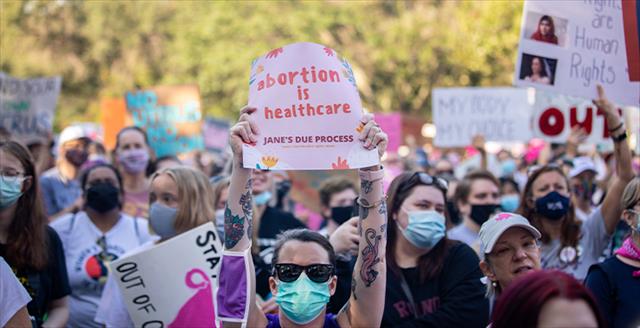
Abortion is the medical or surgical termination of a pregnancy, one of the oldest, most common and most controversial medical procedures. There are numerous reasons for a woman to seek an abortion, and about one in four women in the United States will have an abortion before age 45, although abortion rates across the country have been declining, according to the Guttmacher Institute.
In the years since abortion became legal in the United States, thanks to the 1973 Supreme Court decision in Roe v. Wade, there has been vigorous debate regarding the impact of abortion on a woman's mental health. Research has shown that having an abortion does not increase a woman's risk for depression, anxiety or post-traumatic stress disorder.i A review of the scientific literature conducted by an APA task force and released in 2008 indicated that the relative risk of mental health problems following a single elective first-trimester abortion of is no greater risk to mental health than carrying an that pregnancy to term. Among women who do experience mental health issues, the APA report concluded that these issues may be related to co-occurring risk factors that predispose a woman to multiple unwanted pregnancies and mental health problems.
What the Science Says
-
Women who are denied an abortion are more likely to initially experience higher levels of anxiety, lower life satisfaction and lower self-esteem compared with women who received an abortion.ii
-
Unwanted pregnancy has been associated with deficits to the subsequent child's cognitive, emotional and social processes.ii These children are more likely to experience negative long-term outcomes in adulthood, such as an increased likelihood of engaging in criminal behavior, dependency on public assistance, and having an unstable marriage.iii
-
The number of unsafe abortions is likely to increase when policies limit access to reproductive health care. A study conducted by the World Health Organization and the Guttmacher Institute found that the vast majority of abortions are safe in countries where abortion is broadly legal, while most are unsafe in countries where it is highly restricted.iv
-
There is a strong relationship between unwanted pregnancy and interpersonal violence. Specifically, the inability to obtain an abortion may force women to stay in contact with violent partners, putting them and their children at risk.v
-
Access to safe and legal abortion is central to attaining social equality for women.vi Laws restricting access to safe, legal abortion will be particularly harmful to low-income women, women of color, and sexual and gender minorities, as well as those who live in rural or medically underserved areas. As noted by the Black Women's Health Imperative, “Black women continue to struggle to afford birth control that best meets their needs, the lack of which leads to higher rates of unintended pregnancies. As a result, Black women have significantly higher abortion rates than whites and Hispanics. Moreover, those who are unable to access abortion care are more likely to be thrown into persistent poverty.vii" These bills will further reduce Black women's access to contextually appropriate and effective sexual health information A woman's ability to control when and if she has a child is frequently linked to her socioeconomic standing and earning power.viii Research indicates that women living in poverty, low-income women and women of color are more likely than others to experience cumulative adversity and are at increased risk for unintended pregnancy.ix
-
Experiencing unwanted pregnancies appears to be strongly associated with poor mental health effects for women later in life.xii
APA's Policies Regarding Abortion
APA's Resolution on Abortion adopted in 1969 establishes that termination of pregnancy is the civil right of the pregnant woman, to be handled as are other medical and surgical procedures in consultation with her physician, and to be considered legal if performed by a licensed physician in a licensed medical facility. Subsequent APA policies adopted in 1980, 1989, 1992 affirmed a woman's right to reproductive choice and negated assertions regarding adverse psychological effects of abortion.
APA's Legal Actions Regarding Abortion
In Thornburgh v. American College of Obstetricians and Gynecologists, APA argued that the mandatory provisions of a Pennsylvania law intruded upon the discretion of a pregnant woman's physician to ensure effective counseling and interfered with a woman's constitutional right to make decisions concerning abortion. The U.S. Supreme Court struck down most of the provisions of the Pennsylvania law and reiterated the court's earlier statements that the states are not free, under the guise of protecting maternal health or potential life, to intimidate women into continuing pregnancies.
In Harris v. McRae, APA argued that states participating in Medicaid program were required to pay for medically necessary abortions, and that the Hyde Amendment denying federal reimbursement for such abortions was unconstitutional. The Supreme Court declined to hear the case.
In Bowen v. Kendrick, APA joined with the American Public Health Association, Planned Parenthood, and National Family Planning and Reproductive Health Association to argue that the 1981 Adolescent Family Life Act interfered with an adolescent's constitutional right to make informed reproductive decisions, among other points. The case was remanded to a lower court to determine whether the law violated the Establishment Clause as applied to this individual case. The case was later settled.
In Akron v. Akron Center for Reproductive Health Inc., APA argued that an Akron ordinance mandating physician-conducted pre-abortion counseling was unconstitutional. The court found that certain aspects of the law were unconstitutional and therefore invalid and that it was unreasonable for a state to insist that only a physician is competent to provide informed consent information and counseling relevant to informed consent.
APA's Advocacy on Abortion
- Joining coalition partners to request increased funding for the Title X Family Planning Program.
- Opposing legislation that would harm the integrity of the patient-provider relationship.
- Supporting legislation to preserve access to abortion coverage in private insurance plans.
- Speaking out against the Title X gag rule (PDF, 92KB) and additional restrictions on Title X providers.
References
- i Steinberg JR, Laursen TM, Adler NE, Gasse C, Agerbo E, Munk-Olsen T. (2018). Examining the association of antidepressant prescriptions with first abortion and first childbirth. JAMA Psychiatry. Published online May 30, 2018. doi:10.1001/jamapsychiatry.2018.0849.
- ii Biggs MA, Upadhyay UD, McCulloch CE, Foster DG. (2017). Women's mental health and well-being 5 years after receiving or being denied an abortion. A prospective, longitudinal cohort study. JAMA Psychiatry. 74(2):169–178. doi:10.1001/jamapsychiatry.2016.3478.
- ii Russo, N, (2014). Abortion, unwanted childbearing, and mental health. Salud Mental. 37, 283-289
- iii Ibid.
- iv Ganatra B, et al. (2017) Global, regional, and subregional classification of abortions by safety, 2010–14: estimates from a Bayesian hierarchical model. Lancet, 390: 2372–81.
- v Roberts, SC, Biggs, MA, Chibber, KS, Gould, H, Rocca, CH, & Foster, DG. (2014). Risk of violence from the man involved in the pregnancy after receiving or being denied an abortion. BMC Medicine , 12:144. doi: 10.1186/s12916-014-0144-z.
- vii Black Women's Health Imperative. https://www.bwhi.org/2018/07/02/black-womens-health-imperative-expresses-concern-over-supreme-court-nominees/ .
- ix Prather, C., Fuller, T.R., Jeffries, W.L., Marshall, K.J., Howell, A.V., Belyu-Umole, A., & King, W. (2018). Racism, African American Women, and their sexual and reproductive health: A review of historical and contemporary evidence and implications for health equity. Health Equity , 2(1), 249-259.
- viii Institute for Women's Policy Research. Reproductive Rights. Retrieved from https://statusofwomendata.org/explore-the-data/reproductive-rights/reproductive-rights-full-section/
- ix Center for American Progress. (2008). The straight facts on women in poverty. Retrieved from https://www.americanprogress.org/issues/women/reports/2008/10/08/5103/the-straight-facts-on-women-in-poverty/
- xii Herd, P., Higgins, J., Sicinski, K., & Merkurieva, I. (2016). The implications of unintended pregnancies for mental in later life. American Journal of Public Health , 106(3), 421-429.