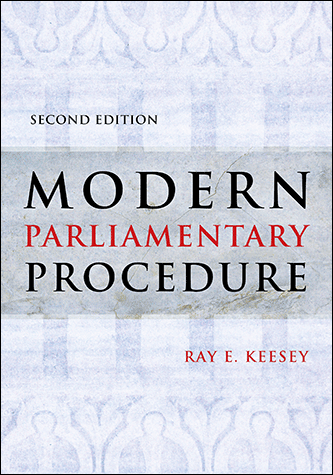
Modern Parliamentary Procedure
In 1971, Ray Keesey developed a guidebook that advanced parliamentary procedure. By eliminating misleading terminology and simplifying many of the complex and overly technical aspects of the traditional parliamentary process, Keesey offered clear rules of order for efficient democratic action in deliberative meetings.
Thanks to its accessibility and lack of jargon, the Keesey System has become widely used by large deliberative bodies and small associations alike, allowing readers to quickly comprehend and implement the rules without needing to be experts on parliamentary process.
Revised and updated with the expertise of the American Institute of Parliamentarians, this new edition includes rules that relate to technological innovations such as electronic voting and offsite attendees.
Key features include a more logical classification of parliamentary motions, the elimination of superfluous motions, and recommendations for preventing and managing disruptions.
This book is an essential reference for associations, clubs, student groups, and larger deliberative bodies seeking clear and effective procedural rules.
Note from APA
Foreword
Introduction
- The Basic Principles
- A Historical Sketch of Parliamentary Procedure
- Introduction to the Rules of Procedure
- Main and Ordinary Motions
- Special Motions
- Conducting the Meeting
- Participants in the Meeting
- Committees
- Voting
- Nominations and Elections
- Constitutions, Bylaws, and Rules
- Appendix A: Tables of Outdated Motions
- Appendix B: Typical Contents of Governing Documents
- Appendix C: Summary Chart of Motions
References
Index