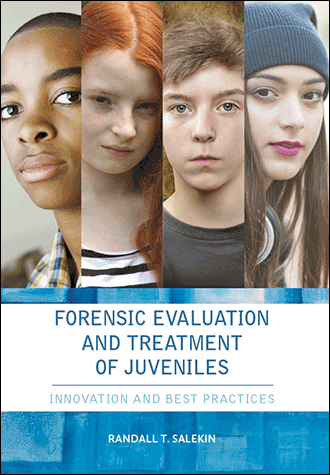
Forensic Evaluation and Treatment of Juveniles
Psychologists have always played a key role in determining how the juvenile justice system assesses and treats young offenders. Recent neuropsychological findings show that there are important developmental differences between juvenile offenders, such as varying levels of maturity, risk potential, and amenability to treatment, not to mention individualized personality traits and possible mental disorders. Psychologists must therefore strive for targeted rehabilitation services to avoid unfair treatment and redirect youth to healthier life choices.
This book is a practical guide that will help psychologists answer important psycho-legal questions to properly assess and treat juvenile offenders. These guidelines primarily focus on disposition evaluations, which describe adolescent offenders and paths to rehabilitation, and transfer evaluations, which determine whether juveniles should be moved to adult courts.
Psychological assessments can greatly influence a judge's decision, so this book will help forensic clinicians
- consider important external factors, such as local laws and the political climate, and
- present assessment data to judges in a thorough, understandable manner.
This book will also be valuable for attorneys, judges, criminologists, and legal scholars who want to understand the psychological science behind juvenile assessment.
Acknowledgments
Introduction
- Legal Contexts and More
- Juvenile Characteristics, Political and Social Climate, and Transfer
- Forensic Mental Health Concepts
- Empirical Foundations and Limits of Juvenile Forensic Evaluation
- Preparation for the Evaluation and Forensic Practice
- Data Collection for Juvenile Evaluations
- Interpretation for Juvenile Evaluations
- Report Writing and Testimony
- Treatment of Young People in the Juvenile Justice System
- Conclusion and Future Directions
References
Index
About the Author
Randall T. Salekin, PhD, is a professor and director of the Disruptive Behavior Clinic at the University of Alabama. He also serves as the Associate Director of the Center for the Prevention on Youth Behavior Problems.
Dr. Salekin is an expert in the assessment and treatment of young people with disruptive behavior disorders who are referred from the community or the juvenile court. He provides assessment, treatment, and general consultation recommendations.
Dr. Salekin is the author of the Risk–Sophistication–Treatment Inventory (RSTI), one of the primary measures for assessing youth who have come into contact with the law. His research focuses on understanding of the causes and correlates of disruptive behavior in children, including youth with interpersonal callousness (limited prosocial emotion). In addition, his research and practice focus on the treatment of conduct problem young people with interpersonal callous traits.
Dr. Salekin's assessment and treatment efforts have been found to be both innovative and effective for youth with oppositional defiant disorders, conduct disorders, and limited prosocial emotion.
Dr. Salekin is the author of numerous research publications, the Handbook of Child and Adolescent Psychopathy, and has received both national and international recognition for his work.
The expertise of the author is evident on every page, an intricate combination of evidence-based support, statistical demographics, psychometric foundations and treatment efficacy-effectiveness research.
—New England Psychologist
This book is written by an authoritative figure in forensic evaluations and treatment of young delinquents. Therefore this guide book and textbook cannot be denied the status that is deserves: an authoritative input into this highly crucial and socio-politically controversial area.
—PsycCRITIQUES®
This excellent book details the assessment process for disposition and transfer evaluations conducted in juvenile court. Written by an expert in the field, it contains practical information useful for both novice clinicians and seasoned veterans. Readers will not be disappointed.
—Doody's