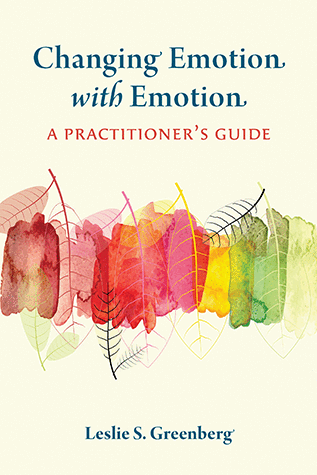
Changing Emotion With Emotion
Available formats
Also available from
This book presents principles and methods for working with emotion in psychotherapy to address the core maladaptive processes that cause anxiety, depression, and other common mental health disorders.
Mental health providers confront emotional suffering every day yet working with emotion is rarely explicitly taught in most clinical graduate programs.
There is evidence that emotional experience in therapy relates to therapy outcome, across multiple diagnoses. This research has given rise to strategies that address the core maladaptive processes that cause distress and dysfunction, rather than specific diagnoses.
Methods described in this book can help clients with all types of disorders to “arrive at,” or fully experience, their painful maladaptive emotions, and then “leave” these emotions by accessing new, adaptive emotions. These methods include helping clients sit with painful feelings, access bodily felt experience, identify unmet needs, and articulate the meaning of an emotion.
Excerpts from moment-to-moment clinical dialogues help demonstrate techniques such as memory reconsolidation, providing corrective emotional experiences, chair work, and imaginal re-entry to past situations.
Introduction: Working with Emotion in Psychotherapy
Part I: Fundamentals
- Emotion Theory
- Research on Emotional Change
- Changing Emotion with Emotion
- Essential Therapist Skills for Practicing Emotion-Based Approaches
Part II: Arriving at Emotion
- Empathic Attunement to Affect
- Focusing on Bodily Feelings: When Words Are Not Enough
- Blocks to Emotion
- Unblocking Emotion
Part III: Leaving Emotion
- Working with Needs
- Re-experiencing the Past in the Present
- Emotion Regulation
- Narrative and Emotion
Looking Ahead: A Unified Approach to Psychotherapy
References
About the Author
Leslie S. Greenberg, PhD, is distinguished research professor emeritus of psychology at York University in Toronto.
He has authored key texts on emotion-focused psychotherapy, from its inception in the 1980s through today. He has received the Distinguished Research Career award of the International Society for Psychotherapy Research as well as the Carl Rogers and the Distinguished Professional Contribution to Applied Research of the APA.
He conducts a private practice for individuals and couples and trains people in emotion-focused approaches.