Structural Analysis of Social Behavior (SASB)
Available formats
Also available from
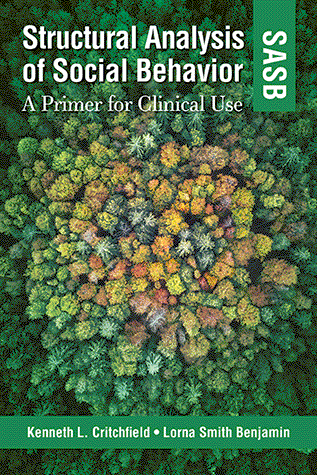
Structural Analysis of Social Behavior (SASB) helps clinicians and researchers make objective assessments of relationship patterns, and enables clients to improve their social interactions.
SASB can help identify connections between clients' current symptoms, and their current and historical relationship patterns. The SASB coding system serves as the basis for case formulation, which in turn informs the choice of interventions used in a variety of therapeutic approaches. SASB can also be used to evaluate the effectiveness of interventions, thus keeping therapy on track.
This book summarizes over 50 years of research and clinical practice with SASB, and demonstrates how it can be used with any therapeutic approach. It has been traditionally used with patients who are comorbid, often rehospitalized, dysfunctional, and suicidal, although it can be used with any clinical population.
SASB offers providers a therapy compass that helps clarify where the client is now, and pointing in the direction they need to go in order to reach their therapy goals.
Part I: Basic Principles
- Chapter 1. Introduction to SASB
- Chapter 2. The SASB Models: Comprehensive Description of the Interpersonal Domain
- Chapter 3. Application of SASB Technology
Part II: Using SASB to put Clinical Theory into Clinical Practice: An Overview
- Chapter 4. SASB as Precise Description: Applications in Diverse Theoretical Frameworks
- Chapter 5. Interpersonal Reconstructive Therapy
Part III: Observing, Assessing, and Formulating Patient Patterns
- Chapter 6. Formulation Using the SASB Intrex Questionnaires
- Chapter 7. Using SASB to Formulate Patterns from Clinical Interviews
Part IV: Treatment: Connecting with Patients and Optimizing Interventions using SASB-Based Focus on Psychotherapy Process, Case Formulation, and Therapy Goals
- Chapter 8. Directing In-Session Relational Processes Toward Therapeutic Goals
- Chapter 9. Actively Applying the IRT Case Formulation
- Chapter 10. Tracking Change and Assessing Outcomes
Kenneth L. Critchfield, PhD, is a tenured associate professor and program director of the Clinical Psychology Program of the Ferkauf Graduate School of Psychology at Yeshiva University. Dr. Critchfield's research, teaching, and clinical work all emphasize interpersonal and attachment-based principles of change implemented in Interpersonal Reconstructive Therapy. He was codirector of the IRT clinic at the University of Utah Neuropsychiatric Institute and was most recently directed the Combined-Integrated Clinical and School Psychology program at James Madison University.
Dr. Critchfield is a fellow of APA's Society for Advancement of Psychotherapy and he has held leadership roles with the Society for Exploration of Psychotherapy Integration, and has long been a member of the Society for Psychotherapy Research. He maintains a psychotherapy practice and frequently consults on issues of methodology, design, and analysis for work at the interface between interpersonal measurement, personality, and psychopathology.
Lorna Smith Benjamin, PhD, is professor emerita of psychology at the University of Utah and founder of the Interpersonal Reconstructive Therapy Clinic at the University of Utah Neuropsychiatric Institute. She is the creator of Structural Analysis of Social Behavior for describing interactions with self and others, and of Interpersonal Reconstructive Therapy which was developed for "treatment resistant" psychiatric patients on the basis of what she learned after decades of using SASB in research and clinical practice.
It would be hard to imagine clinical practice or research that would not be enhanced by familiarity with the incredible precision and utility of SASB as a lens for understanding inter- and intrapersonal behavior. Critchfield and Benjamin have written an essential book articulating SASB’s elegant theory and its many past and potential applications. This is a must-read for any clinician or clinical scientist who has ever wanted a more parsimonious yet powerful way of understanding how humans interact and how to use that knowledge to enhance therapeutic processes.
—Julia Mackaronis, PhD, Licensed Clinical Psychologist, Praxis Psychotherapy
Critchfield and Benjamin have succinctly captured decades of pioneering work and research demonstrating, with clinical examples and empirical support, how Interpersonal Reconstructive Therapy and SASB can be utilized for case conceptualization and the psychotherapeutic process. This volume is likely to be a classic in the field and a must-read for students and practitioners, as well as offering an elegant system for psychotherapy researchers.
—Jeffrey J. Magnavita, PhD, Founder, Glastonbury Psychological Associates, PC; CEO, Strategic Psychotherapeutics, LLC, Glastonbury, CT, United States
In this book, the authors translate half a century of cumulative work on SASB, which is extensively used in psychotherapy research, and present it in a more user-friendly form. Now, students, professors, clinicians, supervisors, and researchers of any level or persuasion can collaborate in broadening and building upon such a solid structural foundation for evolving human relating, at best.
—Nuno Conceicao, PhD, Faculty of Psychology, University of Lisbon, Lisbon, Portugal; Past President, Society for the Exploration of Psychotherapy Integration
The SASB is a dimensional assessment system and an interpretative model created by Lorna Smith Benjamin to read personality disorders. It is a “secret lens” which can be used to view and identify behavior patterns. SASB allows its users to analyze the subject’s interpersonal space and view the world from their perspective: a necessary requirement in order to provide the help needed. Critchfield and Benjamin’s book masterfully summarizes SASB theory, explaining its application while connecting it to Interpersonal Reconstructive Therapy through the case formulation process. The authors scientifically present ample research material on SASB application to the field of psychopathology and psychotherapy. This is the fully-fledged SASB handbook.
—Francesco Colacicco, Psychologist, Psychotherapist, and Director, Istituto Dedalus; Teacher, Centro Studi di Terapia Familiare e Relazionale, Rome, Italy; Member of European Family Therapy Association (EFTA) and Italian Society of Psychology and Relational Psychotherapy (SIPPR)
As a mental health practitioner, educator, scholar, or trainee, if you want to know how to do what you do—in an evidence-based manner that is nonreductionistic—there is no better resource than this powerfully illuminating book. To master the SASB model and method—to see why our clients suffer and how they may heal—there are no better guides than Drs. Ken Critchfield and Lorna Benjamin. Ken and Lorna are not only the brains behind SASB, they are consummate scientists and master therapists, who value craft and rigor in equal measure, a unique gestalt that helps SASB clinicians of all stripes become transformative agents of in-depth change.
—Craig N. Shealy, PhD, Executive Director, International Beliefs and Values Institute (IBAVI); Developer of the Beliefs, Events, and Values Inventory (BEVI)
Structural Analysis of Social Behavior is the most fully developed and researched model of human behavior. This volume is the definitive and comprehensive guide for clinicians new to SASB as well as researchers experienced with the system. It is eminently accessible, practical, and carefully organized to be equally useful as a learning and training resource as well as a reference source. It is one of those core books that informs when first read, and will keep on serving you at each stage of your career!
—Adam O. Horvath, EdD, Professor Emeritus, Simon Fraser University, Vancouver, BC, Canada
For experienced interpersonalists, the interpersonally curious, and everyone in between, Critchfield and Benjamin provide an accessible yet detailed overview of 50 years of theory, research, and clinical application. Because the authors have been gifted scholars, clinicians, and teachers for decades, all readers will leave an encounter with this superbly organized, clinically rich volume with a much more detailed understanding not only of SASB and Interpersonal Reconstructive Therapy, but also of their own work, even if they don’t think of their personal conceptual approach as particularly interpersonal.
—Timothy W. Smith, PhD, Distinguished Professor of Psychology, The University of Utah, Salt Lake City, UT, United States
Welcome to the resource library for Structural Analysis of Social Behavior (SASB): A Primer for Clinical Use, by Kenneth L. Critchfield and Lorna Smith Benjamin.
This content includes valuable resources, including a link to more information about the patient, Arthur, who is discussed in Chapter 3, a sample session transcript with Arthur for SASB coding practice, and SASB codes applied to this sample session. These documents are offered for your personal use. If you reprint or adapt them for publication, permission is required from the publisher.
© 2024 American Psychological Association.
- For more information about Arthur’s history and prior sessions, please refer to the description of the APA video Interpersonal Reconstructive Therapy for Passive–Aggressive Personality Disorder
- Full Session Transcript With Arthur for SASB Coding Practiceopens in new window (PDF, 60KB)
- SASB Codes Applied to Sample Sessionopens in new window (PDF, 253KB)