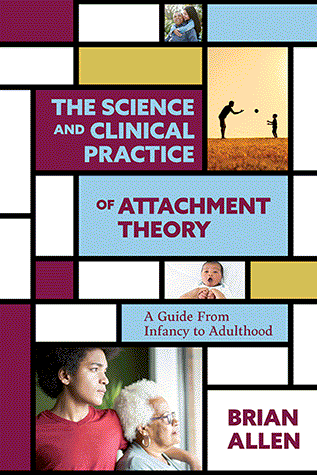
The Science and Clinical Practice of Attachment Theory
Available formats
Also available from
This book summarizes attachment processes across the lifespan and reviews clinical applications with infants, children, adolescents, and adults.
Attachment theory is often mischaracterized as focusing solely on maternal influences in early childhood, but developmental science has explored the important roles that other attachment figures play throughout one’s life, including foster parents, social peers, and romantic partners.
Following the history and evolution of attachment research, this book translates foundational knowledge into clinical practice by reviewing interventions such as parent training techniques, attachment‑based family therapy, and mentalization‑based therapy. These attachment-based interventions are differentiated from other, harmful treatments that have been erroneously linked to attachment theory, being labeled by their proponents as “attachment therapy.”
Key concepts such as internal working models and secure vs. insecure attachment scripts are described, as are important assessment measures like the strange situation procedure and the adult attachment interview. Special features highlight notable topics and controversies in attachment theory and research and present case studies that bring clinical guidance to life.
Preface
Introduction: The Challenges and Promises of Attachment Theory for Mental Health Practitioners
Part I. The Science of Attachment Theory
- Chapter 1: The Historical Foundations of Contemporary Attachment Theory: From John Bowlby to Mary Ainsworth
- Chapter 2: Attachment During Infancy and Early Childhood: Understanding Attachment Behavior
- Chapter 3: Attachment During Middle Childhood: Internal Working Models and Developmental Trajectories
- Chapter 4: Attachment During Adolescence: Evolving Caregiver Relationships and the Role of Peers
- Chapter 5: Attachment During Adulthood: Being a Parent and a Partner
Part II: The Clinical Application of Attachment Theory and Research
- Chapter 6: Attachment and Clinical Practice With Infants and Young Children: The Field of Infant Mental Health
- Chapter 7: Attachment and Clinical Practice With School-Age Children: At the Intersection of Clinical and Developmental Science
- Chapter 8: Attachment and Clinical Practice With Adolescents: Building Autonomy and Connectedness
- Chapter 9: Attachment and Clinical Practice With Adults: Applications to Individual and Couple Therapy
Part III. Questions and Controversies
- Chapter 10: “Attachment Disorder,” “Attachment Therapy,” and the Redemption of a Clinical Theory
- Chapter 11: Frequently Asked Questions
References
Index
About the Author
Brian Allen, PsyD, is director of mental health services in the Center for the Protection of Children, Penn State Children's Hospital and associate professor of pediatrics and psychiatry at the Penn State College of Medicine.
He conducts research on the developmental impact of childhood trauma and maltreatment, the effectiveness and implementation of clinical interventions for children, and problematic sexual behavior among preteen children.
He has authored numerous works on the clinical application of attachment theory, including “A RADical Idea” (2016), one of the most-read and most-cited articles in the journal Evidence-Based Practice in Child and Adolescent Mental Health.
The science of attachment can be daunting but, in his book, Brian Allen proves himself to be an excellent teacher. With its authoritative and practical overview of attachment-based diagnosis and intervention, this book will be a highly valuable resource for practitioners working with children, families, and adult clients.
—Carlo Schuengel, PhD, Professor of Clinical Child and Family Studies, Vrije Universiteit Amsterdam, Amsterdam, The Netherlands