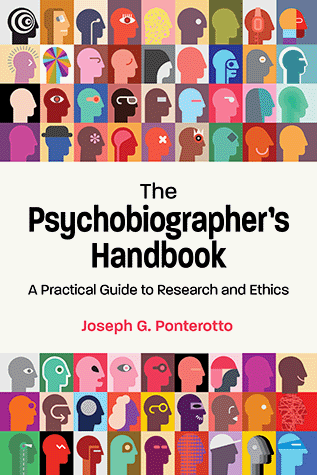
The Psychobiographer's Handbook
Available formats
Also available from
A comprehensive and practical guide on conducting rigorous, ethical, and impactful psychobiographical research.
Psychobiography is the intensive psychological study of an individual within their unique socio‑cultural‑historic context. This engaging and exciting approach challenges researchers to apply psychological theories and knowledge of history to understand the inner emotional life of a particular person, usually a prominent historical figure.
This handbook leads readers step-by-step through all aspects of planning and conducting a psychobiography. Readers will learn how to select an appropriate historical subject for research, anchor their study in established theories of psychology, collect and analyze data, monitor ethical considerations, and write the final report. Chapters are richly illustrated with examples from the author’s own work, as well as early psychobiographical landmarks, such as Freud's study of Leonardo da Vinci and Erikson’s study of Mahatma Gandhi.
With its personal tone and wisdom borne from experience, this book will be a trusty resource for all psychobiographers, from students writing a psychobiography for a course to seasoned researchers writing a book‑length psychobiography for publication.
Introduction: The Evolving Journey of Psychobiography
Part I. Historical, Methodological, and Ethical Foundations for Psychobiography
- Chapter 1. Defining the Field of Psychobiography
- Chapter 2. Historical Perspectives in Psychobiography
- Chapter 3. Current Status and Emerging Trends in Psychobiography
- Chapter 4. Research Paradigms and Inquiry Approaches
- Chapter 5. The Psychobiographer's "Relationship" and Positionality to the Historic Subject
- Chapter 6. The Psychobiographical Subject in Socio-Cultural-Historic Context
- Chapter 7. Ethical and Legal Issues in Psychobiography
- Chapter 8. Ethical Best Practices: A Checklist and Decision-Making Model
Part II. Conducting Psychobiography: Nuts and Bolts
- Chapter 9. Overview of the Process and Steps of Psychobiographical Research
- Chapter 10. Selecting a Subject, Deciding Whether to Work With a Team, and Establishing Initial Research Goals
- Chapter 11. Choosing and Using a Psychological Theory to Guide Your Analysis
- Chapter 12. Engaging the Research: Locating, Evaluating, and Integrating Data on Your Subject
- Chapter 13. Writing and Disseminating the Psychobiographical Report
- Chapter 14. Psychobiographer Self-Care
Epilogue: Top 10 Characteristics of a Strong Psychobiography
References
Appendix A. Initial Content Validity of the Psychobiographer's Competency Self-Assessment Scale
Appendix B. Sample Definitions of Psychobiography
Appendix C. Sample Institutional Review Board Psychobiography Study Proposal
Appendix D. Encountering Erik Erikson: Reflections of Alan C. Elms, William McKinley Runyan, and James W. Anderson
Appendix E. Sample Psychobiography Course Syllabus
Joseph G. Ponterotto, PhD, is a professor of counseling psychology in the graduate school of education at Fordham University’s New York City campus. He is a leading national scholar in psychobiography, multicultural psychology, and qualitative research methods. He has published 16 books, including two psychobiographies: A Psychobiography of Bobby Fischer (2012) and A Psychobiography of John F. Kennedy, Jr. (2019). His research on Bobby Fischer led to his role as historical consultant on the major motion picture, Pawn Sacrifice (2016), starring Tobey Maguire as Bobby Fischer and Liev Schreiber as Boris Spassky.
Useful for novice and expert researchers alike, this exceptionally rich, provocative, and well-reasoned book will have a major impact for decades on psychobiography, lifespan development, and personality research. Professor Ponterotto offers a seminal theoretical, methodological, and practical account of the art and science of psychobiography. His inclusion of a chapter on the self-care of the researcher is brilliant!
—Cynthia E. Winston-Proctor, PhD, Department of Psychology, Howard University, Washington, DC
This volume is certain to become the indispensable reference for anyone seeking to learn about and/or engage in psychobiographical research. Due to its lucid prose and easy-to-follow chapter organization, it is an ideal text for an undergraduate course in psychobiography. At the same time, its comprehensive attention to historical and theoretical developments in psychobiography make it an invaluable resource for the sophisticated scholar. Its miniprofiles of a diverse collection of contemporary prominent psychobiographers are an added bonus.
—Jefferson A. Singer, PhD, Faulk Foundation Professor of Psychology, Connecticut College, New London, CT; author, The Proper Pirate: Robert Louis Stevenson's Quest for Identity
This milestone handbook in the history of psychobiography will be useful to virtually any reader: the novice looking to get started, or the expert looking for a comprehensive reflection on the special endeavor of psychobiographical inquiry. It manages to be both deeply insightful and tangibly practical. A gem!
—Jonathan M. Adler, PhD, Professor of Psychology, Olin College of Engineering, Needham, MA; editor, Personality and Social Psychology Review
This is the defining book on the history and methods of psychobiography written by leading qualitative researcher, Joseph G. Ponterotto. In it, Ponterotto describes the foundations of this field and provides an accessible guide for how to conduct psychobiographical research and how to make decisions along the way.
—Heidi M. Levitt, PhD, Professor of Psychology, University of Massachusetts Boston; editor, Qualitative Psychology
Dr. Joseph G. Ponterotto has been in the forefront of the resurgence of psychobiography. His The Psychobiographer's Handbook: A Practical Guide to Research and Ethics is an indispensable resource, a classic of its kind, for anyone interested in psychobiography. This handbook covers all the essential subjects for both the experienced and novice psychobiographer; it is a delightful read by an expert scholar.
—Ken Fuchsman, EdD, Emeritus Assistant Extension Professor, Interdisciplinary Studies, University of Connecticut, Storrs, CT