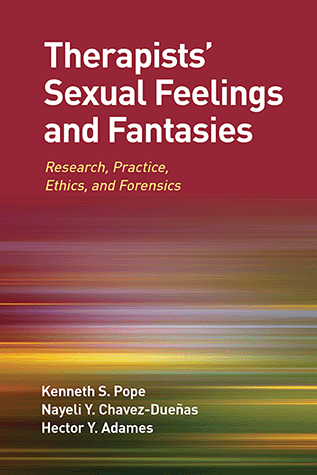
Therapists' Sexual Feelings and Fantasies
Available formats
Also available from
This book offers a concise, practical guide to ethical and legal concerns related to therapists' sexual feelings and fantasies.
The psychotherapy profession has always struggled to deal openly with therapists' sexual feelings. Between the often unavoidable fact of sexual attraction, and the potential crossing of boundaries and sexual relationships with clients, there exists a wide range of assumptions, beliefs, feelings, and daydreams that often are suppressed and unspoken—sometimes with devastating consequences.
This candid, practical book addresses three distinct areas related to therapists’ sexual feelings: sexual attractions to clients (including sexual fantasies, dreams, and arousal); the violation of sexual boundaries with clients (including consensual therapist-patient sexual involvement); and forensic issues, including therapists who testify in cases where therapist-patient sex is at issue. The authors offer an extensive review of widespread and changing approaches to this topic in the history of psychotherapy, alongside a comprehensive look at current standards and research findings. They also provide important information for fact and expert witnesses, examining the evolving ethical and legal standards surrounding sexual relationships between therapists and clients, and discuss how to respond to clients to report having been sexually involved with a prior therapist. Incisive reflection questions encourage readers to recognize and respond appropriately to their own feelings in the therapy room.
Dedication
Acknowledgments
Introduction: The Elephant in the Therapy Office
PART I. A POSITIVE APPROACH TO THERAPISTS' SEXUAL FEELINGS AND FANTASIES
- Chapter 1. A Positive, Open, and Honest Approach to Therapists' Sexual Feelings
- Chapter 2. Influential Therapists Who Have Engaged in Sex with Clients, And Why It Matters: The Importance of Sociohistorical Context
- Chapter 3. Therapists' Sexual Fantasies
- Chapter 4. Exploring Power, Sex, Gender, Sexual Orientation, and Race in Therapists’ Sexual Feelings and Fantasies
PART II. THERAPIST-PATIENT SEXUAL INVOLVEMENT
- Chapter 5. How Therapist-Patient Sex Harms Patients: A Review of the Research and Other Sources of Information
- Chapter 6. Therapist Vulnerabilities
PART III. FORENSIC COMPETENCE
- Chapter 7. Reactions, Biases, and the Basics of Participating in Forensic Work Involving Therapists-Patient Sex
- Chapter 8. The Therapist as Witness: Indispensable First Steps When Working With Attorneys
- Chapter 9. Conducting a Forensic Psychological Assessment and Preparing a Report
- Chapter 10. Testifying Effectively: Navigating Humility, Responsibility, and Both Cognitive and Emotional Bias
PART IV. INFORMED CONSENT RESOURCES
- Resource A. Informed Consent for Forensic Assessment (With Special Attention to Issues of Therapist-Patient Sexual Involvement)
- Resource B. Informed Consent Issues for Providing Therapy to Patients Who Have Been Sexually Involved with a Prior Therapist
PART V. RESOURCES FOR REVIEWING TREATMENT PLANS, NOTES, AND CHARTS
- Resource C. Points to Consider When Reviewing the Treatment Plan of a Patient with A History of Sexual Involvement with a Previous Therapist
- Resource D. Guidelines for Reviewing a Prior Therapist's Treatment Notes and Chart Materials
PART VI. RESOURCES ON PREPARING FOR DEPOSITION AND CROSS EXAMINATION
- Resource E. Ten Questions to Help Therapists Prepare for Deposition and Cross-Examination
- Resource F. Cross-Examination Questions for Therapists Who Testify About a Patient's Sexual Involvement with a Therapist
PART VII. RESOURCE FOR SUBPOENAS AND COMPELLED TESTIMONY
- Resource G. Strategies for Private Practitioners Coping with Subpoenas or Compelled Testimony for Client/Patient Records or Test Data or Test Materials
References
Index
About the Authors
Kenneth S. Pope, PhD, ABPP, is a licensed psychologist. A fellow of the Association for Psychological Science (APS), he served as chair of the ethics committees of the American Board of Professional Psychology (ABPP) and the American Psychological Association (APA). He received the APA Award for Distinguished Contributions to Public Service, the APA Division 12 (Society of Clinical Psychology) Award for Distinguished Professional Contributions to Clinical Psychology, the Canadian Psychological Associationʼs John C. Service Member of the Year Award, and the Ontario Psychological Associationʼs Barbara Wand Award for significant contribution to excellence in professional ethics and standards.
Dr. Popeʼs authored or coauthored books include Speaking the Unspoken: Breaking the Silence, Myths, and Taboos That Hurt Therapists and Patients (with Nayeli Y. Chavez-Dueñas, Hector Y. Adames, Janet L. Sonne, and Beverly A. Greene, 2023). Succeeding as a Therapist: How to Create a Thriving Practice in a Changing World (with Hector Y. Adames, Nayeli Y. Chavez-Dueñas, and Melba J. T. Vasquez, 2023); the sixth edition of Ethics in Psychotherapy and Counseling: A Practical Guide (with Melba J. T. Vasquez, Nayeli Y. Chavez-Dueñas, and Hector Y. Adames, 2021); Five Steps to Strengthen Ethics in Organizations and Individuals: Effective Strategies Informed by Research and History (2017); the third edition of The MMPI, MMPI-2, and MMPI-A in Court: A Practical Guide for Expert Witnesses and Attorneys (with James N. Butcher and Joyce Seelen, 2006); What Therapists Donʼt Talk About and Why: Understanding Taboos That Hurt Us and Our Clients (with Janet L. Sonne and Beverly Greene, 2006); How to Survive and Thrive as a Therapist: Information, Ideas, and Resources for Psychologists in Practice (with Melba J. T. Vasquez, 2005); Recovered Memories of Abuse: Assessment, Therapy, Forensics (with Laura S. Brown, 1996); Sexual Involvement With Therapists: Patient Assessment, Subsequent Therapy, Forensics (1994); Sexual Feelings in Psychotherapy: Explorations for Therapists and Therapists-in-Training (with Janet L. Sonne and Jean Holroyd; 1993); and Sexual Intimacy Between Therapists and Patients (with Jacqueline C. Bouhoutsos, 1986).
Nayeli Y. Chavez-Dueñas, PhD, received her doctorate in clinical psychology from the APA-accredited program at Southern Illinois University at Carbondale. She is a professor at The Chicago School, College of Professional Psychology, where she leads the concentration in Latinx mental health in the Counseling Psychology Department. She also is the codirector of the IC-RACE Lab (Immigration Critical Race and Cultural Equity Lab).
Dr. Chavez-Dueñas has coauthored several books: Speaking the Unspoken: Breaking the Silence, Myths, and Taboos That Hurt Therapists and Patients (with Kenneth S. Pope, Hector Y. Adames, Janet L. Sonne, and Beverly A. Greene, 2023); Succeeding as a Therapist: How to Create a Thriving Practice in a Changing World (with Hector Y. Adames, Melba J. T. Vasquez, and Kenneth S. Pope; 2023); the sixth edition of Ethics in Psychotherapy and Counseling: A Practical Guide (with Kenneth S. Pope, Melba J. T. Vasquez, and Hector Y. Adames; 2021); and Cultural Foundations and Interventions in Latino/a Mental Health: History, Theory, and Within-Group Differences (with Hector Y. Adames; 2017).
She recently coedited the book Decolonial Psychology: Toward Anticolonial Theories, Research, Training, and Practice (with Lillian Comas-Díaz and Hector Y. Adames, 2024. Her research focuses on colorism, skin-color differences, parenting styles, immigration, unaccompanied minors, multiculturalism, and race relations. She has earned a number of awards, including the 2018 APA Distinguished Citizen Psychologist Award and the 2023 Distinguished Professional Career Award from the National Latinx Psychological Association. Visit the Immigration, Critical Race, And Cultural Equity (IC-RACE) Lab for more information about her labopens in new window.
Hector Y. Adames, PsyD, received his doctorate in clinical psychology from the APA-accredited program at Wright State University in Ohio and completed his APA predoctoral internship at the Boston University School of Medicine Center for Multicultural Training in Psychology. Currently, he is a licensed psychologist and a professor at The Chicago School, College of Professional Psychology and the codirector of the IC-RACE Lab (Immigration Critical Race and Cultural Equity Lab).
Dr. Adames has coauthored several books, including Speaking the Unspoken: Breaking the Silence, Myths, and Taboos That Hurt Therapists and Patients (with Kenneth S. Pope, Nayeli Y. Chavez-Dueñas, Janet L. Sonne, and Beverly A. Greene, 2023); Succeeding as a Therapist: How to Create a Thriving Practice in a Changing World (with Nayeli Y. Chavez-Dueñas, Melba J. T. Vasquez, and Kenneth S. Pope; 2023); the sixth edition of Ethics in Psychotherapy and Counseling: A Practical Guide (with Kenneth S. Pope, Melba J. T. Vasquez, and Nayeli Y. Chavez-Dueñas; 2021); and Cultural Foundations and Interventions in Latino/a Mental Health: History, Theory, and Within-Group Differences (with Nayeli Y. Chavez-Dueñas; 2017).
He has also coedited two books Decolonial Psychology: Toward Anticolonial Theories, Research, Training, and Practice (with Lillian Comas-Díaz and Nayeli Y. Chavez-Dueñas, 2024) and Caring for Latinxs With Dementia in a Globalized World: Behavioral and Psychosocial Treatments (with Yvette N. Tazeau; 2020). He has earned several awards, including the 2018 Distinguished Emerging Professional Research Award from the Society for the Psychological Study of Culture, Ethnicity and Race (APA Division 45) and a 2021 Presidential Citation award by APA. Visit the Immigration, Critical Race, And Cultural Equity (IC-RACE) Lab for more information about his labopens in new window
In this comprehensive review, the authors approach a complex and emotionally challenging topic with wisdom and clarity. This book is filled with useful prompts for self-reflection that should be required reading for all therapists, as well as detailed practical advice for those doing forensic evaluations and expert testimony. A text for all mental health practitioners.
—Judith L. Herman, MD, Senior Lecturer in Psychiatry, Harvard Medical School, Cambridge, MA, United States
Dr. Pope and colleagues have produced a brave and searching work on an issue of critical importance to mental health professionals in every specialty area. It has long been a fantasy of my own that someone would write a book like this—one catering so directly to the needs of forensic practitioners as well as others. All readers will appreciate this book’s wealth of appended practical resources.
—Eric Y. Drogin, JD, PhD, ABPP, Forensic, Harvard Medical School Former President, Cambridge, MA, United States; American Board of Forensic Psychology Former Chair, American Psychological Association Committee on Professional Practice and Standards
What a book! This brave and highly accessible work humanizes therapists’ sexual feelings and fantasies in the context of culture, research, and the standard of care. Therapists and expert witnesses will find this meticulously researched book indispensable. I am delighted to have this groundbreaking resource for my clinical and forensic practice, supervision, and teaching.
—Julie Goldenson, PhD, Clinical and Forensic Psychologist, Assistant Professor in the Department of Applied Psychology and Human Development, University of Toronto, ON, Canada
Pope, Chavez-Dueñas, and Adames have done it again! These authors consistently set the bar for foundational texts that train psychologists and mental health providers. Their previous books on ethics and taboo topics in therapy are groundbreaking, helping us understand complex issues and develop ethically humane and socially just practices. Their latest volume, Therapists’ Sexual Feelings and Fantasies, is a unique and indispensable resource that explores aspects often neglected in other works, such as power dynamics, gender, race, and sexual orientation. The authors masterfully contextualize the ethical and legal issues surrounding therapist–client sexual interactions. I appreciate the accessible language, real-life examples, and helpful resources typical of their work. This book is simply terrific. It is a foundational and innovative text that sets a new standard in the field and is a must-read for practitioners of any theoretical orientation.
—Helen A. Neville, PhD, Professor, Educational Psychology and African American Studies 2024 President, Society of Counseling Psychology, University of Illinois Urbana-Champaign, United States
Therapists’ Sexual Feelings and Fantasies addresses the challenging topic of therapists’ sexual feelings about people with whom they work. It offers a much-needed, contemporary, expansive perspective. It provides a positive, normalizing, and realistic consideration of sexual feelings, including vulnerabilities. This extraordinary contribution gives readers a remarkable set of resources and tools to help deal with clinical and forensic work in this area. The authors, who are ethicists, provide rich, thought-provoking questions. This book is a superb treasure beneficial for all practitioners. I give it my highest recommendation.
—Melba J. T. Vasquez, PhD, ABPP, independent practice, Austin, TX, United States; Former President, American Psychological Association
This book goes beyond what we all learn about boundary violations, emphasizing the personal skill and professional competence that is required to embrace and manage our natural but conflictual sexual feelings in relating to our patients. The authors promote systematic personal reflection throughout the book and delineate potential vulnerabilities to problematic relationships. The one book every therapist should read.
—Jon G. Allen, PhD, Clinical Professor, Voluntary Faculty, Menninger Department of Psychiatry and Behavioral Sciences, Baylor College of Medicine, Houston, TX, United States
In this courageous book, the authors provide nuanced and informed discussion and resources to help therapists and forensic evaluators wade through the maelstrom of romantic and sexual feelings. They discuss the deplorable intellectual history of therapist–patient sexual involvement, and the ongoing vulnerabilities of contemporary therapists. They provide honest acknowledgment of intense therapist reactions, while describing steps to avoid the sexual and/or emotional abuse of patients. They also cover forensic issues in cases of suspected therapist–patient sex, provide evolving resources for informed consent, the review of treatment plans, and other practical matters that will help make psychotherapy a healthier arena for therapists and patients alike.
—Etzel Cardeña, PhD, Thorsen Professor in Psychology, Lund University, Lund, Sweden
This book addresses one of the key neglected issues in practicing ethically and effectively. Its combination of experience, a willingness to approach very sensitive topics, and practical guidelines should be required reading for all psychotherapists in training. In fact, there are few psychotherapists, however long they have practiced and whatever their theoretical persuasion, who will not benefit from studying the advice and resources it contains.
—Chris R. Brewin, PhD, Emeritus Professor of Clinical Psychology, University College London, United Kingdom