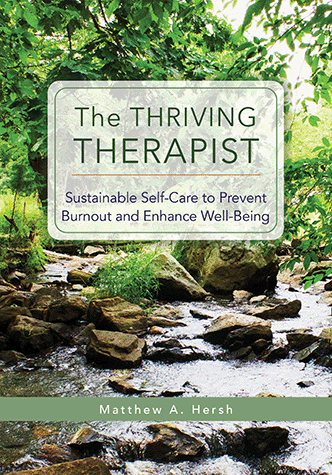
The Thriving Therapist
Available formats
Also available from
The Thriving Therapist provides an integrative, holistic, and developmentally sensitive path to assist therapists in assessing their unique needs and proactively structuring sustainable self-care practices, in alignment with their values.
Self-care shouldn’t feel like a burden. Professional self-care can be enjoyable, personally meaningful, and sustainably integrated into mental health practitioners’ lives.
Included in this book are diverse and vital resources that help practitioners:
- go beyond one-off activities to create a self-caring lifestyle;
- strengthen the guiding values by which they live and work, in order to prevent burnout and embody wellness;
- cultivate mindful awareness of their needs both personal and professional, with special attention to the alignment of the person-practitioner-work environment;
- build powerful inner resources such as gratitude, self-compassion, forgiveness, and humor to soothe in response to threats and bounce back from daily challenges;
- implement and sustain healthy lifestyle habits that transform “simply getting by” into more easeful and meaningful living, including neurophysiological supports, meditation and subtle energy practices, mindful media consumption, and community-building.
Acknowledgments
Introduction
Part I: Nourishing the Roots of Self-Care
- Chapter 1: Exploring Professional Self-Care: Myths, Mistaken Identities, and Meanings
- Chapter 2: Our Unique Stressors, Pressures, and Challenges
- Chapter 3: The “Big Four” Occupational Hazards
- Chapter 4: Our Ethical Imperative Toward Sustainable Self-Care
- Chapter 5: Why We Become Psychotherapists and What Sustains Us
- Chapter 6: Mapping Our Self-Care Values
- Chapter 7: Identifying and Addressing the Blocks to Being Our Own Best Allies
Part II: Flexibly Grounded: Mindful Awareness of Habits, Patterns, and Needs
- Chapter 8: Developmental and Career Stage Realities
- Chapter 9: Listening to Our Bodies
- Chapter 10: Knowing Our Habits of Mind and Emotion
- Chapter 11: Relational Patterns and Fulfillment of Needs
- Chapter 12: How’s Your Frontal Lobe Doing? and Other Executive Functioning Questions
- Chapter 13: Money: Our Unspoken Needs, Beliefs, and Habits
- Chapter 14: Spiritual and Religious Beliefs and Needs
- Chapter 15: Cultural Influences on Self-Care and Well-Being
- Chapter 16: Person-Therapist-Work Alignment
Part III: Intrinsic Self-Care: Soft Strength, Hidden Resilience
- Chapter 17: Cultivating Mindful Awareness and Intentionality
- Chapter 18: Fostering Acceptance, Equanimity, and Acknowledgment of Impermanence
- Chapter 19: Nurturing Compassion
- Chapter 20: Encouraging Forgiveness
- Chapter 21: Gifting Gratitude
- Chapter 22: Inspiring Laughter, Humor, Joy, and Playfulness
- Chapter 23: Learning Optimism
Part IV: Extrinsic Self-Care: Powerful Practices, Transformational Habits
- Chapter 24: Biological Foundations of Self-Care I: Sleep and Breath
- Chapter 25: Biological Foundations of Self-Care II: Movement and Nutrition
- Chapter 26: Meditation
- Chapter 27: Subtle Energy Practices
- Chapter 28: Rest, Time Off, and Recharging Our Batteries
- Chapter 29: Supportive Connections and Healthy Boundaries
- Chapter 30: Supporting Our Frontal Lobe for Sustainable Self-Care and Well-Being
- Chapter 31: Mindful Use of Technology and Media
- Chapter 32: Personal Grounding and Growth: Making Space for Creative Endeavors, Self-Growth, and Pursuing Our Own Therapy
- Chapter 33: Professional Grounding and Growth: Seeking Professional Development, Diversity of Experience, and Consultation/Supervision
- Chapter 34: Navigating Our Work Environment
- Chapter 35: Enhancing Our Workspace for Better Health
Part V: Thriving: Creating Sustainability of Self-Care and Well-Being
- Chapter 36: Willingness, Readiness, and Motivation to Integrate Self-Care
- Chapter 37: Integration and Embodiment of Self-Caring Into Everyday Life
- Chapter 38: The Gifts of Stewardship and Paying It Forward: A Communitarian Approach to Helping Our Fellow Helpers
Appendix A: Mindful Self-Care Scale--Clinical Version
Appendix B: Selected Resources for Psychotherapists’ Professional Development and Well-Being
Appendix C: Addressing Our Blocks, Barriers, and Objections to Being Our Own Best Allies
Appendix D: Selected Resources for Psychotherapists With a Highly Sensitive Temperament
Appendix E: Mindful Check-In
Appendix F: Selected Mindfulness and Meditation Resources
Appendix G: Selected Subtle Energy Resources and Practices
Appendix H: The Rapid Relief Energy Sweep
Appendix I: Selected Self-Care Practices to Integrate Throughout the (Work)Day
Appendix J: Mindful Self-Caring Plan and Calendar
Appendix K: Selected Resources for Healthy Habit Formation and Building a Meaningful Life
References
Index
About the Author
Matt Hersh, PhD, is a practicing clinical psychologist in the Boston area with over twenty years of clinical experience. He has maintained a full-time private practice for the past decade. Dr. Hersh works with teens and adults who struggle with anxiety disorders, executive function deficits, relational conflicts, and stress-based difficulties.
In addition to being a psychotherapist, Dr. Hersh holds a consultant affiliation as a mindfulness teacher with Harvard University's Center for Wellness and Health Promotion; he is a certified Koru Mindfulness teacher and a diplomate of Comprehensive Energy Psychology.
He is founder of The Thriving Therapist, an online resource for mental health professionals to prevent burnout and cultivate enduring self-care and well-being. For more, visit The Thriving Therapist websiteopens in new window.
As our society gets ever more stressed and burned out, mental health professionals themselves are busier and more burned out than ever. Dr. Hersh has put together one of the best, most evidence-based yet accessible guides to restoring your health, mental health, and idealism as a mental health professional that I’ve encountered in years.
—Christopher Willard, PsyD, Psychologist and Consultant, Boston, MA
Matthew A. Hersh has given a tremendous gift to psychotherapists with his book on sustainable self-care. Born out of his personal experience with a life-threatening illness while he was still in training, this book provides an integrative and nuanced view of the critical importance of self-care to those who care for the mental wellness of others. His engaging style of writing and his self-care reflection breaks encourage the reader to actively participate in—rather than passively read through—this well-researched book. It offers important and meaningful wisdom for psychotherapists throughout their lives.
—Erica H. Wise, PhD, Clinical Professor Emerita, Department of Psychology & Neuroscience, University of North Carolina at Chapel Hill, Chapel Hill, NC, and Fellow of the American Psychological Association
Matthew A. Hersh has pulled together ideas from many wise people and integrated these with his own experiences as a psychologist, therapist, and cancer survivor. The result is a reflective guide to self-care for helping professionals and others who need skills for mindful coping. Readers will find a useful assortment of tools, guides, and wisdom to support themselves even as they strive to help others.
—Gerald P. Koocher, PhD, ABPP, Harvard Medical School, Boston, MA, and Former American Psychological Association President