Weir, K. (2025, June 30). Culture and the self: The universal capacity to be shaped by your contexts. https://www.apa.org/research-practice/conduct-research/culture-self-shaped-contexts
For more than 100 years, APA’s journals, books, and databases have provided top-quality psychological research content to scholars around the world. The Breakthrough Research series revisits key papers published in APA journals that continue to shape the field decades later.
In each article, you’ll learn about the original research—its inspiration and impact—and hear from psychological scientists who are building on that foundational work today, demonstrating its enduring and evolving relevance.
The breakthrough
The term WEIRD famously describes the “Western, educated, industrialized, rich, democratic” population that has long been overrepresented in psychological research. But nearly 2 decades before the concept of WEIRD was coined (Henrich, J., et al., Behavioral and Brain Sciences, Vol. 33, No. 2–3, 2010opens in new window), a paper on culture and the self helped psychological scientists look at cultural identity in a new way.
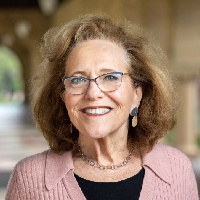
Hazel Markus, PhD (Photo: LiPo Ching)
“Today, culture is woven into the field of psychology,” said Batja Mesquita, PhD, a professor at the University of Leuven in Belgium who studies the role of culture in emotions. Not so long ago, however, culture was seen largely as something that existed outside of the core mechanisms of the mind. Then in 1991, Hazel Markus, PhD, now a professor of psychology at Stanford University, and Shinobu Kitayama, PhD, a professor of psychology at the University of Michigan, teamed up to develop a framework that described how culture influenced the development of the self and, in turn, the psychological processes that make us human.
Shinobu Kitayama, PhD
Markus and Kitayama weren’t the only researchers beginning to shine a light on culture around this time. “It was part of a zeitgeist,” Mesquita said. But the paper has had lasting influence, thanks in part because it provided a clear, systematic framework to describe how culture could exert broad influence across cognition, emotion, and motivation. “It was one of the first papers that really brought home the idea that culture is not peripheral to the mind. It’s a part of the basic processes we study in psychology,” Mesquita said.
Through the second half of the 20th century, the cognitive perspective reigned. “The human mind was supposed to be like a computer, and a Mac is a Mac whether you’re in the United States or Asia or Africa,” Kitayama said. “If that’s the case, it makes sense to ignore contextual variables, including culture, to look deeply into the nature of this computing machine.”
But that view didn’t entirely square with Kitayama’s observations. In his native Japan, psychological research was booming. Yet scientists there often failed to replicate accepted research findings from the West, such as attribution theory (which explains how people interpret the causes of behavior) or cognitive dissonance (the mental discomfort that occurs from holding contradictory beliefs).
At first, he assumed he and his Japanese colleagues must be missing something or making some kind of error. Then he went to graduate school at the University of Michigan and discovered that his fellow scientists, while intelligent, weren’t any more brilliant than his friends back home. “My conclusion was there must be a different reason that some psychological processes looked different in Japan. There was the possibility that culture was having an important impact,” he said.
The University of Michigan, where Markus was then a faculty member, had a long-standing scholar exchange program with Japanese universities. Several times in the 1980s, Markus spent time in Japan through that program. Back in the Midwest, she met Kitayama, who completed his PhD in 1987. As the two compared notes, they began to flesh out a theory of the different ways Eastern and Western cultures influenced psychological processes.
Their framework described two different types of cultural systems. In America, the culture was more independent, with an emphasis on individuality. In Japan, a more interdependent culture, there was a greater focus on fitting in and coexisting with others. Those differences, Markus and Kitayama proposed, would have strikingly different consequences for cognition, emotion, and motivation—indeed, for the entire concept of oneself. “This interaction between culture and the mind is very complicated, but you can sort things out and simplify by focusing on the self,” Kitayama said.
When taking culture into account, so-called “universal” traits and processes turn out not to be so absolute after all. Take cognitive dissonance, for example. If an American buys an expensive car but feels guilty about it, they’re likely to justify their decision—reminding themselves of the car’s excellent safety features, for example—even if no one is outwardly criticizing them. East Asian people didn’t seem to experience cognitive dissonance, Kitayama said. But when he looked more closely, he found the dissonance effect was missing only when the choice was private. If a respected individual questioned their choice, East Asians experienced cognitive dissonance and felt the need to justify it. In other words, social cues drove the dissonance effect—a result that would be expected in the context of an interdependent culture (Psychological Science, Vol. 15, No. 8, 2004opens in new window).
While the differences between Eastern and Western selves were eye-opening, the researchers never intended to suggest that only two types of self existed, Markus explained. Rather, the paper was a starting point. “The most important thing from my perspective was to use cultural comparison to hold a mirror up to the white middle-class West and show that as soon as you move outside that context, things look really different,” she said. “If your self takes a different form, it will influence your cognition, your emotion, your affect, your motivation, as well as your interpersonal relations.”
In the 30-odd years since their paper was published, Markus, Kitayama, and psychological scientists around the world have amassed a body of evidence that shows culture is indeed central to basic psychological processes. That research has identified other cultural systems beyond North American independence and Asian interdependence and has described how those systems affect the ways we think, act, and feel—findings with implications for education, communication, public health, economic development, global affairs, and beyond.
Shinobu Kitayama (front, right) with members of his Culture & Cognition Lab at the University of Michigan
Culture and the self today: mixed emotions
When Markus and Kitayama published their paper in 1991, Mesquita was already studying cultural differences in emotions and struggling with how to conceptualize them. “This paper, describing different selves, gave me a helpful way to think about it,” she said.
Individualist cultures define the self as a distinct entity, while collectivist ones define the self in relation to others. Similar differences show up in our experiences of emotion. “There are cultures where emotions are mostly inside feelings and cultures where emotions are primarily relational acts that happen between people,” she said—concepts she describes as “mine” emotions and “ours” emotions in her book Between Us: How Cultures Create Emotions (W. W. Norton & Company, 2022). In an independent culture, a manager might check a new employee’s face to suss out how he’s adjusting. In an interdependent culture, the boss might also look at the faces of the new employee’s office mates for clues (Journal of Personality and Social Psychology, Vol. 94, No. 3, 2008opens in new window).
Those differences have implications for the ways we regulate our feelings. Researchers have found, for example, that in individualist cultures, behaviors like ruminating and suppressing one’s emotions are both associated with worse mental health. But in more interdependent countries, those strategies are unrelated to, and may even improve, mental health (Tamir, M., et al., American Psychologist, Vol. 79, No. 5, 2024opens in new window).
Batja Mesquita, PhD
Mesquita has investigated cultural differences in people’s emotional experiences. In one example, she and her colleagues asked students from the United States, Japan, and Belgium to imagine their emotional responses to hypothetical situations that could provoke feelings of anger or shame. People from all three countries described experiencing the emotions, but different situations triggered different patterns of responses. When angry, for instance, participants from different cultures tended to show different patterns of frustration, self-blame, other-blame, or aggression in response to one situation or another. “Not everybody experiences anger and shame in the same way,” she said. “In every culture, there are different types of experiences attached to those emotions.”
Her research showed that certain patterns of emotion were dominant in each culture. Differences in the dominant experiences of emotion were so distinct, in fact, that a participant’s cultural origin could be predicted with 72% accuracy based on their dominant profile of anger, and with 74% accuracy for their dominant profile of shame (Emotion, Vol. 18, No. 8, 2018opens in new window). “It’s not that culture is a homogenous way of experiencing emotions, but it does structure the kinds of experience people associate with certain emotional labels,” she said.
Mesquita has also explored emotions between romantic couples as they discussed subjects they disagreed about, comparing couples from individualistic Belgium and interdependent Japan. The Belgian couples were more likely to highlight self-assertive emotions like annoyance, while Japanese couples emphasized more other-focused emotions like empathy (Emotion, Vol. 22, No. 5, 2022opens in new window). And, at least in the Belgian group, couples who had more culturally typical interactions reported better functioning in their relationships. “We find very different trajectories of conflict [in the different cultures], even though the intensity or importance of the conflict subjects were very similar,” Mesquita said.
Cultural differences in emotion have important practical implications too—for psychotherapists who help clients with emotion regulation, relationship harmony, or any of the many ways that emotions touch on their daily lives, and for anyone trying to understand people better. “Emotions are a way of being in the world. They signal what people find important and the kinds of relationships they value,” Mesquita said. “If we want to have any chance of crossing boundaries, we have to understand emotions as meaningful and logical within a certain cultural context.”
Culture and the self today: making international development culturally wise
Beyond the realm of emotions, psychologists have also found evidence to support Markus’s and Kitayama’s predictions that culture would have important effects on cognition and motivation. As those findings have accumulated, they’ve led to measurable impacts in real-world settings.
Hazel Markus, PhD, and Catherine Thomas, PhD
Catherine Thomas, PhD, an assistant professor of psychology at the University of Michigan and former doctoral student of Markus’s, studies the importance of cultural responsiveness in reducing poverty and inequality. “If there’s one place that needs cultural psychology the most, it might be international aid—where you have people from Western, high-income contexts trying to reach low-income, low-literacy populations,” usually from different racial, ethnic, and geographic backgrounds, she said. “Being responsive to culture in these contexts matters not only in terms of ethics but also in terms of effectiveness.”
During her dissertation research, Thomas worked with Markus, Greg Walton, PhD, also a professor of psychology at Stanford, and colleagues to test what she describes as “culturally wise” interventions in West Africa. Their study population involved “the lowest-income women in the lowest-income areas of Niger, which is one of the lowest-income countries in the world,” she said. The government was establishing a social safety net program that provided low-income women economic supports including cash transfers, business training, and savings groups (small community-based groups through which individuals can save or borrow money when financial institutions are absent or inaccessible). The team wanted to integrate psychosocial interventions into the program to support women’s economic empowerment. However, most evidence-based psychosocial interventions have been developed in WEIRD contexts. Thomas wanted to know whether making the interventions more culturally wise would increase women’s motivation toward financial goals and improve their economic outcomes.
Looking at different mental models of economic success, the researchers found that the typical Western approaches focused on factors related to self-regulation, such as taking initiative and being future oriented. In more collectivist Niger, people were more likely to associate success with factors related to social harmony and respect for others. The team’s next step was to compare different interventions based on those differing perspectives.
The women in the study were randomized to receive one of two 30-minute coaching sessions. The first was an evidence-based intervention developed in a Western context, centered around the self-regulation strategy of using implementation intentions to achieve personal goals. The second was similar in format, but it framed goal pursuit in terms of social duties, family responsibilities, and collective benefit—an approach tailored to Niger’s interdependent cultural style (World Bank Group Policy Research Working Paper 10824, June 2024opens in new window). "We found that only the culturally wise intervention produced significant effects at one year, on measures of business outcomes and food security,” Thomas said.
In other words, when it comes to motivation and success, culture counts. “Copying and pasting approaches from Western settings may have limited impact when cultural context isn’t accounted for,” Thomas said.
Future focus
As students and colleagues have built on their original framework, Markus and Kitayama have also continued to extend their findings across cultures and psychological domains. Kitayama’s Culture & Cognition lab explores how culture shapes the mind and the brain, with recent projects venturing into genetic, epigenetic, and neural differences in addition to behavioral variations. Markus examines the ways that people shape and are shaped by their cultural environments, and as codirector of Stanford SPARQ, she applies what she’s learned to address social disparities and spark culture change in schools, workplaces, and other real-life contexts.
Researchers have also moved beyond the East-West dichotomy to describe cultural patterns in other parts of the world. The work reveals that non-Western societies tend to be interdependent—a conclusion that isn’t unexpected given the finding that individualism is a relatively recent invention, emerging only in the last several hundred years, Kitayama said. Yet different non-Western societies also emphasize different ways of being interdependent, his research shows (American Psychologist, Vol. 77, No. 9, 2022). In one set of projects, Kitayama and Thomas are working with Cristina Salvador, PhD, a social and cultural psychologist at Duke University, to better understand these unique cultural dynamics in regions across the globe. For instance, self-effacing interdependence characterizes East Asia, while expressive interdependence characterizes Latin America (Salvador, C. E., et al., Emotion, Vol. 24, No. 3, 2024). “It’s not just about adaptations to the idiosyncrasies of one particular country or group but recognizing that whole regions have culturally unique psychological foundations,” Thomas said.
Another next step, Kitayama added, will be to look beyond geography to understand the forces that create culture and, in turn, shape the self. “To understand what you’re finding, you have to bring in the time dimension, history, ecology, geography, and evolution into the theoretical scope. I think that’s where the field is going,” he said.
As important as it is to broaden that scope, it’s just as worthwhile to narrow the lens, looking at cultural differences that exist within our own backyards, Markus said. There are numerous cultural differences in the United States, including those of race, ethnicity, gender, sexual orientation, educational attainment, socioeconomic class, political party, and regional geography. “We still don’t really understand the many selves common in our American contexts and what intersections of cultural contexts animate them,” she said. “Science requires universals, but I think the universal is the amazing human capacity to be shaped by our contexts.”
For more than 100 years, APA’s journals, books, and databases have provided top-quality psychological research content to scholars around the world. This series revisits key papers published in APA journals that continue to shape the field decades later.