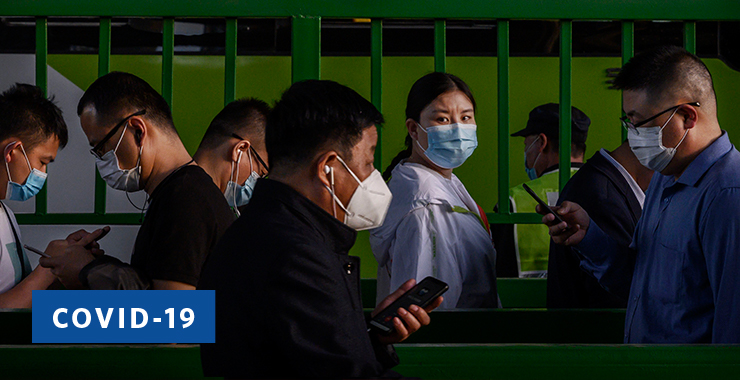
Six months into the COVID-19 pandemic, China seems to have brought its infection rate under control. But now a new crisis is beginning—the trauma and other mental health concerns the illness has brought to both health-care professionals and the general public alike, says Buxhin Han, PhD, president of the Chinese Psychological Society.
COVID-19 has created a “public mental health crisis,” researchers agree (Dong, L., and Bouey, J., Emerging Infectious Diseasesopens in new window, Vol. 26, No. 7, 2020). COVID-19 survivors and front-line health-care professionals are experiencing depression, anxiety, and post-traumatic stress disorder (PTSD), while the public is struggling to overcome anxiety, fear, and lockdown’s psychosocial impact. And this “parallel epidemic” may increase the risk of infection, warn other researchers (Yao, H., et al., The Lancet Psychiatry, Vol. 7, No. 4, 2020). Cognitive impairment, lack of awareness of the risks and the importance of personal protection, confined conditions in psychiatric wards and lack of access to health care because of stigma may render those with serious mental illness more vulnerable to infection, for example. Co-morbid mental health problems may also make COVID-19 treatment more challenging—and possibly less effective, the researchers add.
Han and other Chinese psychologists have been sharing lessons learned about mitigating COVID-19’s psychological impact during an ongoing series of calls with top leaders of APA and psychological associations from around the world. APA’s Office of International Affairs organizes and chairs the calls.
Chinese psychologists suggest several strategies.