Modernist design was, in part, a response to the tuberculosis epidemic of the early twentieth century (Colomina, B., X-Ray Architectureopens in new window, Lars Müller Publishers, 2019). Medical centers for treating and containing the disease embraced open spaces and minimal interiors—and such design choices had psychological implications.
“A white, pared down space feels clean, while big windows give people a sense of connection to the outdoors, fresh air, and sunlight,” says Nélida Quintero, PhD, a New-York based environmental psychologist and architect who works as a consultant and adjunct professor at the Fashion Institute of Technology.
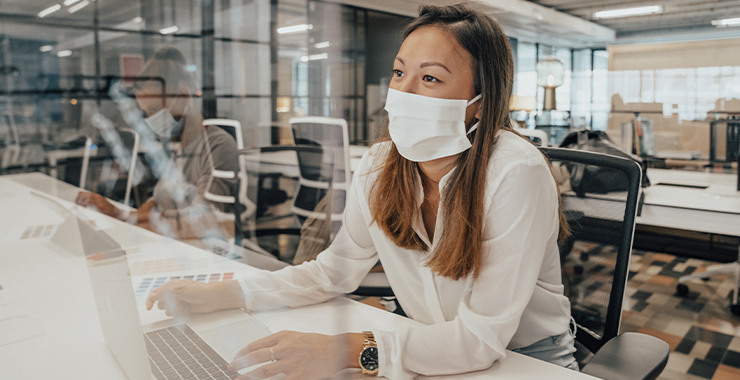
Like tuberculosis, COVID-19 is changing our public and shared spaces, Quintero says. Easy-to-clean surfaces, contactless technology, and layouts conducive to physical distancing and air flow are now in vogue.
Environmental psychologists, who study human interactions with both the natural and built environment, are starting to consider how best to modify spaces like schools, offices, and grocery stores. They’re conducting new research and applying existing findings on factors including risk perceptions and trust-building to provide designers, architects, and business owners with evidence-based recommendations on making public spaces feel safer.
“An important role of environmental psychologists—and social scientists in general—is to collaborate with designers,” says Setha Low, PhD, a professor of environmental psychology, anthropology, geography, and women’s studies and founding director of the Public Space Research Groupopens in new window at the City University of New York. “Our focus on data can provide them with much-needed evidence on the interface between people and place.”