skip to main content

How to safely manage and dispose of medications

APA Style leaf logo Cite This Article in APA Style
American Psychological Association. (2024, October 15). How to safely manage and dispose of medications. https://www.apa.org/topics/substance-use-abuse-addiction/safe-medication-disposal

How to safely manage and dispose of medications

Over 214 million opioid prescriptions were dispensed by pharmacies in the United States in 2016. Opioids in the home present risk for both misuse and accidental exposure. More than 80% of those who misuse prescription opioids obtained them from a prescription or from a friend or family member (Richesson et al., 2024). Thus, the safe management and disposal of these medications are critical components of addressing the opioid epidemic.

Discussion of medication storage and disposal is indicated for all patients, not only for those with concerns about potential misuse. Here are a few guidelines:

  • Prescribed medications should not be shared with anyone else.
  • If an opioid prescription is needed, store it in a location that is not easily accessible by others.
  • Medications should be stored out of the reach of children and should be locked if possible.
  • Medications should be closely monitored to ensure pills are not missing, especially if someone who lives in or has access to the home has a known substance use disorder.

Once a prescription is no longer needed or expired, it should be disposed of as soon as possible. Pharmacies have implemented a number of new programs for medication disposal; contact your local pharmacy to ask about these options. For example, in January 2018, Walmart began providing a free kit for safe disposal of opioid medications to anyone filling an opioid prescription. Other national pharmacy chains have also added options, such as confidential drop-off locations.
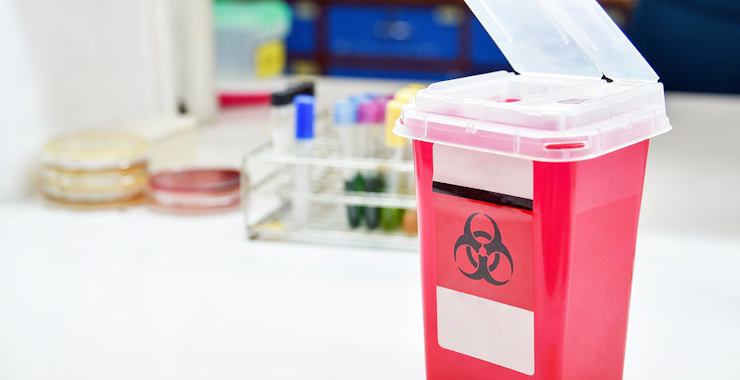
Options for safe prescription disposal

Safe disposal locations

An array of public locations will accept unused medications for safe disposal, such as pharmacies, police stations, and health clinics. To find a location in your area you can either (a) call your local pharmacy or law enforcement agency or (b) use web resources such as Dispose My Medsopens in new window or search for “safe medication disposal” in your favorite search engine.

Confidential self-drop-off locations

A number of organizations such as state and local public health departments sponsor confidential kiosks where medications can be safely disposed. Information about such kiosks should be available on your state or local government’s public health department page. Confidential kiosks are also available at some pharmacies, such as Walgreens and CVS.

Mail-back programs

Some pharmacies will also provide envelopes for mailing unused medications for safe disposal. Call your local pharmacy for more information on whether this is an option.

Medication take-back-events

A number of organizations such as the Drug Enforcement Agency, local law enforcement, and local pharmacies frequently sponsor medication take-back days when you can bring unused medications to a preidentified collection site. These events can be identified using local news sources or through a web search.

At-home disposal

Disposing of medications via a safe disposal location is strongly recommended. Flushing medications down a toilet or other drain presents potential environmental risks and should be avoided. However, the FDA also has recommendations for at-home disposal in the trash if such locations are not available or if use of a safe disposal location is not feasible.

Follow these simple steps to dispose of medicines in the household trash

  • Mix: Mix medicines (do not crush tablets or capsules) with an unpalatable substance such as dirt, cat litter, or used coffee grounds.
  • Place: Place the mixture in a container such as a sealed plastic bag.
  • Throw: Throw the container in your household trash.
  • Scratch out: Scratch out all personal information on the prescription label of your empty pill bottle or empty medicine packaging to make it unreadable; then dispose of the container.

References

Richesson, D., Magas, I., Brown, S., Linman, S., & Hoenig, J. M. (2024, July). “Key Substance Use and Mental Health Indicators in the United States: Results from the 2023 National Survey on Drug Use and Health.” Substance Abuse and Mental Health Services Administration. https://www.samhsa.gov/data/sites/default/files/reports/rpt47095/National%20Report/National%20Report/2023-nsduh-annual-national.pdfopens in new window

Recommended Reading

You may also like