

The following is an interactive data tool on the areas of specialty for health service psychologists based on data collected from the APA’s 2021 Survey of Health Service Psychologists. Users can explore the demographic, educational, and practice characteristics of the health service psychologist workforce across different areas of specialty.
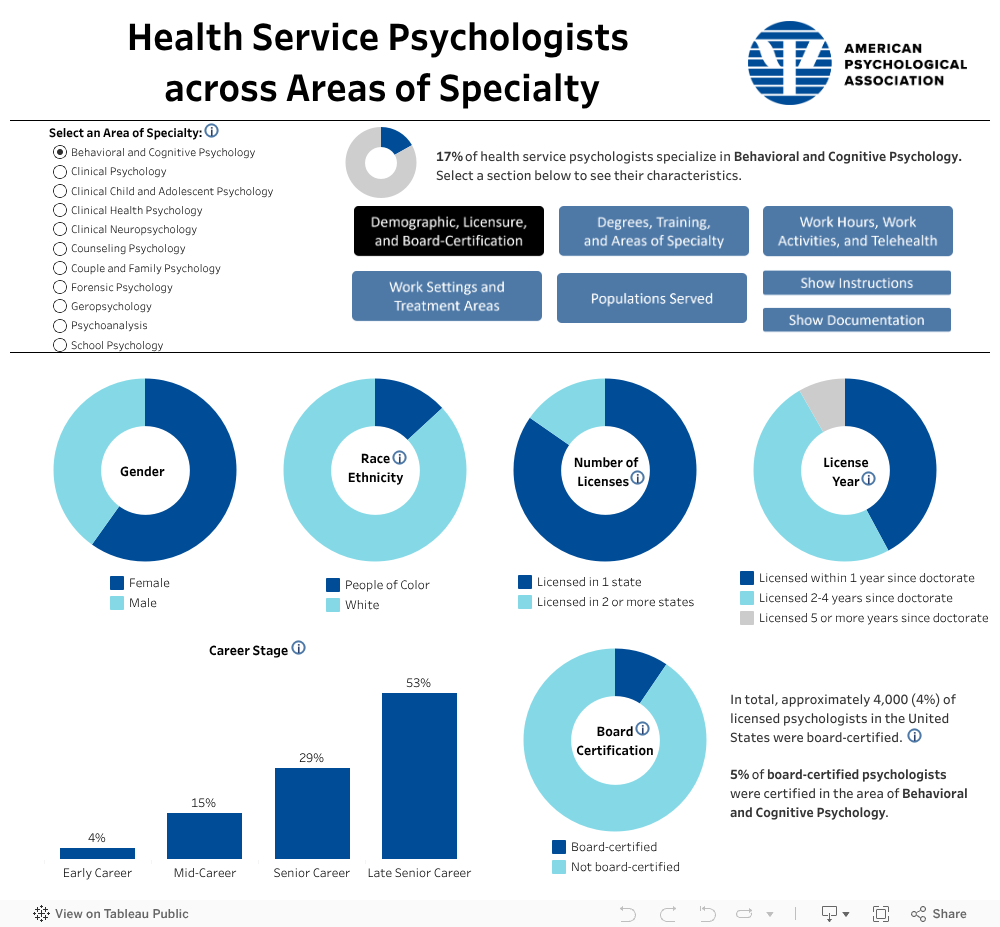
Unless otherwise noted, all data are from the APA’s 2021 Survey of Health Service Psychologists (April 2021, N = 842). The survey included doctoral-level licensed psychologists in the United States who provide direct patient/client care.
While the specialty areas listed are those formally recognized by APA, the results are based on respondents’ self-reported primary or secondary areas of specialty with which they identify. Not all specialty areas were included due to small sample sizes for some specialty areas. Readers are encouraged to review APA policies defining specialty and language used to describe programmatic education and training in APA recognized specialties:
- The definition of a specialtyopens in new window
- The taxonomy for education and training in professional psychology health service specialties and subspecialtiesopens in new window
- The Commission for the Recognition of Specialties and Subspecialties in Professional Psychology (CRSSPP)
People of color included the following racial/ethnic groups: American Indian/Alaska Native, Asian, Black/African American, Hispanic, Native Hawaiian/Pacific Islander, and other racial/ethnic groups not listed. Due to small sample sizes, these population groups were combined to reflect the total percentage of people of color in the psychologist workforce within a given specialty area. APA has developed a framework to guide our long-term commitment to infuse Equity, Diversity, and Inclusion (EDI) into all we do. APA is in the process of streamlining a set of demographic questions to better evaluate trends of the psychology workforce over time. While the current racial/ethnic question does not include the Arab American, Middle Eastern, or North African category, future surveys can be improved by including this response option. Future research will also look into additional research methods better suited for small population groups such as the American Indian/Alaska Native populations and the Native Hawaiian/Pacific Islander populations. These efforts will help present a more nuanced and comprehensive picture of the psychologist workforce.
Visit APA’s 2021 Survey of Health Service Psychologists webpage for more information about the survey.
Recommended citation
American Psychological Association. (2022). Health Service Psychologists across Areas of Specialty [Interactive Data Tool]. Retrieved [Insert date here], from https://www.apa.org/workforce/publications/health-service-psychologists-survey/specialty-areas