This page has been archived and is no longer being updated regularly.
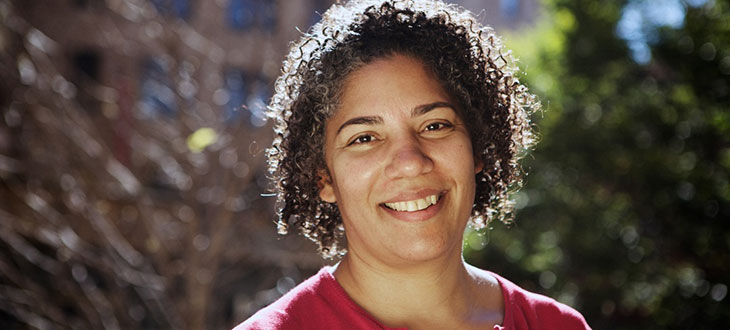
Jennifer Manly, PhD
Neuropsychologist
“One of the overarching positive outcomes of my research is that people interested in reducing disparities in cognitive aging are realizing that a powerful way to do that is to continue to improve early childhood education for everyone.”
Alzheimer's Differences
Jennifer Manly, PhD, researches how people’s cultural experiences — especially the quality of their early education — affect their brains as they age.
Manly was intrigued when she saw research data showing that elderly African-Americans and Hispanics exhibited higher rates of Alzheimer’s disease than elderly whites. She launched a research project in the neighborhood near Columbia University, where she works, to study how cultural and educational differences might affect the development and diagnosis of Alzheimer’s. “I want to get people into the study who wouldn't normally be researched,” she says. “We go out and see them in their homes. That’s a really cool thing most psychologists don’t do.” The project administers a medical interview followed by standard neuropsychological testing.
Dr. Manly in Action
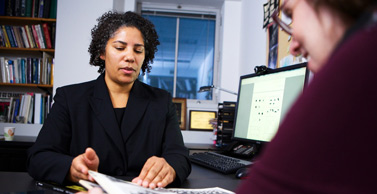
Getting Together
Dr. Manly discusses her research with a colleague.
Team Spirit
Dr. Manly briefs her research team.
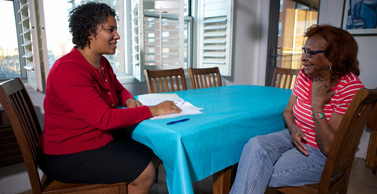
House Calls
Dr. Manly meets with her research subjects in their homes.
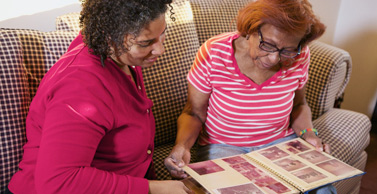
Picture This
Reviewing old photo albums helps Dr. Manly learn about a research subject's early life experiences.
Learning from Data
Sharing data with colleagues can spark new lines of questioning.
Looking Beyond Genetics for Answers
Manly discovered that most of the African-Americans living in the neighborhood she was studying grew up in the South in segregated schools, many of them in rural areas. “I found that your length of school year, the amount of money that the schools spent on students per year and your student-teacher ratio explain how well you do on memory, executive function and language tests in older age across race,” she says. So while many researchers were looking for genetic causes of Alzheimer’s among African-Americans, Manly discovered an educational element. When she compared the results of memory tests of African-Americans to white Americans who had received the same quality of childhood education, Manly found no difference in the rate of cognitive decline.
As a result of Manly’s research, clinicians studying such maladies as HIV/AIDS, multiple sclerosis and head injuries are also looking at school quality as a possible factor for cognitive impairment. Noting that research data are not always properly applied to answer key questions, she says, “I strongly believe that we should use science to get to the right answers.”
Brain Science and Cognitive Psychology at Work
Studying Brains as We Age
Neuropsychologist Jennifer Manly, PhD, examines how people's cultural experiences affect their brains as they age. She has found connections between poor early education and later cognitive impairment.
Literacy's Impact on Memory
Another area Manly is studying is how the literacy level of older people might affect changes in the sharpness of their memory over time. “I found that elders with both high and low levels of literacy declined in immediate and delayed memory over time,” she says. “However, the decline was more rapid among low literacy elders.” This suggests that high literacy skills don’t provide complete preservation of memory skills but rather help slow age-related decline.
“One of the overarching positive outcomes of my research is that people interested in reducing disparities in cognitive aging are realizing that a powerful way to do that is to continue to improve early childhood education for everyone,” she says.
Brain Science and Cognitive Psychology
Psychologists working in the field of brain science and cognition study how the human mind thinks, remembers and learns. They use psychological science to understand how we interpret events and make decisions.