

Educators can use the following links to jump to a specific section of this page:
Disability and Neurodiversity: Development and Learning Pillar
Resources to help broaden disability and neurodiversity representation across the development and learning pillar of APA’s National Standards for High School Psychology Curricula
Research summaries
Suggested instructions: Research summaries can be incorporated into a lecture or shared with students as a reading to demonstrate how psychological science explores the diversity of human experience. These resources can also be used to encourage students to identify the major components of a research study (i.e., the hypothesis or study question, sample, method, and findings). Students can be asked to identify potential limitations of the study and encouraged to discuss the implications for our understanding of human behavior. Keywords highlight how concepts within and across pillars are incorporated into a single research study.
Sample research summaries
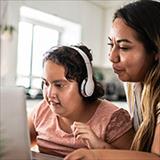
Learn how the involvement of autistic individuals in research might transform the way autism is understood and discussed in the scientific world

Uncover the unique stories of women seeking autism diagnosis in adulthood, captured through the lens of their own cameras
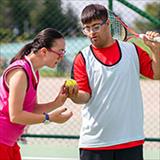
The relationship between physical activity and self-efficacy in children with disabilities
This study on the power of sports is a must-read for anyone interested in how we can help kids with disabilities feel more confident
Psychologist profiles
Suggested instructions: Profiles can be shared with students to enhance the visibility of psychologists of diverse backgrounds. As an additional activity, students can be asked to conduct research to learn more about the psychologist and their work. An alternative assignment could be to ask students to find other psychologists of diverse backgrounds whose work falls into this content pillar. Keywords highlight how psychological scientists study concepts within and across pillars.
Sample psychologist profiles

Barbaro’s groundbreaking research merges neurodiversity affirmation with innovative methods for identifying autism in young children

Pearson is an autistic researcher who uses creative research strategies to understand friendship, bullying, and other aspects of autism

A deaf psychologist who studies advocacy and how we can all become better allies to the disability community
Additional resources
Suggested instructions: Additional resources are provided as supporting instructional aids for teachers to use in class.
Charts
- Centers for Disease Control and Prevention. (n.d.). Data and Statistics on Children's Mental Health. Retrieved January 13, 2024, from https://www.cdc.gov/childrensmentalhealth/data.htmlopens in new window
This chart shows variation in depression, anxiety, and behavior disorders by age. Additional information on this web page adds fascinating context, like how poverty and racism impacts mental health.
Videos
- Purple Ella. (2021, September 21). Autistic stimming explained [Video]. YouTube. https://www.youtube.com/watch?v=BNBUHlXtA3gopens in new window
This is a first-hand account from a woman with late-diagnosed autism. She describes what stimming means to her and reflects on childhood experiences of how people reacted to her stimming behavior.
Article summary
- Babik, I., & Gardner, E. S. (2021). Factors affecting the perception of disability: A developmental perspective. Frontiers in Psychology, 12, Article 702166. https://doi.org/10.3389/fpsyg.2021.702166opens in new window
This article examines how children and adolescents perceive disabilities. It investigates why some children might have negative attitudes towards disability, which can lead to social exclusion of individuals with disabilities. The study explores the development of these perceptions through cognitive (how people think), affective (how people feel), and behavioral (how people act) aspects. This is a review article, so it aims to combine the findings of several research studies about this topic. The findings suggest that how we perceive disabilities is shaped by factors at various levels—individual beliefs, family and school environment, and broader societal attitudes. The research emphasizes the need for interventions to improve children’s attitudes towards peers with disabilities, aiming to reduce biases and promote social inclusion.
Profile
Many psychologists and other professionals with autism are leaders in research and advocacy aimed at improving the lives of people with autism. For example, TC Waisman, EdDopens in new window, who was diagnosed as autistic in adulthood, and who holds a doctorate in leadership, policy and governance, collaborates with developmental psychologist Kristen Gillespie-Lynch, PhDopens in new window, on ways to improve the experiences of students with autism in higher education. Students can learn more about Waisman’s unique experiences as a Black, Indigenous Pasifika, autistic, nonbinary person whose career path broadened from organizational leadership and coaching to include education and training on how universal design principles can be used to create more inclusive and accessible learning and work environments after she received her diagnosis at their websiteopens in new window. They can also explore some of their notable publications listed below.
- Jones, D. R., Nicolaidis, C., Ellwood, L. J., Garcia, A., Johnson, K. R., Lopez, K., & Waisman, T. C. (2020). An expert discussion on structural racism in autism research and practice. Autism in Adulthood, 2(4), 273–281. https://doi.org/10.1089/aut.2020.29015.drjopens in new window
- Waisman, T. C., Williams, Z. J., Cage, E., Santhanam, S. P., Magiati, I., Dwyer, P., Stockwell, K. M., Kofner, B., Brown, H., Davidson, D., Herrell, J., Shore, S. M., Caudel, D., Gurbuz, E., & Gillespie-Lynch, K. (2023). Learning from the experts: Evaluating a participatory autism and universal design training for university educators. Autism, 27(2), 356–370. https://doi.org/10.1177/13623613221097207opens in new window
The development of resources to broaden diversity and representation in the teaching of high school psychology resources is an APA Committee of Teachers of Psychology in Secondary Schools initiative supported by funding from the American Psychological Foundation David and Carol Myers Fund. This resource was developed by Kara Ayers, PhD; Emily Lund, PhD; Erika Sanborne; and Allison Shaver.
Date created: July 2024