Baby Talk
 Babies find it easier to learn the names of objects when those names include repeating syllables, suggests a study in Language Learning and Development. Researchers showed 24 babies pictures of two novel toys. One toy was described with a nonsense name with repeating syllables (like "nee-nee") and one with a name with non-repeating syllables (like "bolay"). Later, the babies were more likely to associate the correct name with the toy when it was a repeating-syllable name. The researchers say that this may be why many "baby talk" words and phrases include repeated syllables, like "choo-choo" and "night-night."
Boys at risk
Teen boys who attempt suicide face more risk factors for heart disease in their twenties, according to a study in Health Psychology. The researchers found that among 8,000 young adults, young men who had attempted suicide as teens had significantly higher blood pressure and more systemic low-grade inflammation than those who had not. Young women did not follow this pattern, but the researchers did find that young adult women who had been close with someone else who attempted suicide as a teen were more likely to be overweight or obese and to have high blood pressure as young adults.
Kodachrome moments
 Taking photos can increase people's enjoyment of positive experiences, despite a commonly held belief that photo taking distracts people from enjoying their surroundings, according to a study in the Journal of Personality and Social Psychology. Researchers asked more than 2,000 participants to either take photos, or not, while doing things such as eating a meal, visiting a museum or taking a bus tour. In almost every case, photo-takers reported higher levels of enjoyment and engagement in the experience than people who didn't take photos. However, when people were doing something unpleasant, taking photos made the experience even more unpleasant for them.
Of mice and memory
Mice need REM sleep to form long-term spatial memories, suggests a study in Science. Researchers used a type of targeted light to disturb neurons associated with memory in the hippocampus during the mice's REM sleep cycles. The next day, those mice were less likely to remember the location of an object that they had learned about the previous day, compared with mice whose REM sleep had not been disturbed.
Generational barriers
A language barrier between immigrant parents and their children may contribute to teens' behavior problems, suggests a study in the Journal of Research on Adolescence. Researchers observed interactions between 674 pairs of young teens and mothers, all of Mexican origin, and then measured self-control and aggression in the teens. They found that positive discipline and warm parenting increased self-control and decreased aggression in the children, but only when the mother and teen were proficient in a common language. The researchers suggest that this is because the language barrier makes it more difficult to have complex conversations about, for example, parents' rules or teenagers' concerns.
Healing after war
Reconciliation programs in societies torn by civil war can promote societal healing, but at the same time worsen psychological health for some individuals, suggests a study in Science. Researchers looked at the effects of one of these "truth and reconciliation" programs, which bring victims and perpetrators together to recount and confess to atrocities in a war's aftermath. The study included 2,383 people from 200 villages in Sierra Leone. The researchers found that villages with a reconciliation program saw increased social capital—more forgiveness of perpetrators and stronger social networks—but that victims in those communities had more depression, anxiety and PTSD than victims in villages without the program.
Commuting woes
 Children whose fathers commute a long distance to work face more emotional and social problems, suggests research in the Journal of Family and Economic Issues. The analysis of data from a nationally representative sample of German workers found that 5- and 6-year-old children with fathers who commuted more than 24 miles each way had lower levels of prosocial behaviors than other children their age, and that those whose fathers commuted more than 37 miles each way had more problems with peers, even after adjusting for parents' work hours, education and other factors. The researchers hypothesize that parental stress and fatigue may explain the link.
Recovery from depression
About two in five adults with major depression recover complete mental health, defined as almost daily happiness or life satisfaction; positive social and psychological well-being; and freedom from depression, anxiety and suicidal thoughts for one full year, according to a study in Psychiatry Research. The researchers examined a nationally representative sample of 2,500 Canadians who had experienced major depression. They found that the length of the depressive episode did not correlate with recovery, but that people with good social support and good physical health were more likely to recover.
Mother tongue
Many areas of a child's brain respond more strongly to his or her mother's voice than to a stranger's voice, according to research in Proceedings of the National Academy of Sciences. Researchers used fMRI to measure brain activity in 24 children as they listened to their mothers' voices and to strange women's voices reading nonsense words. Brain areas involved in auditory processing, emotion and reward processing, social functions and face recognition all responded more strongly to the mothers' voices. Children whose brains showed more connection among these regions when hearing Mom's voice also had stronger social communication skills, as measured by a parent questionnaire.
An integrated look at pediatric sleep
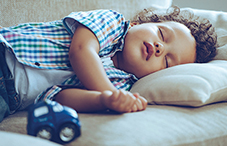 Three journals published coordinated special issues in June focusing on improving sleep in children with chronic illnesses and developmental disorders. APA's Clinical Practice in Pediatric Psychology, the Journal of Pediatric Psychology from Div. 54 (Society of Pediatric Psychology) and the Journal of Developmental and Behavioral Pediatrics from the Society for Developmental and Behavioral Pediatrics teamed up to highlight new research on sleep in children with autism, ADHD, chronic pain, diabetes and other conditions.
"For researchers, the quality of the studies across these three journals shows the benefits of longitudinal study designs, the importance of including objective and subjective measures of sleep, and the value of including sleep as a variable of interest," Lisa J. Meltzer, PhD, of National Jewish Health in Denver, wrote in the introduction to the CPPP special issue. "In addition, for clinicians, it is my hope that the diversity of papers included in the three journals will serve as inspiration and motivation to integrate sleep into their clinical practices, whether through a simple screening, a detailed intervention, or somewhere in between."
Cutting calories
Color-coded or numeric calorie labels could reduce calorie consumption by as much as 10 percent, according to a study in the Journal of Public Policy and Marketing. Researchers studied employees at a large corporation who could order lunch from the company cafeteria via an online portal. When the researchers added color-coded "traffic light" labels to the menu items—red for high-calorie, yellow for medium and green for low—total calories ordered went down by about 10 percent. A numeric calorie-rating system had a similar effect, also reducing calories ordered by about 10 percent.
Autism therapy
Telehealth training could help parents provide therapy to their children with autism, suggests a pilot study published in the Journal of Autism and Developmental Disorders. Twenty-eight parents completed a 12-week, self-directed online course on an autism intervention, and half of the participants also received two 30-minute coaching sessions a week with a therapist, via video-conferencing. Parents in both groups learned to use the intervention technique, though those with coaching made greater gains. Children in both groups improved their language skills, and children in the therapist-assisted group also improved in social skills.
Should "birdbrain" be a compliment?
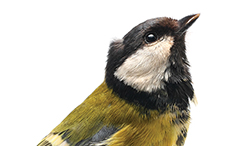 Birds' brains contain many more neurons than mammalian brains of the same mass, according to a study in the Proceedings of the National Academy of Sciences. The neurons in avian brains are smaller and more densely packed, the researchers found. So, for example, a macaw parrot brain the size of a walnut has more neurons than a macaque monkey brain the size of a lemon. This may explain why some birds can accomplish such complex cognitive tasks as planning for the future and finding patterns, despite having relatively small brains.
Off-label antidepressants
Primary-care doctors frequently prescribe antidepressant medications for nondepressive symptoms, according to a study in the Journal of the American Medical Association. The research examined prescription records from an electronic medical record system used by primary-care physicians in Quebec. Of the 101,759 antidepressant prescriptions written by 158 doctors from 2006 to 2015, the researchers found that only 55 percent were indicated for depression. Eighteen percent were prescribed for anxiety disorders, 10 percent for insomnia, 6 percent for pain and 4 percent for panic disorders.
Teens and marijuana
Adolescents' use of marijuana and rate of marijuana use disorders fell from 2002 to 2013 in the United States, according to research in Child and Adolescent Psychiatry. Researchers analyzed data from 216,000 teens collected as part of the National Survey on Drug Use and Health. In 2002, 16 percent reported using marijuana during the previous year; in 2013 it had dropped to 14 percent. In 2002, 4 percent of teens reported marijuana-use disorders such as becoming dependent on the drug; in 2013, it was 3 percent.
College drinking
Alcohol intervention programs don't work for college fraternity members, suggests a meta-analysis in Health Psychology. Researchers analyzed 15 studies that spanned 25 years and included 21 different interventions and 6,026 total participants (18 percent women in sororities and 82 percent men in fraternities). They found that the interventions had little or no effect on alcohol consumption, frequency of heavy drinking, frequency of drinking days or incidence of alcohol-related problems.
Jog your memory
 Need to remember something? Once you've learned new information, exercising four hours later can help you retain it, suggests new research in Current Biology. In a study of 72 participants, researchers found that people who exercised four hours after a learning session were better able to recall what they'd learned two days later compared with those who exercised either immediately or not at all. The researchers do not yet know what triggered the exercisers' better memories.
Alcohol and stress
Drinking during adolescence could increase vulnerability to stress later in life, suggests a rat study in Brain Research. The researchers gave rats alcohol every other day starting in early- to mid-adolescence. In adulthood, those same rats showed a maladaptive stress response: Rats, like humans, should release a large amount of stress hormone when they are first exposed to a stressor but have a smaller response to the same stressor over time as they adapt to it. But the alcohol-exposed rats continued to show a large hormone response to a chronic stressor, suggesting that teen alcohol use could have lifelong effects.
Shifting schedules
Shift work impairs workers' cognitive functioning, but the damage is not permanent, suggests new research in Neurobiology of Aging. The researchers examined data from more than 7,000 participants in a Swedish health study. They found that shift workers and people who had done shift work in the past five years performed worse than non-shift workers on a test of cognitive function, even after accounting for such variables as age, education and sleep duration. But people who had stopped doing shift work more than five years earlier performed as well as those who had never done shift work.
Machiavellian research
Online poker can be a useful tool for studying the psychology of Machiavellianism, according to a study in Personality and Individual Differences. People high in Machiavellian tendencies, who deceive and manipulate others to gain status for themselves, were no more likely to bluff in a game of online poker than players low in Machiavellian traits. But when they did bluff, they were more likely to "bluff big." They also became more distraught when they themselves were "slow-played," or deceived by their opponents, than non-Machiavellian players were.
-Compiled by Lea Winerman