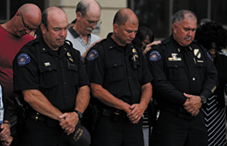

Psychologists are also exploring the effects mass shootings have on police officers, firefighters, emergency medical technicians and other first responders.
Deborah Beidel, PhD, a professor of psychology and medical education at the University of Central Florida (UCF), and Amie Newins, PhD, an assistant professor of psychology at UCF, have been using an empirically supported post-traumatic stress disorder (PTSD) treatment program originally developed for military veterans—Trauma Management Therapy—and tweaking it to treat first responders to mass shootings (Journal of Anxiety Disorders, Vol. 50, 2017opens in new window). The program uses exposure therapy, which puts PTSD sufferers in situations that make them anxious. When nothing bad happens, their fears of the triggers lessen. The program also offers a group therapy component.
So far, the UCF team has treated about 260 military veterans and more than 40 first responders. About 70 percent of first responders with PTSD no longer met the criteria after completing the program."That certainly doesn't mean everything is fine after that, but it means that we're able to help them make significant improvements and get them back to their jobs," she says. For many police officers and firefighters, a mental health diagnosis leads to a "light-duty" or desk job, so many of them are looking for a short-term treatment to help them stay working at the jobs they love, Beidel says. —Amy Novotney