Wait for It…
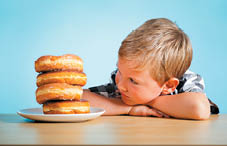 Today's preschool-age children can delay gratification longer on Walter Mischel's well-known "marshmallow test" than could children of their parents' or grandparents' generations, finds a study in Developmental Psychology. Researchers analyzed data from three cohorts of U.S. children (840 children total) who participated in marshmallow test studies in the 1960s, 1980s and 2000s. In the test, children are offered a treat that they can eat immediately (like one marshmallow) but are told that they can have a larger treat (like two marshmallows) if they can wait to eat until the experimenter returns. On average, children tested in the 2000s waited one minute longer than children tested in the 1980s and two minutes longer than children tested in the 1960s. One explanation for the generational difference may be that more children today attend preschool, where they learn school readiness skills, including self-control. DOI: 10.1037/dev0000533opens in new window
Minorities at risk for depression
 African-Americans and Latinos are at increased risk for depression compared with white Americans, but that increased risk does not appear to be linked to chronic stress and unhealthy behaviors, finds a study in Preventive Medicine. The researchers analyzed data from 12,272 participants in the U.S. National Health and Nutrition Examination Survey (NHANES), including data on participants' depression levels; unhealthy behaviors, including smoking, excessive drinking, insufficient physical activity and poor diet; and physical biomarkers of chronic stress, including blood pressure, BMI and cholesterol. Overall, Latinos (11.3 percent) and African-Americans (10.4 percent) were more likely than whites (7.1 percent) to meet depressive disorder criteria. Although levels of chronic stress were higher overall among Latino/a-Americans and African-Americans, chronic stress was not associated with the likelihood of depression within any of the groups, nor did unhealthy behaviors influence whether there was such an association. DOI: 10.1016/j.ypmed.2018.02.002opens in new window
A different perspective
Contrary to popular belief, "putting yourself in another person's shoes" does not help you gauge their thoughts, feelings, attitudes or mental state more accurately, finds a study in the Journal of Personality and Social Psychology. In a series of 25 experiments, researchers asked participants to adopt another person's perspective and then do a variety of tasks, such as predicting the other person's emotions based on facial expressions and body postures, identifying fake versus genuine smiles and spotting when someone is lying. Overall, the researchers found no consistent evidence that trying to take someone else's perspective increased participants' accuracy at these tasks, though it did increase their confidence in their judgments. DOI: 10.1037/pspa0000115opens in new window
Social support and sleep
People with more social support in their lives sleep better, finds a meta-analysis in Health Psychology. Researchers analyzed 61 studies with a total of 105,431 participants. Overall, they found that having more social support was associated with better sleep outcomes. The association held in studies that used self-reports as well as in those that used sleep actigraphy (which measures body movements) to measure sleep quality. It also held in studies with healthy populations as well as in studies with populations with chronic illness. DOI: 10.1037/hea0000628opens in new window
A changeable disorder
Borderline personality disorder (BPD) has historically been thought of as a stable condition, but a new study in the Journal of Abnormal Psychology concludes that it has both stable elements and elements that are episodic or situational. Researchers followed 668 adults with BPD in the United States, administering semi-structured diagnostic interviews five times over 10 years. Analyzing those interviews, they found that the stable elements accounted for only about 45 percent of individual differences in the disorder's severity at any moment. They also found that these stable elements were associated with the personality traits (such as neuroticism) and environmental factors (including a history of child abuse) thought to underlie BPD. DOI: 10.1037/abn0000364opens in new window
An early-bird advantage
 Middle-aged and older women who wake up and go to bed early are less likely to develop depression, finds a study in the Journal of Psychiatric Research. Researchers analyzed data on more than 32,000 participants, average age 55, who took part in the Nurses' Health Study. None of the participants in the analysis had depression when the study began in 2009. Thirty-seven percent were self-professed early birds, 10 percent were night owls, and 53 percent described themselves as intermediate types. Over the next four years, early birds were 12 to 27 percent less likely than intermediate types to develop depression, even after accounting for factors such as body weight, physical activity, chronic disease, night shift work and more. Night owls were slightly more likely than intermediate types to develop depression, although that difference was not statistically significant. DOI: 10.1016/j.jpsychires.2018.05.022opens in new window
Dehumanization in the brain
Thinking of a person as less than fully human involves a portion of the brain that is distinct from the brain region involved in disliking him or her, suggests a study in the Journal of Experimental Psychology: General. Researchers used fMRI to scan the brains of 24 participants as they answered questions about 10 different groups, including Americans, Muslims, Europeans, Roma, homeless people, puppies and rats. Some questions measured like/dislike (how cold or warm participants felt toward the group) and others measured dehumanization (where they thought the group belonged on an "ascent of man" scale that depicts evolutionary stages). Overall, the researchers found that regions in the left inferior parietal cortex and left inferior frontal cortex were associated with ratings that indicated dehumanization, while a region in the posterior cingulate cortex was associated with like/dislike. DOI: 10.1037/xge0000417opens in new window
Integrated care savings
 Bringing behavioral health providers into pediatric primary-care settings can reduce health-care costs, suggests a study in Clinical Practice in Pediatric Psychology. Researchers analyzed the medical records of 248 U.S. children seen at a community clinic in a medically underserved area and compared monthly medical charges for each patient before and after the patients were referred to an on-site behavioral health provider (a psychologist, social worker or trainee). On average, costs decreased by $38 per patient per month after a patient saw the behavioral health provider. There was no significant difference in the savings between patients who saw licensed providers and those who saw trainees. DOI: 10.1037/cpp0000231opens in new window
Courtroom emotion
Male attorneys who express anger in the courtroom are seen as powerful and full of conviction, but female attorneys who express anger are seen as shrill and obnoxious, finds a study in Law and Human Behavior. In three experiments with nearly 700 online MTurk and in-person undergraduate participants, participants watched videos of male or female attorneys presenting the same closing argument in a murder case, in either a neutral or an angry tone. The researchers asked the participants to rate their impressions of the attorney and whether they would be likely to hire him or her. Across all experiments, participants were more likely to reference the positive aspects of anger—such as power and conviction—to justify hiring an angry male attorney and the negative aspects of anger—such as shrillness—to justify not hiring an angry female attorney. DOI: 10.1037/lhb0000292opens in new window
Sunk costs
It's not just humans who fall prey to "sunk costs"—the tendency to keep sinking time or other resources into a venture once we've begun it. Mice and rats do it, too, according to research in Science. Researchers trained mice and rats in a "restaurant row" experiment: a square maze with different chambers at each corner where the rodents could find flavored food pellets. At each station, a tone signaled to the rodents how long they would have to wait before receiving the food. The rodents could choose at any time to leave a station and look for food elsewhere. The researchers found that, like humans, the longer the rodents spent waiting at a station, the less likely they were to give up and look elsewhere, even if the long wait cut into their limited time to explore the other food stations. DOI: 10.1126/science.aar8644opens in new window
Abortion and depression
Having an abortion does not increase a woman's chances of developing depression, suggests a study in JAMA Psychiatry. Researchers analyzed the medical records of nearly 400,000 Danish women born between 1980 and 1994. They found that women who had had an abortion were more likely to have received an antidepressant prescription than those who had never had an abortion. However, that increased likelihood held in both the year before and the year after the abortion, suggesting that abortion does not cause depression but that other factors—such as experiencing mental illness symptoms or intimate-partner violence—may increase the risk for both. DOI: 10.1001/jamapsychiatry.2018.0849opens in new window
Real-life morality
The decisions people make when considering hypothetical moral quandaries may not reflect the actions they would take in real life, suggests a study in Psychological Science. Researchers asked more than 200 undergraduate participants to complete an online version of the "trolley test," in which people must decide whether they would passively allow a runaway train to kill multiple people or actively throw a switch that would send it onto a different track and kill just one person. Later, the researchers asked some of the participants to make an analogous "real-life" decision: Participants were shown a cage with one mouse and another cage with five mice and told that the five mice would receive an electric shock unless the participant pushed a button to send the shock to the cage with the single mouse (in reality, no mice were shocked). Meanwhile, other participants completed the mouse decision task online. The researchers found that 84 percent of participants who responded to the online mouse scenario allowed multiple mice to be shocked, compared with only about two-thirds of the participants faced with the real-life decision. DOI: 10.1177/0956797617752640opens in new window
Eating popcorn with chopsticks
Bored with the same old, same old? Try experiencing old things in a new way, suggests a study in Personality and Social Psychology Bulletin. Researchers asked 68 undergraduate participants to participate in a study supposedly about helping them eat more slowly. They instructed half of the participants to eat popcorn one piece at a time, using their hands, and the other half to do the same but with chopsticks. On average, participants who used the chopsticks reported enjoying the popcorn more than those who used their hands. In a second experiment, 300 online participants drank water. Half did so in the usual way (in a regular glass), while half made up new ways, like drinking it from a martini glass or a shipping envelope. Again, participants who drank the water in unusual ways reported enjoying it more than those who used a regular glass. DOI: 10.1177/0146167218779823opens in new window
Intergenerational stress
Males may pass the effects of early-life trauma and abuse on to their children through epigenetic changes, suggests a study with mice and men in Translational Psychiatry. The researchers analyzed sperm samples from 28 men and found that men who reported experiencing childhood abuse had substantially lower concentrations of two types of microRNAs (which regulate gene activity) than men who were not abused as children. In a follow-up experiment, the researchers found that male mice who had been stressed as infants (by being moved to different cages several times) also had lower concentrations of the same two microRNA molecules and displayed more anxiety in lab tests. Further, these mice transmitted these lower concentrations to their offspring. DOI: 10.1038/s41398-018-0146-2opens in new window
Brain and diet
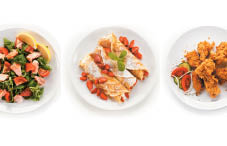 Differences in brain structure could affect people's ability to stick to a healthy diet, suggests research in The Journal of Neuroscience. Researchers used structural imaging to examine the brains of 123 participants (78 women and 45 men) who completed four experiments in which they viewed photos of different foods and decided which to eat. When asked to consider a food's healthfulness, participants with more gray matter volume in the dorsolateral prefrontal cortex and the ventromedial prefrontal cortex made more disciplined food choices, focusing more on the food's healthfulness and less on its taste. DOI: 10.1523/JNEUROSCI.3402-17.2018opens in new window
Evaluating the Medicaid expansion
The Affordable Care Act's Medicaid expansion provision improved both quality of and access to care, including mental health care, in the states that implemented it, suggests a meta-analysis in Health Affairs. Researchers analyzed 77 studies and found that about 60 percent of the studies showed significant positive effects, including increases in health coverage, quality of care and access to care. About 35 percent found no significant effects and 4 percent found negative effects, such as increased wait times. None showed decreased quality of care. DOI: 10.1377/hlthaff.2017.1491opens in new window
No one-time treatment of anxiety
Only about one in five youth treated for anxiety stay well after 12 weeks of formal treatment, finds a study in the Journal of the American Academy of Child & Adolescent Psychiatry. Researchers followed 319 young people (ages 10 to 25) diagnosed with social, separation or generalized anxiety disorder, who received medication (sertraline), cognitive-behavioral therapy or both. After 12 weeks of treatment, the researchers checked in with each patient once a year for four years. Overall, 22 percent of the patients stayed well after treatment, 48 percent relapsed at least once and 30 percent met the criteria for an anxiety disorder at every follow-up. The researchers also found no difference in long-term outcomes among the treatment types. DOI: 10.1016/j.jaac.2018.03.017opens in new window
Take a coffee break
 Teams that drink caffeinated coffee together work better as a group, finds a study in the Journal of Psychopharmacology. Researchers invited 72 U.S. undergraduates—all selfdescribed coffee drinkers—into the lab for a "coffee tasting." Half of the participants were given coffee, split into groups of five and asked to read about and discuss a controversial political topic. The other half held the discussion first and did the coffee tasting afterward. The researchers found that participants with caffeine in their systems rated their co-discussants more positively than did those who drank the coffee after the discussion. In a second, similar, experiment, the researchers found that caffeinated participants rated their codiscussants more positively than did participants who were given decaffeinated coffee to drink. DOI: 10.1177/0269881118760665opens in new window
Hangry feeling
Last year, the Oxford English Dictionary added the word "hangry"—a feeling of hunger-induced anger. Now, a study in Emotion suggests that people become "hangry" due to an interplay of biological and environmental factors. Researchers showed about 400 online participants in the U.S. images designed to induce positive, neutral or negative feelings. Then they showed the participants an ambiguous image (a Chinese pictograph) and asked them to rate it on a seven-point scale from pleasant to unpleasant. Participants were also asked to report how hungry they felt. On average, hungrier participants were more likely to rate the pictograph as unpleasant, but that effect held only if they were first primed with a negative image. The researchers suggest that the negative priming images provided a context for people to interpret their hunger feelings as an unpleasant emotion. DOI: 10.1037/emo0000422opens in new window
Black-market opioid sales
When the U.S. government tightened restrictions on hydrocodone—the most popular opioid painkiller—in 2014, illicit online sales of opioids increased, suggests a study in The BMJ. Researchers used "web crawler" software to search for evidence of black-market online sales of the drugs between September 2013 and July 2016. According to their analysis, illicit sales of opioids through online markets rose to more than 13 percent of all U.S. opioid sales in 2016, compared with what would have been an estimated 6.7 percent if restrictions had not been strengthened. In contrast, the researchers found no change during that time in illicit online purchases of opioids in markets based outside the United States. DOI: 10.1136/bmj.k2270opens in new window
ADHD medications
Many college students without attention-deficit hyperactivity disorder (ADHD) believe that taking ADHD medications such as Adderall can give them an academic boost. But a pilot study in Pharmacy suggests that these "study drugs" provide no cognitive benefit and could actually harm people without ADHD. In the double-blind study, researchers tested 13 university students without ADHD in two sessions each. In one session, participants were given Adderall and in the other session, a placebo pill, before taking a battery of cognitive tests. The researchers found that the Adderall did not improve students' reading comprehension or fluency, and it impaired their working memory. Meanwhile, it did increase their positive mood, heart rate and blood pressure. DOI: 10.3390/pharmacy6030058opens in new window
Critical parenting
Children of highly critical parents are less attuned to other people's emotional facial expressions, finds a study in the Journal of Clinical Child & Adolescent Psychology. Researchers asked the parents of 87 7- to 11-year-old children in the United States to talk about their children for five minutes and coded those descriptions for level of criticism. Then, they used fMRI to scan the children's brains while the children viewed pictures of faces showing various emotions. Children of highly critical parents showed less attention to all facial emotions, including fearful, happy and sad faces. The researchers suggest this may be because the children learn to pay less attention to faces to avoid their parents' critical expressions. DOI: 10.1080/15374416.2018.1453365opens in new window