Overview
CE credits: 1
Learning objectives: After reading this article, CE candidates will be able to:
- Define deep poverty and discuss research on its psychological impacts.
- Discuss classism in clinical settings and ways to counteract it.
- Describe possible interventions to help lift people out of deep poverty.
For more information on earning CE credit for this article, go to www.apa.org/ed/ce/resources/ce-corner.
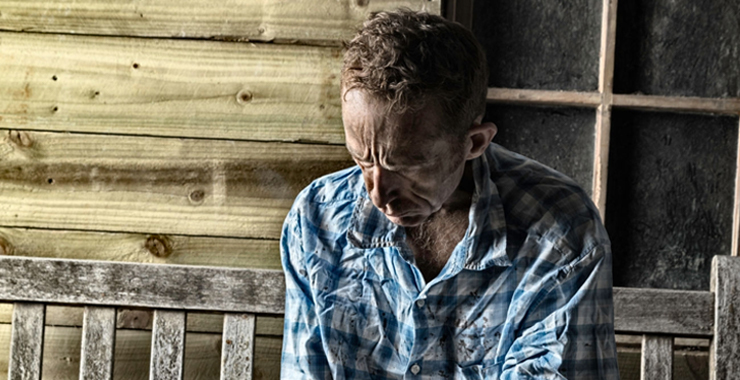
The deeply poor face entrenched stigmas, such as the belief that people living in poverty are entirely to blame for their situation.
It may seem impossible for a family of four to survive on just over $12,000 per year or a single person on just over $6,000, but that’s what millions of people do every day in the United States. And people who are poor face challenges beyond a lack of resources. They also experience mental and physical health issues at a much higher rate than those living above the poverty line, difficulties that are even worse for those who are extremely poor (Case, A., et al., American Economic Review opens in new window , Vol. 92, No. 5, 2002)—a fact that inspired APA President Rosie Phillips Davis, PhD, ABPP, to tackle deep poverty as her 2019 presidential initiative.
While poverty is bad enough, some 18.5 million Americans—more than 6% of the population and almost half of those living in poverty—live in what is known as deep poverty, with household incomes less than 50% of the poverty threshold, according to the U.S. Census Bureau. For a single person younger than 65, that means living on less than $6,243 per year; for a family of four, less than $12,169.50 (Semega, J.L., et al., U.S. Census Bureau, Current Population Reports, P60-259opens in new window, 2017).
Deep poverty is hard to exit, say researchers, who add that it’s more likely to persist across multiple generations than is poverty as traditionally defined. Over time, extreme material hardship and cumulative disadvantage resulting from problems like poor health care, a weak social safety net and a lack of affordable housing accumulate to create health inequities and restrict educational attainment (McLeod, J., et al., Eds., "Handbook of the Social Psychology of Inequalityopens in new window," 2014).
And over the past two decades, the percentage of Americans living in deep poverty has been on the rise, partly because of welfare reforms passed in 1996 that restrict social services for those who are unemployed (Sherman, A., & Trisi, D., Center on Budget and Policy Prioritiesopens in new window, 2014).
Psychologists are increasingly studying, treating and advocating for people living in deep poverty, but there is still a long road ahead.
"Right now, there’s a very big role for psychologists to further develop, study and implement interventions that help lift people out of deep poverty," says Sheila Smith, PhD, early childhood director at Columbia University’s National Center for Children in Povertyopens in new window (NCCP). "There’s a lot we still have to learn about this population, which until recently hasn’t always been well-defined in research"—because of the complexities of studying impoverished populations, which include quantifying poverty’s duration and timing.
To help address these issues, an APA working group on deep poverty is reviewing the psychological literature and creating action guides to equip psychologists in research, education and clinical practice with the tools and information needed to understand and begin to address this grave social ill.
"We live in a country that has immense wealth, yet deep poverty exists and persists within our society," says Wendy R. Williams, PhD, professor of psychology and women’s and gender studies at Berea College in Kentucky and chair of APA’s deep poverty working group. "I would argue that psychologists have a moral imperative to engage in efforts to help rectify this injustice."

Poverty versus deep poverty
Researchers have long documented a broad range of health concerns linked to poverty, including increased risk for chronic conditions such as obesity and diabetes and a wide range of mental health concerns. But research on deep poverty is less established, working group members say.
What researchers do know is that compared with young children above the deep poverty line, children who live in deep poverty perform much worse on composite measures of development that assess curiosity, affection and resiliency, according to data from nationally representative surveys compiled by Smith and her colleagues at the NCCP (Ekono, M., et al., Fact Sheet: Young Children in Deep Povertyopens in new window, 2016).
The research also found that infants and toddlers from deeply impoverished families were more likely than their age mates from poor and nonpoor families to experience developmental delays, depression and anxiety when a parent was physically or mentally ill. The surveys also showed that adults living in deep poverty experienced more physical and mental health problems and more parenting stress than did adults above the deep poverty line.
"Living in deep poverty creates an enormous amount of physical and psychological stress for parents, making it very hard to function," Smith says. "Over time, this translates into greater risks and vulnerabilities for their children."
Other research findings provide insight into the mental state that can emerge when people lack a critical resource such as money or time. Psychologist Eldar Shafir, PhD, economist Sendhil Mullainathan, PhD, and others found that this state of scarcity can reduce cognitive capacity, making it harder to make smart financial choices (Mani, A., et al., Science opens in new window , Vol. 341, No. 6149, 2013).
"People who don’t have enough resources function less well simply because of their circumstances, not because they are inherently less capable," Shafir says.
New research is also challenging psychologists to rethink how social class and its relationship to poverty are incorporated into experimental protocols. For example, when Tyler Watts, PhD, an applied psychology researcher at New York University, and colleagues repeated the seminal "marshmallow test" originated by Walter Mischel, PhD, and colleagues—which found that children who delayed gratification in favor of a larger reward had better life outcomes—they found that the ability to put off immediate pleasure was partly shaped by socioeconomic factors such as a parent’s education level or income level ( Psychological Science opens in new window , Vol. 29, No. 7, 2018). These new findings suggest that self-control alone can’t overcome economic and social disadvantage, Williams says.
"In order to learn how social class, and deep poverty in particular, affects the way we think, behave and make choices, we need to be consistently reporting the social class of our participants," she adds.
The work on class underscores current efforts to better understand how socioeconomic status interacts with other factors to shape mental and behavioral health. To this end, part of the deep poverty working group’s task is to complete an extensive review of literature that may include information about deep poverty but is not explicitly labeled as such, including studies of long-term welfare recipients, people who are homeless or people in tribal communities. The goal is to determine what is known about those living in poverty versus deep poverty and to find out where the two groups diverge, as a foundation for future research and interventions.
"It’s important for us to clarify what is different about the experience of deep poverty versus poverty more broadly," says Nia West-Bey, PhD, a member of the APA working group on deep poverty and a senior policy analyst at the Center for Law and Social Policyopens in new window (CLASP), a national nonprofit that advances policy for low-income Americans. "Because if we don’t precisely name a problem, it can be hard to know when we’ve found an effective solution."
Reducing stigma and classism
In addition to coping with material deprivation, the deeply poor also face entrenched stigmas, such as the belief that people living in poverty are entirely to blame for their situation, says Laura Smith, PhD, professor of psychology and education at Teachers College, Columbia University.
"Classism affects people in a way that’s analogous to the psychological harm that’s done by racism—and that can be incredibly damaging," she says.
Psychologists can actively engage in stigma reduction by educating others about the research on poverty, which indicates that social class is a product not of an individual’s shortcomings, but rather of a person’s life circumstances, says Cindy Juntunen, PhD, dean of the College of Education and Human Development at the University of North Dakota and chair of the APA Task Force on Developing Guidelines for Psychological Practice With Low-Income and Economically Marginalized Clients. Structural barriers—such as poor-performing schools and limited access to health care—make deep poverty difficult to escape, she says.
"As psychologists, we can counteract the message that people are poor because of their personality or characteristics, when the truth is that income inequality is built into our societal structures and is very hard to overcome," she says.
And clinicians aren’t immune to prejudice along class lines. For example, one study found that psychotherapists returned calls to potential clients who were middle-class about three times as often as they responded to help-seekers who were working- class (Kugelmass, H., Journal of Health and Social Behavior opens in new window , Vol. 57, No. 2, 2016).
Clinicians may also make inaccurate assumptions about clients who live in deep poverty, often because they don’t understand these clients’ everyday realities, Laura Smith adds. Aside from the small fraction of psychologists who accept Medicaid, work in acute care settings or do pro bono work, "many of us have little direct experience working with people who live in extreme poverty, nor were their life circumstances often featured in our textbooks," she says.
Therefore, it’s important that psychologists educate themselves about the barriers and situations faced by those living in deep poverty, and consider the resources, opportunities and status that middle- and upper-class Americans often take for granted, Juntunen adds.
One way to do so is to participate in experiential workshops that provide a glimpse of the daily pressures experienced by the deeply poor, such as the Community Action Poverty Simulationopens in new window, which Juntunen has both attended and administered. For several hours, participants role-play scenarios typical for a family living in poverty, including seeking health care without insurance, finding transportation to work and school and purchasing food with minimal resources.
"Going through an experience where you could feel, even just for a tiny moment, a dim shadow of the hurdles people in poverty face is a powerful reminder of how much distress and pain they can have in their daily lives," Juntunen says. The simulation has been shown to increase empathy and knowledge of the circumstances faced by low-income populations (Strasser, S., et al., American Journal of Health Education opens in new window , Vol. 44, No. 5, 2013).
Psychologists should also bear in mind that the deeply poor may hesitate to speak freely to therapists outside their social class, just as other marginalized clients often seek support from those with shared lived experience, says West-Bey. "In order to build therapeutic relationships effectively, we need to enter these communities with cultural humility and a willingness to learn," she says.
Clinical psychologists can better reach clients who are deeply poor by accepting more Medicaid patients, offering services in urban and rural low- income areas, and using telehealth to administer screenings and treatment, she suggests.
Clinicians can also get more creative about the venues in which psychological services are offered. Sheila Smith says that home visits are a key way to reach people who are economically stressed and may lack transportation. Early childhood education programs, often held at local schools and community centers, also offer a convenient space in which to screen parents for depression or other mental health problems.
This approach requires partnering with other professionals, including case managers, social workers and certified peer specialists. "These families are not well-served by a siloed approach," Sheila Smith says, "so it’s important to team up with others working in the community and ensure that their efforts are valued to the same extent as our own."
The bigger picture
As valuable as research and traditional psychological services are, some experts stress that policy changes are crucial to begin reversing the damage done by deep poverty.
"Studying people living in deep poverty and helping those who are already bearing up under its damage is important," says Laura Smith, "but it’s just as important to engage in preventative advocacy and concrete policy changes that address economic inequities."
One way is to support a higher federal minimum wage, which Laura Smith says is currently too low to enable workers with children to rise above the poverty line ( American Psychologist opens in new window , Vol. 70, No. 6, 2015). She also urges psychologists to draft briefs and policy statements to inform judicial bodies and legislators on relevant scientific findings, such as Shafir and Mullainathan’s research on scarcity. APA’s advocacy arm, which promotes a range of policies to help low-income populations, is one venue available to psychologists who wish to do so.
Psychologists are already promoting research-informed policies to improve economic security. In one of the latest efforts, psychologists were among the authors of a 2019 National Academies report that summarizes research and advances policy recommendations that could cut child poverty rates in half within a decade. Citing research on poor children’s increased risk of depression, learning disabilities, academic problems and other mental and behavioral health issues, the report concludes that a causal link exists between poverty and numerous negative outcomes for children. The report recommends two policy packages for reducing child poverty, which include tax credits, increased supplemental assistance for food and housing and improved child support (National Academies of Science, Engineering, and Medicine, "A Roadmap to Reducing Child Povertyopens in new window," 2019).
Another key step is to develop and implement large-scale interventions that address factors that may be caused or exacerbated by deep poverty, such as poor parental mental health. For example, interventions that simultaneously support both children and their parents—known as "two-generation approaches"—appear to be particularly effective in tackling deep poverty. The Child Firstopens in new window intervention, for instance, includes a dyadic treatment component that helps parents and children develop strong, nurturing relationships, which Laura Smith says can be challenging for parents whose primary focus is on their family’s material survival.
At CLASP, West-Bey has worked with state agencies in Minnesota and Oregon to design, test and implement such policies at the state level. The Family Independence Initiativeopens in new window (FII), which will launch statewide in Oregon in 2019, provides a platform for families living in poverty to build resource-sharing networks and support one another with minimal government involvement.
The FII was informed by and designed using input from families and communities living in extreme poverty, which experts say is an essential part of building effective policies. In line with this thinking, a central focus of APA’s deep poverty working group will be to incorporate the perspectives of people with lived experience of deep poverty.
"If you talk to the folks who are closest to the problem, they are also often closest to the solution," West-Bey says. "People in deep poverty have developed a lot of strengths to navigate their situation," she adds. "If more of our policies recognize that, we can make a much bigger difference."