A Salvadoran teen and his family flee a death sentence from a local gang. A Guatemalan farmer abandons his coffee farm after years of drought destroy his crops. A young woman raised by her grandmother in Honduras leaves to reunite with her parents after more than a decade.
Along with hundreds of thousands of others, these Central Americans are migrating north this year seeking asylum, employment and family reunification. Between October 2018 and February 2019, nearly 260,000 people left the Northern Triangle region (El Salvador, Guatemala and Honduras)—about double the number who left during the same period the previous year, according to an analysis of U.S. Customs and Border Protection (CBP) and other data by migration researchers at the Lawfare Institute, a nonprofit educational organization based in Washington, D.C. (Leutert, S., & Spalding, S., Lawfareopens in new window, Mar. 14, 2019).
Central Americans are seeking to escape gang violence, corruption, extreme poverty, the impacts of climate change and other problems, and hoping to resettle in Mexico or the United States. While much attention is focused on the humanitarian crises at the U.S. border, researchers, clinicians and activists are also working to address problems at their source in Guatemala, Honduras and El Salvador.
In an effort to make the Northern Triangle safer and more humane for the millions of people who live there, psychologists are providing psychosocial support for trauma survivors, designing and delivering preventive community workshops and studying what drives residents to migrate north.
“As a community, we need to attend to the physical, psychological, emotional, social, economic and familial needs of our people,” says Ana Alicia Cóbar Catalán, PhD, a clinical psychologist at Proyecto Aiglé Guatemala and professor at Universidad del Valle de Guatemala (UVG). “Not just for the migrants leaving, but for those who are staying, those who are coming back and those who are caught between two cultures.”
Dire conditions
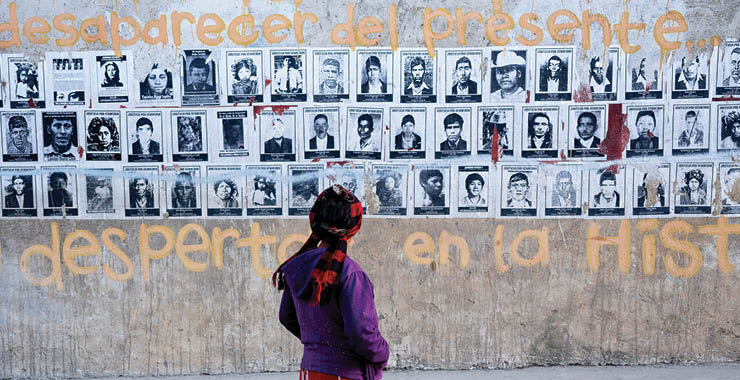
Decades of trauma and violence in the Northern Triangle—including civil wars in Guatemala and El Salvador and ongoing political instability in Honduras—have left behind a trail of crime, poverty, sociopolitical unrest and extreme income inequality in all three countries.
In El Salvador, for instance, an underfunded and corrupt police force, unable to maintain public safety, has helped spur the formation of gangs as de facto authorities across most of the country (“Life Under Gang Rule in El Salvadoropens in new window,” International Crisis Group, 2018).
And throughout the Northern Triangle, sexual assault, murder, and drug and human trafficking are common, with perpetrators emboldened by judicial delays and corruption that essentially result in impunity. Gangs often threaten teens or adults with rape or murder, forcing entire families to flee their homes (World Report 2019opens in new window, Human Rights Watch).
For others, poverty and lack of work opportunities are the driving forces behind migration—in Honduras, more than 60% of the population lives below the poverty line (World Bank,opens in new window 2018).
“Our research indicates that most people want to work to support their families and send their children to school,” says M. Brinton Lykes, PhD, a professor of community-cultural psychology and co-director of the Center for Human Rights and International Justiceopens in new window at Boston College. “But the work situation is so dire that it’s almost impossible to make a decent living,” she says, because of low pay and limited work opportunities.
In the United States, an immigrant might earn $300 per week cleaning houses, the equivalent of about a month’s salary in Guatemala, says Cóbar Catalán. Migrants typically aim to improve their families’ quality of life by sending money home to purchase a house or pay private school tuition or by saving up and returning after a few years.
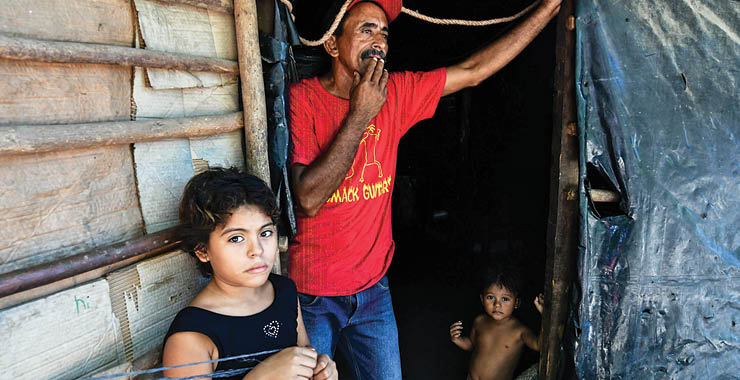
Many of the millions of Central American subsistence farmers are also starting to migrate north as climate change threatens their livelihoods, according to the Climate Reality Project, an activist organization founded by former vice president Al Gore (“How the Climate Crisis Is Driving Central American Migrationopens in new window,” 2019). In Guatemala, for instance, rising temperatures and long droughts are reducing returns from coffee, corn and sugarcane farms. And when natural disasters such as hurricanes strike, aid is not available to help residents recover.
Amid such far-reaching and systemic challenges, many have fought to defend Central Americans’ right to migrate, but Lykes says it’s also time to start considering another inalienable right—the right to remain.
“What options do people have to stay home?” she asks. “And why aren’t we more concerned about that?”
Research and outreach
To support the right to remain, some psychologists seek to better understand the complex decision about whether to migrate. Mauricio Gaborit, PhD, a social psychologist who studies the migration of children and adolescents at Universidad Centroamericana José Simeón Cañas in El Salvador, has documented increasing rates of migration among adolescent girls and children under age 12. CBP data echo the demographic shift—the majority of migrants detained at the border are now families or unaccompanied children rather than adult men (Recent Migration to the United States From Central America: Frequently Asked Questionsopens in new window, Congressional Research Service, 2019).
In 15-minute interviews conducted while the Salvadoran immigration authorities processed migrants who had been deported from the United States for reentry into El Salvador, Gaborit and his colleagues assessed children and teens for depression, anxiety and somatization. One of their most surprising findings was that deported children did not experience greater psychological harm than a control group of Salvadoran children who remained in the country (“El Salvador,” in Childhood and Migration in Central and North America: Causes, Policies, Practices and Challengesopens in new window, 2015).
“To be a young person in El Salvador, Guatemala or Honduras is extremely stressful,” he says. “So stressful, in fact, that the migration route with all its perils barely registers above the daily pressures children and their families face here.”
Gaborit and his team have also designed and delivered interventions to 3,500 children and adolescents in schools and community settings to help them make more informed decisions about whether to migrate. In one exercise, facilitators ask children to predict travel time to the United States (most underestimate the length of the journey), then use an enlarged map to measure distances and show that the route is thousands of miles long and can take months.
“Education is crucial to help people understand more about life in the United States as a migrant,” says Maria Elena Humphrey, PhD, former executive secretary for Mexico, Central America and the Caribbean at the Interamerican Society of Psychology. “Not only can it be dangerous to live in the United States as an undocumented person, but leaving behind one’s home, family and culture is often very painful.”
Treating trauma
At UVG, Cóbar Catalán coordinates the delivery of psychological services in the university’s community clinic to trauma survivors, people who are unemployed and people whose family members have migrated north. Students in UVG’s master’s program in psychological counseling and mental health, which Cóbar Catalán directs, also conduct preventive workshops in agrarian communities in western Guatemala. Those workshops address teen marriage and pregnancy, suicidality, behavioral problems and drug and alcohol misuse in an effort to improve educational and professional outcomes for rural populations. The group also administers APA’s ACT Raising Safe Kids Program to teach parents and caregivers how to create healthy and nurturing environments for young children.
“In Guatemala, we tend to be reactive,” she says. “But through this program, we are working to create a culture of prevention.”
Other psychologists have turned their attention to a frequently overlooked population—those who have been deported from the United States, known as “retornados.”
“Retornados carry a lot of stigma because of the criminal label that comes with deportation,” says Juan Carlos García Rivera, a marriage and family therapist from El Salvador who is pursuing his doctorate in critical social/personality psychology at the City University of New York.
Retornados often struggle to find work, become targets of gangs who assume they have money, and have problems with addiction and suicidality, García Rivera says. To help retornados transition back into Salvadoran society, he has designed and facilitated workshops to help build peer psychosocial support relationships among those who have been deported.
But García Rivera says that in light of the crisis in Central America, psychologists must do more than conduct research, provide clinical services and design community interventions.
“It’s very challenging to navigate domains where we may be told we don’t belong,” he says. “But if we really care about the mental well-being of the people, we need to look beyond traditional mental health services and outside of our field.”
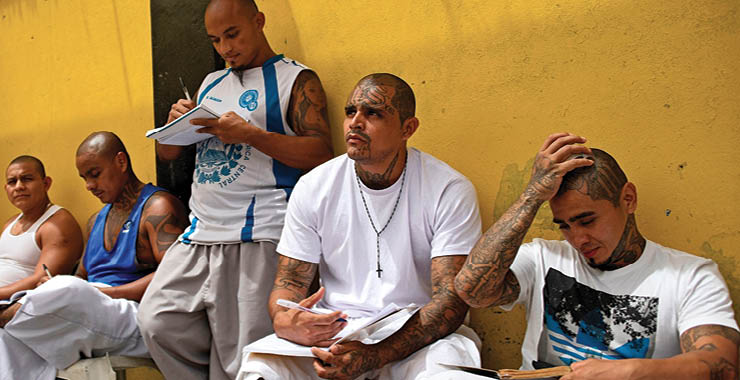
To that end, García Rivera works with the Liberation Psychology Intercambio/Exchangeopens in new window, a knowledge exchange program that connects psychologists, therapists, social workers and immigration lawyers from the United States and Central America to engage with psychological theories and practices originating in Latin America. Liberation psychology, for example, established in the 1970s by Jesuit priest Ignacio Martín-Baró, PhD, calls on psychologists to redefine their role as sociopolitical and to support oppressed communities.
The exchange, co-founded by clinical psychologist Leticia Gonzalez Pileski, PsyD, and Jason Platt, PhD, a counseling psychologist based in Mexico City, holds one-day conferences where students discuss their work in liberation psychology and organizes trips to war-torn areas of El Salvador to help survivors preserve cultural memory about the violence they endured. Platt also teaches classes in El Salvador to local clinical psychologists and psychology students on single session therapy, a solution-focused behavioral practice that aims to serve marginalized communities that may struggle to access psychological treatment because of isolation and limited resources.
“Single session therapy has a lot of potential because it’s focused on giving the most help we can in the shortest amount of time,” he says.
Others, inspired by the mission of liberation psychology, have launched or joined human rights organizations to more directly address systemic issues such as gender-based violence, public corruption and income inequality. For example, ECAPopens in new window, a Guatemalan organization whose name translates to the Community Studies and Psychosocial Action Team, works primarily with indigenous women and children to seek gender equity and restorative justice for past crimes. The organization provided psychosocial support to survivors during the Sepur Zarco trial, which resulted in the first conviction for sexual slavery during an armed conflict by a national court (“Sepur Zarco: In Pursuit of Truth, Justice and Now Reparationsopens in new window,” UN Women, 2017).
“Psychological work in human rights is very important,” says Gina Rodriguez, a Honduran master’s-level clinical psychologist and human rights activist. “It’s a crucial part of larger efforts to strengthen our social fabric and to repair the damage caused by sociopolitical violence.”
Rodriguez supports the Shelter City Networkopens in new window, which relocates human rights defenders forced to move because of threats to their safety and provides psychotherapeutic treatment to Honduran survivors of torture, sexual violence and other crimes as they seek recourse through national and international justice systems.
On a larger scale, the nonprofit International Justice Mission (IJM) works to end impunity for slavery and other human rights violations through legal and justice reform. Marylin Beckley, a licensed professional counselor and doctoral student in the international psychology program at the Chicago School of Professional Psychology in Washington, D.C., works with IJM in Guatemala, El Salvador and other Latin American countries.
In El Salvador, Beckley has trained police officers, prosecutors, judges, community leaders, social workers and psychologists in trauma-informed care for people who are seeking justice through the courts. Such training includes defining psychological trauma, learning appropriate terminology—trainees are instructed to use the term “survivor” rather than “victim”—and managing acute distress. Beckley also teaches professionals to use open-ended questions to obtain important information from survivors without retraumatizing them.
Once survivors attain a significant level of recovery from their initial trauma, measured using a tool IJM developed called the Assessment of Survivor Outcomesopens in new window, Beckley guides some of them into leadership roles in the international global survivor network to share their experiences and advocate for other survivors. In Guatemala, she has helped organize a group of survivor leaders to raise public awareness of the psychological impacts of sexual violence and problems with the country’s justice system.
“As psychologists, it is our professional ethical duty to get involved with this crisis,” Beckley says. “Just because it is painful, we cannot look away. We need to do something.”
Seeking more impact
Despite such accomplishments, many psychologists in the Northern Triangle countries feel that they are largely working in isolation with little support and few resources.
In Honduras, a population of nearly 9 million relies on just 185 mental health professionals, and in El Salvador, 225 mental health workers serve more than 6 million people (Mental Health Atlas Country Profiles, World Health Organization, 2017). Even in Guatemala, which has about 7,700 mental health professionals and 16 million people, rural areas are vastly underserved (“Healthcare Access and Conditions in Guatemala, Honduras and El Salvadoropens in new window,” Centers for Disease Control and Prevention, 2017). And across the region, the median percentage of countries’ health-care budgets allocated to mental health is 0.9%, the vast majority of which funds psychiatric hospitals (WHO-AIMS: Report on Mental Health Systems in Latin America and the Caribbeanopens in new window, 2013). The United States, by comparison, spends about 8% of its health-care budget on mental health (Dieleman, J.L., et al., JAMAopens in new window, Vol. 316, No. 24, 2016).
Gaborit stresses that psychologists must assemble professionally and partner with nongovernmental organizations such as IJM, UNICEF and local groups to achieve a greater collective impact. Teaming up with locally run organizations, such as Grupo de Mujeres Mayas KAQLA,opens in new window an indigenous group based in Guatemala, can also help foreign psychologists gain cultural competency and establish trust with indigenous people, who may be reluctant to partner with outsiders, says Lykes.
But even as psychologists seek a broader impact, says Cóbar Catalán, it’s important to remember that the trauma and disenfranchisement driving Central Americans north are deeply personal.
“If we understand the individual reasons that force people to migrate, we may be closer to finding the interventions that are relevant and effective,” she says. “Listening and telling people’s stories is a first step to start humanizing migrants in a society where blaming the victim tends to be the norm.”