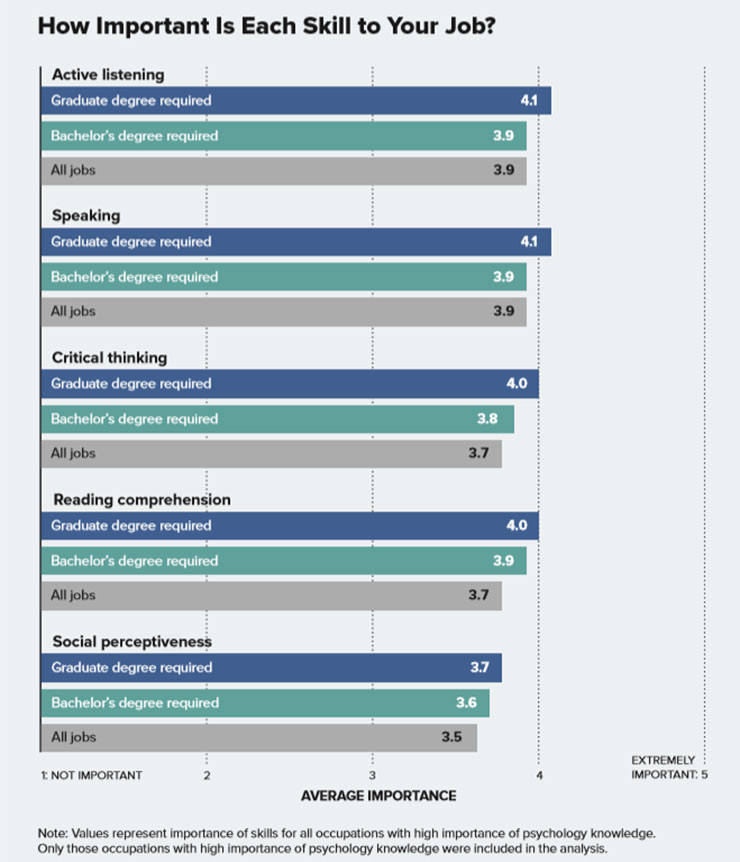
A psychology education offers more than a deep grounding in a specific area of psychology; it also develops communication, cognitive, social and other skills that are highly desirable at work.1 An analysis of occupational profiles found that among jobs that require a high amount of “psychology knowledge”2—such as psychologists, nurses and human factors engineers—those additional skills are also important.3
The analysis found that:
- The most important skills used in these jobs were active listening and speaking, followed closely by critical thinking and reading comprehension.
- These skills were important in jobs across all education levels, from those that require bachelor’s degrees to those that require master’s, doctorate and postdoctorate education. The top skills are slightly more important in jobs that require higher levels of education and more experience.
Want more information? See CWS’s interactive data tools: www.apa.org/workforce/data-tools/index or contact cws@apa.org.