Diversity
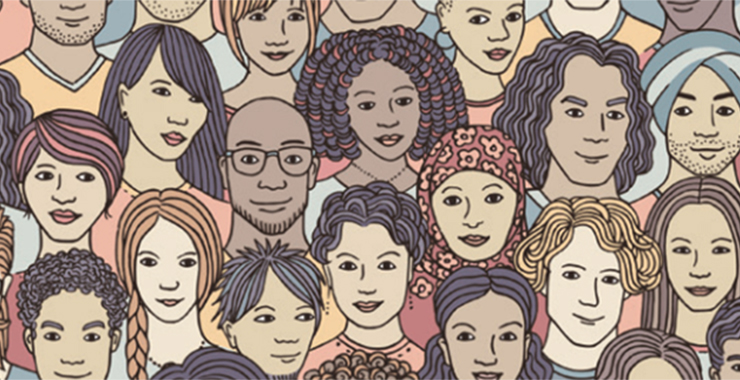
With regard to “New Guidance on Race and Ethnicity for Psychologists” (December Monitor): Classifying patients as simply members of specific racial groups or Western/non-Western cultures risks overlooking the incredible diversity within each of these immense groups. These cultures are neither homogenous nor static. Though guidelines for cultural competency may be a helpful starting point, it is best that the clinician approach each individual with the attitude of curiosity rather than with assumptions about how membership in these immense cultures affects the individual’s personality. The clinician’s inquiry can easily see that there is not an uninterrupted chain of causation between our patient’s personality and culture of origin. Factors such as parental milieu, education, economic security and degree of religious adherence no doubt play a significant factor in psychic development. One of the best ways to improve cultural competency is for clinicians to work with patients from many different cultures and by doing so discover, as the psychiatrist Harry Stack Sullivan, observed: “We are much more simply human than otherwise.”
Ira Moses, PhD, ABPsa
New York, New York
Correlation versus causation
In the December issue of the Monitor, APA President Rosie Phillips Davis talks about “standing up for our science” and APA CEO Arthur Evans talks about “psychological science.” Yet in the “In Brief” section, a clearly correlational survey study is given the headline “Dark Chocolate Brightens Mood.” Shouldn’t APA practice what we preach? While this kind of misinterpretation of correlation with cause-effect happens all too often in newspaper and TV news stories, I clearly expect better from our professional organization.
William M. Sherman, PhD
New Haven, Connecticut
Clarification
Due to space limitations, the December 2019 article “Informing the Courts With the Best Research” did not fully explain the several interrelated lawsuits that led to psychologists’ right to bill insurers on equal footing with psychiatrists. For a full explanation, read “The Case Against the Blues: The Virginia Challengeopens in new window” (American Psychologist, Vol. 40, No. 9, 1985).
Our favorite tweets
Re: “Trends for 2020: Going High Tech in Academia” (January)
@impact_psyc I was glad to see @_HGAPS highlighted in the APA Monitor! This group is doing great work to make psychological science available broadly through #Wikipedia
Re: “Lab Work: How Close Relationships Help Us Thrive” (December)
@freddie_doc This is really important work being discussed in these articles. BRAVO to those doing this work!! Relationships are one of the most important parts of life. More research is needed.
Re: “Informing the Courts With the Best Research” (December)
@DrMindermast The world would be such a better place if everyone would just shut up and listen to psychologists. Not that I’m biased or anything ;)
We’d love your feedback. Send letters to Editor Lea Winerman.