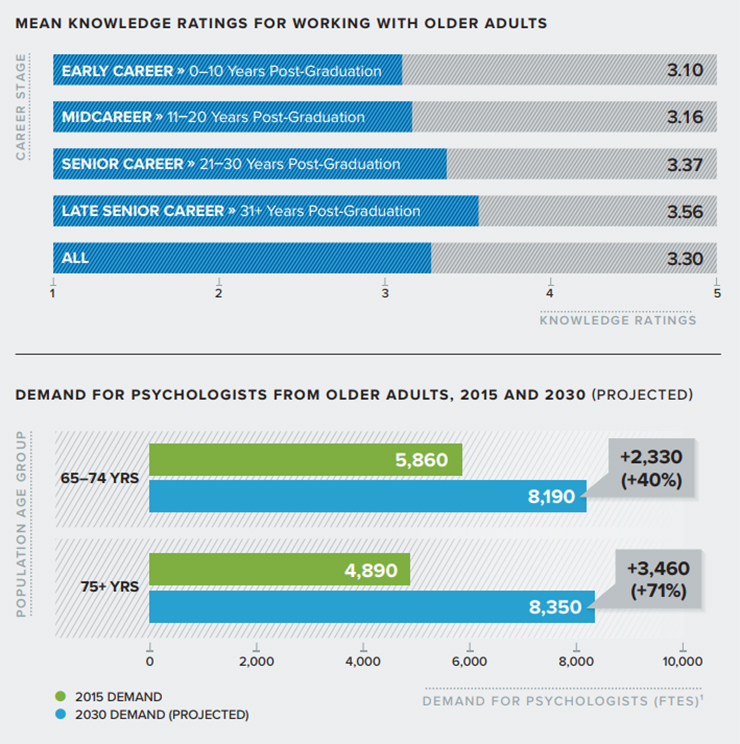
By 2030, the United States will need 5,790 more geropsychologists1 to meet the needs of its older adults (65+ years old). How prepared is the psychologist workforce to meet this demand?
[Related: The growing demand for geropsychologists]
- Typically, geropsychology is a field that psychologists age into; few psychologists have a formally recognized specialty in geropsychology. In 2019, the National Provider Identifier Registry2 identified roughly 660 geropsychologists, accounting for fewer than 1% of all doctoral-level licensed psychologists. As psychologists get older, they become more familiar with treating older adults. Psychologists in later career stages rated themselves higher on knowledge about working with older adults than psychologists in earlier career stages.3
- Because a large portion of later career psychologists are nearing or already older than the typical retirement age of 65, these psychologists are likely to leave the workforce within the next 10 years. In 2019, there were 22,400 psychologists in the workforce between ages 56 and 65 and 22,100 over 65 years old. Psychologists 65 years and older accounted for 37% of the workforce.
- Collectively, these findings suggest the psychologist workforce is insufficiently prepared to address the future health needs of older adults.
Want more information? See CWS’s interactive data tools or email.
Learn more | For more on the demand for geropsychologists and ways to fill the gap with specialized training, see The growing demand for geropsychologists.