
skip to main content

A new era of weight loss: Mental health effects of GLP-1 drugs

Psychologists are helping patients manage body image, identity, and relationship changes
APA Style leaf logo Cite This Article in APA Style
Medaris, A. (2025, July 1). A new era of weight loss: Mental health effects of GLP-1 drugs. Monitor on Psychology, 56(5). https://www.apa.org/monitor/2025/07-08/weight-loss-drugs-mental-health

two women talking

Key points

  • GLP-1 drugs can transform the health of people with obesity, quiet “food noise,” and may level the weight-loss playing field.
  • Research on the drugs’ mental health effects is mixed. Experts worry widespread use could fuel sizeism and eating disorders.
  • Psychologists are helping GLP-1 patients develop healthy behaviors and manage body image, identity, and relationship changes.

At first, Meghan Dressler wasn’t interested in taking a glucagon-like peptide-1 (GLP-1) receptor agonist, the class of popular diabetes and weight-loss medications that includes Ozempic and Wegovy. The New York City-based lawyer had spent much of her life cycling through restrictive diets like Jenny Craig and Weight Watchers, only to put the pounds back on every time. Why would an expensive injectable medication lacking long-term data work any better?

But in early 2024 at age 41, Dressler’s joints hurt. Her sleep suffered. Her community theater performances left her zapped. So her doctor prescribed Zepbound, a cousin of the original GLP-1s. Within a year, Dressler lost 70 pounds. Unlike the commercial diets, she said, “I have every intention of sticking with it.”

Dressler is among the 12% of U.S. adults who have used a GLP-1, according to a 2024 KFF pollopens in new window. Four in 10 of them had taken the jabs (most GLP-1s are delivered via injection) primarily to lose weight. Mental health professionals are taking note. Researchers are tracking the drugs’ positive and negative effects on mood as well as their potential to quell some disordered eating symptoms while exacerbating others. Some psychologists are studying how the medications’ mechanisms might also advance treatments for drug, alcohol, and behavioral addictions.

Clinical psychologists, meanwhile, are helping patients navigate what happens on the inside when everything changes on the outside. Dressler, for one, is working with a therapist to address an emerging obsession with the dropping number on the scale. She’s also learning to field questions—and judgments—about how she pays for the drugs and what she eats. She’s realizing she’s traded one set of societal stigmas for another. Her weekly sessions, she said, have “saved” her.

“It’s a no-win situation in that you’re taking control of your health; you’re doing what for years people have been saying—‘obese people are a strain on the health care industry’—and all of that,” Dressler said. “Then there’s something that’s available that helps some people, and now it’s, ‘You’re not doing it the right way.’”

Indeed, while the medications’ positives include their ability to improve health and relieve the stigma of “failing” to lose weight, they also have the potential to increase weight stigma, medicalize larger bodies, and shame people for both taking the perceived “easy way out”—or not taking it, A. Janet Tomiyama, PhD, a health psychologist at the University of California, Los Angeles, wrote in a 2025 commentary. “From a social identity perspective,” she added, “GLP-1 medications could even be perceived as a tool to eradicate an entire social group—those that identify as higher weight” (Annals of Behavioral Medicine, Vol. 59, No. 1, 2025opens in new window).

Psychologists, then, “have a really important role to play on the medical team,” said Amy Walters, PhD, a licensed psychologist and the director of behavioral health for St. Luke’s Humphreys Diabetes Center in Boise, Idaho, where she works with people who have endocrine conditions and metabolic disease. “We can help patients become more knowledgeable. We can work with the emotional side of things, help support the health behavior change, screen and treat disordered eating behaviors that might develop, or address anxiety or depression that goes alongside it. We can help people develop a healthy relationship with food and a more comfortable relationship with their bodies while really promoting health at every size.”

[Related: Working with patients with weight-related chronic disease]
The promise

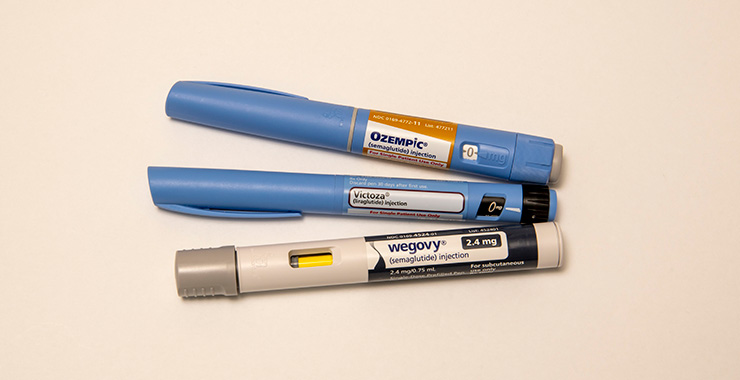
Broadly, GLP-1 receptor agonists like semaglutide and liraglutide (Ozempic, Wegovy, Saxenda, and others) and GLP-1/glucose-dependent insulinotropic polypeptide (GIP) receptor agonists like tirzepatide (Zepbound, Mounjaro) work by mimicking hormones that affect appetite and blood sugar.

While some of these drugs have been around for decades to treat diabetes, more and more are earning approval from the U.S. Food and Drug Administration (FDA) to treat obesity and overweight, too. In those patients, they’ve been shown to lead to a 10%–20% reduction in body weightopens in new window over 9 to 15 months by suppressing appetite, slowing digestion, and boosting satiety.

The at-home injections, when prescribed alongside lifestyle changes like diet and exercise, are also largely effective at improving cardiometabolic risk factors like blood pressure and cholesterol, as well as self-reported physical functioning. Side effects—namely gastrointestinal distress—tend to be mild to moderate and “transient,” initial research showed (Wilding, J. P. H., et al., The New England Journal of Medicine, Vol. 384, No. 11, 2021opens in new window).

The medications are “providing hope for our patients,” said Rachel Goldman, PhD, a clinical psychologist in New York City who specializes in cognitive behavioral therapy and health behavior change. “For individuals struggling with obesity—and for anybody who tries to make a behavior change over and over again without success—they think something’s wrong with them. They internalize that bias. There’s shame; there’s guilt. And that really gets in the way of them continuing to try. But the GLP-1s put them on an even playing field.”

“It’s not just about the weight loss,” added Dina Goldstein Silverman, PhD, lead psychologist at Cooper University Hospital and an associate professor of clinical psychiatry at Cooper Medical School of Rowan University in Camden, New Jersey. “It’s about the sense of mastery and self-efficacy, that feeling of ‘I learned how to do something, it was really difficult to do, and I was able to sustain it, and I feel an incredible sense of accomplishment.’”

Another bonus for some GLP-1 patients: a quieting of so-called “food noise,” or what psychologists might call food-related intrusive thoughtsopens in new window. “I don’t concentrate on food the way I did before,” Dressler said. “I was always concerned: When am I going to eat? What am I going eat? Am I going to be full? Am I going to be hungry again? It was always a constant thing in the back of my mind that I never realized I had until it was gone.”

That lack of background chatter leaves a wider opening for psychological and other positive interventions to take hold, said Goldman, who’s also a clinical assistant professor in the Department of Psychiatry at NYU Langone Health. “With less food noise, people have more energy and time and space to think about and do other things,” she said.

There are caveats, however. For some, internal chow-focused chatter could be indicative of disordered eating. As with the famous World War II-era Minnesota Starvation Experiment—in which men couldn’t stop fantasizing, reading, and talking about food when they were deprived of it—some psychologists say the cure for food noise isn’t muting it with medication but rather answering it with, well, food.

“If you have food noise and you’re always obsessing, maybe you need to eat; you’re hungry,” said Charlotte Markey, PhD, a professor of psychology and chair of the health sciences department at Rutgers University. “Food noise is very real for a lot of people, but is a pharmacological solution the best solution for that?”

[Related: Clinical Practice Guideline for the Treatment of Obesity and Overweight in Children and Adolescents]

Mixed effects on mood

When GLP-1s for weight loss entered the mainstream, Sera Lavelle, PhD, a clinical psychologist in New York City who specializes in emotional eating and other issues, was struck by an uncannily similar shift in her patients who took them. “I noticed this kind of flat affect like, ‘What’s the point of life?’ Not suicidal, but just this lack of pleasure,” Lavelle said.

Indeed, while the meds seem to blunt many unhelpful desires, like wanting excessive processed foods, booze, or gaming, they could also “deplete your dopamine response to any enjoyable activity,” said Lavelle, who’s also CEO and cofounder of Bea Better Eating, an AI-based app that uses psychological principles to change mindsets around food. “You’re cutting off feelings of looking forward to sex with your partner; you’re cutting off the high you get from a good conversation with a loved one; you might not feel that rush from getting a job promotion.”

The research related to Lavelle’s observations is mixed. One large 2024 study in the journal Scientific Reports found that people with obesity who were on GLP-1s had a slightly elevated risk of anxiety and suicidal behavior when compared with controls, and almost double the risk of major depression. (Kornelius, E., et al., Scientific Reports, Vol. 14, Article 24433, 2024opens in new window). Then, an April 2025 paper demonstrated how GLP-1s might drive depression and suicidal ideation in people with a genetic predisposition toward low dopamine function (Sharafshah, A., et al., Current Neuropharmacology, Vol. 23, No. 8, 2025opens in new window).

Meanwhile, a case report presented at the 2024 American Psychiatric Association annual meetingopens in new window included the example of a 42-year-old woman who developed “behavioral disruptions, protracted nihilistic delusions,” and an attempted self-strangulation just 3 weeks after beginning Ozempic. When she quit the drug, the thoughts and actions slowly reversed.

On the other hand, a 2024 study led by University of Pennsylvania psychologist Thomas A. Wadden, PhD—and funded by Novo Nordisk, the maker of semaglutide—found that GLP-1 takers without known psychopathology weren’t any more likely to develop depression or suicidal thoughts or actions than controls. They even had a “small but statistically significant” reduction in depressive symptoms (JAMA Internal Medicine, Vol. 184, No. 11, 2024opens in new window).

The FDA and the European Medicines Agency both conducted reviews of the evidence on suicide and deemed the drugs safe—for now.

“These medications impact neurotransmitters, and so they can have an impact on mood,” Walters said. “We’ve seen people who really feel like it boosts their mood, and I’ve seen others who feel like they struggle more with depression or irritability. It’s definitely something that [health professionals] want to be assessing and monitoring and then treating if it comes up.”

weight loss injection pens

Physical and financial challenges

Some psychologists are concerned about the drugs’ physical side effects, too. Though rare, one observational study found a link between GLP-1s and blindnessopens in new window. Other research has shown that, like most methods of weight loss, as much as 60% of the pounds shed on GLP-1s can come from lean mass like muscles (Neeland, I. J., et al., Diabetes, Obesity and Metabolism, Vol. 26, No. S4, 2024opens in new window). Muscle depletion, in turn, is linked with bone issues like osteoporosis. As common with diets, stopping the drug usually means weight regain, but the long-term effects of continuing the injections for life remain to be seen.

“Once the excitement about the drugs dies down, we’re likely to be in the same position we’ve always been in, which is that to be comfortable in your own skin, to have a positive sense of your body, you have to do more internal work than external work,” said Markey, author of Adultish: The Body Image Book for Life. Her recent study showed that “body appreciation”—which includes a desire to care for the body and an acceptance of physical imperfections—may make people less likely to be interested in using GLP-1s for weight loss (Body Image, Vol. 53, 2025opens in new window).

Even the most common and seemingly benign side effects, like nausea and constipation, can take a mental and emotional toll, Goldstein has found. “Feeling uncomfortable physically—when that’s happening, it’s the only thing you can think about,” she said.

As such, one report in JAMA Network Open found that 50% of people who were on GLP-1s for obesity but not diabetes stopped taking the medications within a year. Those who developed adverse gastrointestinal effects while taking the drug were among those more likely to stop. Other factors influencing the likelihood of discontinuing use of the medication within a year included Black or Hispanic race or ethnicity, being a Medicare or Medicaid enrollee, and living in areas with very high levels of social needs, indicating socioeconomic status may be a factor as well (Do, D., et al., JAMA Network Open, Vol. 7, No. 5, 2024opens in new window).

“An interruption in access can cause weight cycling, reduce the effectiveness long term, and increase side effects,” said Michael Stanton, PhD, a clinical health psychologist and a professor of public health at California State University, East Bay, where he studies the psychosocial determinants of obesity.

While in some ways the drugs might help shore up some racial and socioeconomic disparities—offering a new way to manage weight for people who have limited access to healthy food and safe places to exercise, for example—in other ways, they can exacerbate disparities, Stanton said. “People who don’t have access to adequate health care now have even less access to the most advanced weight-loss methods, and people who already have resources have even more access to losing weight,” Stanton said.

Even people in bigger bodies who simply don’t want to lose weight, regardless of health care access, could be tangentially penalized as the drugs proliferate. After all, there’s strong evidence that weight stigma hurts mental and physical health and is linked to unhealthy eating behaviors like binge eating (see March 2022 Monitor). “We need to be careful not to create a new problem with these meds, even though we’re potentially solving-ish one problem,” Stanton added. The drugs’ ubiquity “might reinforce weight stigma and medical bias by focusing on medication over addressing the systemic causes of obesity.”

For example, doctors may be a little too eager to dish out prescriptions based on someone’s looks rather than their health markers. Culture matters, too: What’s an unhealthy body mass index in an Asian patient may be a healthy BMI in a Black patient, research has shownopens in new window. “We wouldn’t want someone who has a normal, healthy weight to be taking medication that is going to reduce their weight to an unhealthy level,” Stanton said.

At the same time, experts don’t want people who are already not eating enough to take a medication that reinforces restrictive behaviors. But it’s happening. After all, the drugs—and especially non-FDA-approved compounded varieties, which come with their own set of risks—are easily accessible via telehealth platforms and loosely regulated “medical spas.” If you don’t meet the body mass index criteria for a prescription, you can simply lie. “It breaks my heart—it’s people with anorexia, people with bulimia who just want to cut off their appetite,” Lavelle said.

professional and young man having a conversation

Where psychology shines

Dressler is about two thirds of the way to her goal of losing 100 pounds total. These days, when she takes dance classes, she bends in a way she didn’t know was possible before. When she sees a Broadway show, she more easily slides into her seat. But what’s made her more physically comfortable is also, at times, making her emotionally uneasy.

“I’ve reached this point where so many people are starting to notice and comment and it’s positive, but it sort of gives me that feeling of, ‘Yeah, I was uncomfortable before, but I didn’t feel that horrible,’” she said. “I don’t want to hate who I was before. I just want to feel even better with who I am now.”

That’s where psychologists can come in. For example, they can help patients on GLP-1s strengthen their body image and deal with body dysmorphia as their brains try to “catch up” with what their eyes see in the mirror, Goldman said. She also often helps patients work through grief that can arise when old pleasures—nightly ice cream with a partner, happy hour with coworkers—leave them feeling flat. “We can look at it like a loss and grieve it, but we also need to find something different,” she said. “If that brought you joy, what else can you do?”

Other psychologists, including Lavelle, offer eye movement desensitization therapy to treat people who used food to cope with a traumatic event like sexual abuse. “I’ve had people lose weight and start to get very scared…because all of a sudden, men start looking at them,” she said.

Psychologists can help patients with more practical matters, too, like making sure they’re getting enough protein, engaging in resistance exercise, and eating a variety of foods to help prevent muscle loss and malnourishment. “We really want to promote a healthy relationship with food and a healthy rate of weight loss, because we know from studying weight management that if people lose weight too rapidly in the wrong way, they can lose muscle and bone mass and struggle to sustain their weight loss,” Walters said.

Then there are the relationship issues. “Just watching my patients drop 100 pounds—it’s transformative in a positive way. It helps their diabetes; it helps their ability to walk, to exercise,” Stanton said. “In addition, it almost always causes friction with the family and their loved ones.”

In fact, one 2018 study in Sweden found that married people who underwent bariatric surgery were more likely to divorce or separate than those in a control group. Bariatric patients who’d been single were more likely to tie the knot (Bruze, G., et al., JAMA Surgery, Vol. 153, No. 7, 2018opens in new window). No matter the method of weight loss, Goldman said, “you’re going to have the same emotional challenges,” including shifts in your relationships, social life, routines, and body image. “That doesn’t mean that your relationship is going to end—it just means we need to put protective factors in place,” she added.

Ultimately, psychologists agree: These medications aren’t going anywhere and psychology plays a vital role. “In a perfect world, everybody on a GLP-1 would see a behavioral health provider because these medications are really impacting people’s thoughts, emotions, and behaviors,” Goldman said. “And I mean: thoughts, emotions, behaviors. Hello! That’s psychology, right?”

Additional uses

The promise of GLP-1s in treating substance use disorders

Soon after injectable drugs like Wegovy earned FDA approval for weight loss, anecdotes about their ability to curb the desire for addictive substances like alcohol started circulating in popular culture.

Researchers weren’t surprised. For more than a decade, they’ve been using animal models to look at GLP-1 receptor agonists as a potential intervention for addictions. In February 2025, the first randomized controlled trial of semaglutide’s effect on alcohol use showed that people with alcohol use disorder who took low doses of semaglutide had fewer heavy drinking days, fewer drinks when they did drink, fewer cravings, and less alcohol intake in the lab when compared with a placebo. Those who smoked cigarettes lit up less often, too (Hendershot, C. S., et al., JAMA Psychiatry, Vol. 82, No. 4, 2025opens in new window).

“Our findings validate the preclinical work as well as the patient reports that have been coming out,” said psychologist and lead study author Christian Hendershot, PhD, a professor and director of clinical research at the University of Southern California Institute for Addiction Science.

The drugs’ effects on consumption appeared at least on par with other pharmaceutical interventions for alcohol use disorder, and future work should evaluate whether semaglutide works even better if paired with therapeutic interventions like cognitive behavioral therapy, Hendershot said. Since study participants weren’t actively trying to cut down on drinking, the drug could also show different effects in people aiming for sobriety—and potentially stronger effects if delivered at higher doses. Alternatively, it could become an appropriate intervention for those looking to reduce but not eliminate their alcohol consumption, Hendershot said.

Scientists aren’t entirely sure why semaglutide curbs alcohol cravings, but it’s likely doing so in the same way it suppresses appetite: by interfering with the brain’s reward system and inducing satiety. Just like people with obesity don’t stop eating entirely while on Wegovy, people in the study didn’t drink any less frequently—they just consumed less each time they drank, on average.

More clinical trials are needed before drugs like Ozempic might earn FDA approval for treating addiction. The current study was small with a relatively short trial period, and it didn’t address the question of whether on-the-market (and so higher-dosed) formulations of semaglutide are safe for people who drink to excess but don’t have a high body mass index. Still, psychologists should pay attention, Hendershot said.

“Psychologists will be seeing an increasing number of patients who are taking GLP-1 receptor agonists, so we should be aware of both the general aspects of these medications, including safety and side effects, but also potential secondary effects on mental health outcomes, including substance use.”

Further reading

The burden of weight stigma
Abrams, Z., Monitor on Psychology, March 2022

How weight-loss drugs can upend a marriageopens in new window
Miller, L., The New York Times Sunday Magazine, February 2, 2025

Behavioral medicine in the GLP-1 eraopens in new window
Tomiyama, A. J., Annals of Behavioral Medicine, 2025

Use of glucagon-like peptide-1 receptor agonists in eating disorder populationsopens in new window
Bartel, S. et al., International Journal of Eating Disorders, 2024

Recommended Reading

Speaking of Psychology

Subscribe to APA’s audio podcast series highlighting some of the most important and relevant psychological research being conducted today.

Subscribe to Speaking of Psychology and download via:

Appleopens in new window
Apple podcast logo

Spotifyopens in new window
Spotify logo

Related and recent