skip to main content
Career

Navigating GLP-1 use in therapy

Understanding how GLP-1 drugs can impact patients, including those at risk for disordered eating, can help mental health providers offer better support

APA Style leaf logo Cite This Article in APA Style
Abrams, Z. (2026, June 1). Navigating GLP-1 use in therapy. Monitor on Psychology, 57(4). https://www.apa.org/monitor/2026/06/navigating-glp-use-therapy

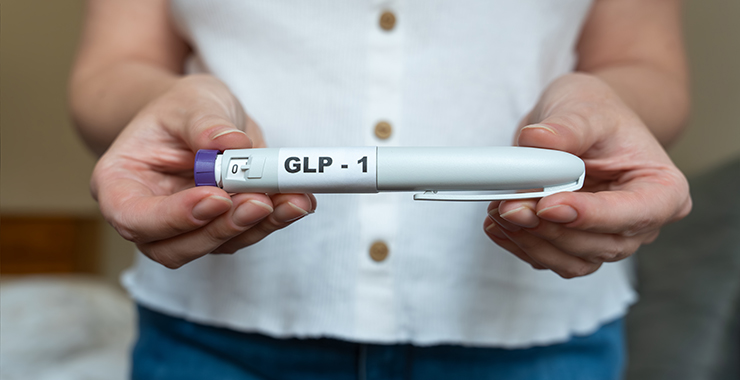
GLP-1 pen

Glucagon-like peptide-1 (GLP-1) receptor agonist medications, which include the drugs Ozempic and Wegovy, have been used to treat Type 2 diabetes since 2005. But the drugs gained prominence when the FDA approved their use for weight loss, and celebrities from Oprah Winfrey to Elon Musk started touting their benefits. As of November 2025, 18% of U.S. adults had taken a GLP-1, with 12% reporting current use (KFF Health Tracking Poll: Prescription Drug Costs, Views on Trump Administration Actions, and GLP-1 Use, Kaiser Family Foundation, 2025opens in new window).

“It’s complicated, because these medications can be life-changing for people with diabetes and other conditions,” said Sara Bartel, PhD, a clinical psychologist and researcher at the Maritime Eating and Appearance Lab (MEAL), a collaboration between Dalhousie University and the University of New Brunswick in Canada. “The medications themselves aren’t a problem, but the discourse about them at a societal level is, partly because it reinforces the idea that body size is a personal choice.”

While GLP-1s can offer physical and even psychological benefits for some patients, they also come with risks. In addition to common side effects such as gastrointestinal problems, they can mask or worsen eating disorder symptoms or trigger symptoms among patients in recovery (GLP-1 receptor agonists and eating disorders, National Eating Disorders Associationopens in new window). Rapid weight changes—both loss and regain—may also trigger psychological and relational challenges that are worth addressing in therapy.

Many patients taking GLP-1s could benefit from more support, said Gregory Dodell, MD, an endocrinologist at Central Park Endocrinology in New York, who has seen patients who have been prescribed the drugs elsewhere but are seeking more oversight. In fact, many patients aren’t getting their GLP-1s from a physician they see regularly: About 26% of people who take GLP-1 drugs get them from an online provider or aesthetic medicine center, according to the 2025 KFF poll.

Even those who do have a provider’s guidance are not always screened for eating disorder symptoms and may even be encouraged to lose weight when doing so could be harmful, said Ashley Dunford, PhD, a clinical and research psychologist at Massachusetts General Hospital focused on eating disorders in higher weight patients.

“These drugs are only becoming more prevalent, so it’s really important for mental health providers to find a way to navigate this space with patients,” Dunford said.

Eating disorders and weight cycling

The use of GLP-1s for weight loss is so new that hardly any research has explored how the drugs affect eating disorders. Several early studies have found they can lessen symptoms of binge eating disorder, while others have found no effect, according to a systematic review led by Bartel (International Journal of Eating Disorders, Vol. 57, No. 2, 2024opens in new window).

“It’s way too early to know whether GLP-1s are an effective or useful treatment for eating disorders,” she said. “People may be eating less, but it’s unclear if that’s a shift toward healthier eating patterns or if they’re restricting in a pathological way.”

While virtually no controlled studies have looked at GLP-1s and restrictive eating disorders, psychologists are concerned about their potential effects. Case reports show that the drugs can be a backchannel for patients with eating disorders to reduce their appetite.

In one case study, a patient in a larger body and a history of anorexia was prescribed a GLP-1 for weight loss and Type 2 diabetes management that triggered a relapse of her eating disorder (Guerdjikova, A. I., et al., Journal of Clinical Psychopharmacology, Vol. 45, No. 3, 2025opens in new window). GLP-1 use can mask symptoms of restrictive eating disorders, because many common effects (rapid weight loss, nausea, and reduced appetite) overlap.

“For some people with eating disorders or in recent recovery, use of these drugs can be risky. They can be misused to support restriction or become a trigger for relapse,” Bartel said.

Another unanswered question about GLP-1s is whether they are suitable for long-term use. Many patients eventually stop taking the drugs due to cost or unwanted side effects—and studies show they often regain much of the weight they lost (Wu, H., BMC Medicine, Vol. 23, No. 298, 2025opens in new window). Research on other weight loss interventions, including bariatric surgery, shows that this “weight cycling” can even increase a person’s risk for cardiovascular and metabolic problems later in life (Swartz, A. Z., et al., The Journal of Clinical Endocrinology & Metabolism, 2025opens in new window).

“There’s a hidden risk when it comes to GLP-1 meds. A person who goes on and off can get stuck in a weight-cycling process that can be harmful in and of itself,” said psychologist Rebecca Boswell, PhD, a clinical associate professor of psychiatry and director of the Princeton Center for Eating Disorders at the University of Pennsylvania Perelman School of Medicine.

Talking with patients about GLP-1 use

Patients on GLP-1s are often not counseled about the medical and psychological risks of rapid weight loss or regularly screened for eating disorder symptoms. Boswell is working with colleagues across several disciplines to develop clinical guidelines around screening, education, and psychological counseling. In the meantime, mental health providers can help address critical gaps.

“Malnutrition and health risks need to be monitored, but unfortunately, patients may not be getting that information from their physician,” said Chevese Turner, an eating disorder and weight discrimination activist who runs the Body Equity Alliance, a health equity consultancy. “So, it’s important that mental health providers are bringing some reality into the situation.”

Therapists can ask about GLP-1 use during intake evaluations, as they typically do for other medications. A thorough intake may also include questions about weight history, body image, and eating concerns, which can help flag at-risk patients. If an existing patient starts taking a GLP-1, it’s worth asking a few questions about body image and eating patterns to uncover potential warning signs, Dunford said.

Broaching the subject with patients can be tricky, especially for those who feel they have finally found an effective way to lose weight. Start by gaining permission to discuss the topic and lead with compassion, Bartel suggests.

“It’s important to validate that someone who has body image struggles—or has experienced significant discrimination because of their body size—may understandably be looking for a solution,” she said.

Boswell recommends approaching a patient’s motivations for taking a GLP-1 with curiosity, whether it stems from health concerns, experiences of weight-related discrimination or bullying, interpersonal relationships, or some combination of these. Next, gauge their understanding of the drugs, including potential benefits, risks, and impacts on weight and nutrition. It can also help to explore a patient’s beliefs about what losing weight will mean for them.

“Sometimes people believe that weight loss will change lots of things in their lives—their relationship, their success, how they feel,” Boswell said. “We can help them gently consider whether all of that is related to body size or to other parts of themselves.”

Signs of a problem include misuse of the medication (taking larger or more frequent doses than prescribed), cognitive changes around food (labeling foods as “good” or “bad”), and changes in how people think about weight, such as repeating stereotypes about those in larger bodies, Boswell said.

Rapid weight loss is also a cause for concern. If patients report or show signs of malnutrition, such as minimal eating, gastrointestinal changes, changes in temperature regulation, or signs of physical discomfort, they should be referred to a medical provider or dietitian for medical monitoring.

Therapists should seek guidance from an eating disorder specialist or connect with a patient’s prescribing physician if they have concerns about malnutrition or new symptoms. For patients who are open to learning more, resources from JAMA Internal Medicineopens in new window, MEALopens in new window, and the National Association of Anorexia Nervosa and Associated Disordersopens in new window can offer additional guidance.

Even when disordered eating isn’t at play, rapid weight loss can be destabilizing, Boswell said, because it can influence how patients relate to others and how they are treated.

“Often as their bodies change, folks will report changes in their relationships and how other people treat them,” she said, such as receiving more attention in public or being spoken to differently by family members. “That can be really psychologically startling.”

Providers report watching marriages break apart and substance use increase, among other changes.

“People feel like they have a new life, and sometimes the result is not always positive,” Turner said. “It can also be destructive.”

In a country where weight-based discrimination is legal in most states—including the workplace—and antifat bias pervades media, relationships, and public spaces, GLP-1s offer a chance of relief for some people in larger bodies.

“The oppression of fatness is real,” Turner said. “It’s really hard to thrive and feel good about yourself when the world around you is saying that you’re not OK.”

In a study of 225 college students, those most interested in trying GLP-1s and most willing to tolerate common side effects also reported higher levels of body shame, weight concerns, and antifat bias (Murkey, C. A., et al., Body Image, Vol. 53, 2025opens in new window). Such beliefs may predispose people to use GLP-1s as a solution, ultimately feeding into weight stigma rather than lessening it, Bartel said.

“These medications are actually perpetuating the idea that body size is a choice, because it’s seen as something that can now be easily changed,” she said. “That’s perfect fuel for discrimination based on body size.”

Research suggests that women who use GLP-1s to lose weight also face negative stereotypes, because the drugs are seen as a “shortcut” (Post, S. M., and Persky, S., International Journal of Obesity, Vol. 48, 2024opens in new window). Weight stigma has been found to harm mental and physical health and to interfere with eating disorder treatment.

“More research is needed on the role of weight stigma in this equation, but it’s something providers should be attuned to and prepared to discuss,” Dunford said.

As GLP-1 use continues to rise, mental health providers can offer a safe space to help patients navigate choices around these medications. That involves supporting patient goals while also addressing beliefs and pressures that often shape decisions about their use, particularly among those at risk for eating disorders.


Tips for talking about GLP-1 use

Broaching the subject of GLP-1 use with patients can be tricky, especially for those who feel they have finally found an effective way to lose weight:

  • Start by gaining permission to discuss the topic and lead with compassion.
  • Ask about GLP-1 use during intake evaluations, like any other medication. A thorough intake may also include questions about weight history, body image, and eating concerns, which can help flag at-risk patients.
  • If an existing patient starts taking a GLP-1, consider asking questions about body image and eating patterns to uncover potential warning signs. For example, ask how the medication has affected their appetite and eating patterns, or whether it has changed how they think and feel about their body.
  • Ground conversations in validation and approach any patient’s motivations for taking a GLP-1 with curiosity, whether driven by health concerns, weight-related discrimination or bullying, relationships, or some combination of these.
  • Gauge a patient’s understanding of the drugs, including potential benefits, risks, and impacts on weight and nutrition.
  • Explore a patient’s beliefs about what losing weight will mean for them.

Recommended Reading

Speaking of Psychology

Subscribe to APA’s audio podcast series highlighting some of the most important and relevant psychological research being conducted today.

Subscribe to Speaking of Psychology and download via:

Appleopens in new window
Apple podcast logo

Spotifyopens in new window
Spotify logo

Related and recent