
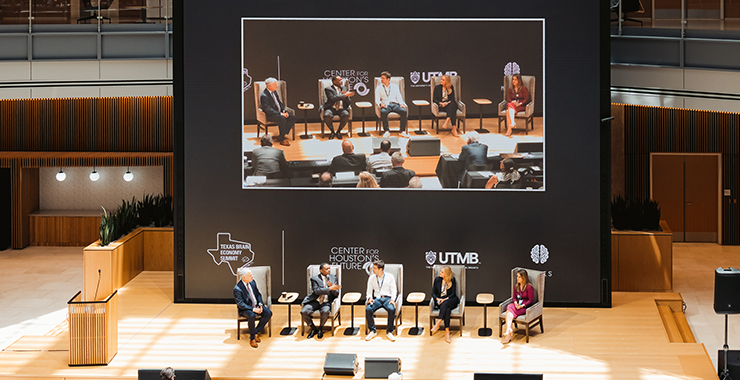
When I attended the Texas Brain Economy Summit in Houston this summer, something notable happened. A few years ago, when psychology showed up at brain health convenings like this, others wondered: Why is APA here? This time, nobody asked that question. We were seen as essential to the conversation—and that shift matters.
So, what has changed? To start, the “brain economy” frame has gained remarkable traction in a short amount of time. At its core, this framework recognizes that cognitive capacity, mental health, and behavioral well-being are foundational infrastructure for human productivity and resilience. When policymakers, health system leaders, and philanthropists gather to discuss large-scale brain research initiatives, they are talking not just about treating illness but also about what it takes for people—and economies—to function and flourish. Psychology has always had something powerful to offer that conversation, and the brain economy framing makes that visible.
Another reason that psychology is now in the room: AI.
During my panel on the future of brain health and AI, I offered that we are living through the biggest experiment on the human brain in history. By the end of the day, I had heard it repeated back to me by multiple attendees.
The people building these technologies, no matter how talented, do not have the expertise to understand and apply behavioral science. We do. And that expertise is urgently needed to protect people from potential harms and to capitalize on opportunities to extend mental health support, improve outcomes, and strengthen the brain economy from the ground up.
The question before us: Will our field rise to the moment? This means bringing psychological science to bear on the issues that will define brain health in the coming decades—from understanding AI’s effects on cognitive aging to addressing disparities affecting underserved and vulnerable populations. It also means ensuring that the design and deployment of these technologies reflect what we uniquely know about human behavior and well-being.
What happens next in brain health and AI will shape our field for generations. Psychology must be at the forefront—not to watch this movement unfold but to help lead it.