

- During the past decade, there has been an average annual increase of 2 percent in the number of people ≥ 50 years of age in the U.S. living with HIV.
- Of the almost 1.2 million people living with HIV in the U.S., based on prevalence estimates, only 30 percent achieve viral suppression (see Figure 1).
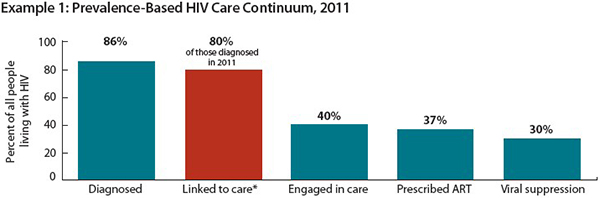
- Viral suppression is contingent on adhering to ART regimens ≥ 90 percent of the time. This means that, for many people living with HIV, they can skip or miss their HIV medications only once or twice a month. For many persons living with HIV, this can be extremely challenging.
- The potential challenges of consistent antiretroviral therapy (ART) adherence in older adults living with HIV are complex and ever-changing. Many older adults living with HIV experience chronic health conditions, such as cardiovascular disease, cancer, osteoporosis, hypertension, kidney failure and liver disease, all of which can complicate their HIV treatment and efforts to adhere to ART regimens.
- Managing multiple comorbid conditions, including HIV, requires adherence to complex and burdensome pill regimens consisting of HIV-specific and non-HIV specific medications.
Patterns and Predictors of ART Adherence in Older Adults
- In spite of the physical, social and economic challenges that might decrease ART adherence in older adults living with HIV, ART adherence in older adults living with HIV appears to be quite good. Older adults who are more adherent tend to be better educated, have better relationships with their physicians and use alcohol less frequently.
- Older adults who self-reported greater ART adherence also had lower viral loads as assessed through hematological testing at one of the clinics.
- Older adults living with HIV who had difficulty adhering to ART regimens also demonstrated poorer neuropsychological functioning, particularly on measures of executive function and psychomotor speed.
- Older adults living with HIV who were less adherent to ART regimens reported more negative affect, frequently brought about by poor social supports and greater reliance on maladaptive coping strategies.
- Older adults living with HIV who reported inconsistent ART adherence also reported more depressive symptoms, greater use of avoidance coping in response to taxing life stressors and received less social support from family members and friends.
- Higher rates of ART adherence in older adults living with HIV are not unique to the United States. In research conducted in 10 HIV treatment programs in Burundi, Cameroon and the Democratic Republic of Congo, persons living with HIV ≥ 50 years of age were more likely to be adherent to their HIV medications compared to their younger counterparts.