

- People living with HIV are aging, in large part due to the efficacy of anti-retroviral therapy (ART).
- The process of aging, immune dysregulation and chronic inflammation occurs in HIV-infected older adults, even those who are well-treated with ART.
- For older adults living with HIV, diseases and conditions such as heart attacks (indicating cardiovascular disease) and low bone density (indicative of osteoporosis) are more frequent than would be expected with normal aging.
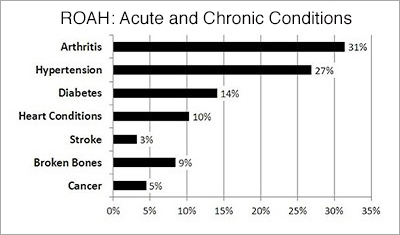
This figure from the Research on Older Adults with HIV Project shows the most prevalent comorbid health conditions among older adults living with HIV.
- HIV may contribute directly to increased medical comorbidity, and certain ART regimens may contribute to increased cardiovascular risk.
- Older persons living with HIV have higher fracture rates (broken bones) than the general population, consistent with findings of greater than expected bone loss in bone density testing in older men living with HIV.
- Chronic inflammation is associated with increased osteoporosis and cardiovascular disease and may underlie bone disease in HIV infection.
- The combination of HIV infection, typical osteoporosis risk factors, and antiretroviral treatment may contribute to bone disease in HIV infection.