Big Liars
This book investigates the science behind “big liars”—those rare people who use lies as their principal way of navigating life.
Most people are mostly honest, most of the time. And there aren't that many big, pants-on-fire liars in the population overall. But just a few big liars can have an outsized impact on the people around them--ruining personal relationships, bankrupting businesses, and even, when they attain political power, undermining the fabric of society.
Big Liars explores this small but dangerous group through the lens of psychological science. Fascinating new research gives us insight into the nature of dishonesty and dishonest people, explaining who lies, what types of people lie a lot, how often people lie, how big liars are created, how they operate, how we can recognize them, and how we can avoid being victimized by them. This book has crucial implications for mental health treatment, as well as our efforts to grapple with the effects of big liars—and their big lies—on social movements and society as a whole.
Preface
Acknowledgments
- Chapter 1: A World Awash with Liars
- Chapter 2: From Baby Fibbers to Adult Deceivers
- Chapter 3: Pathological Liars and Others Who Lie Excessively
- Chapter 4: Big Liars All Around Us
- Chapter 5: Lying to Lovers and Others in Our Lives
- Chapter 6: The Liar’s Toolbox
- Chapter 7: Examining Why Liars Lie
- Chapter 8: The Cost of Dishonesty
- Chapter 9: Detecting Lies and Big Liars
- Chapter 10: How to Avoid Being Duped and to Cultivate Honesty
Index
About the Authors
Christian L. Hart, PhD is a professor of psychology at Texas Woman’s University, where he is the director of the psychological science program and director of the Human Deception Laboratory. He holds a master’s degree and PhD in experimental psychology and has been a professor for almost 20 years.
He teaches courses on deception and forensic psychology and conducts research on lie detection, pathological lying, lying within relationships, the morality of lying, and the factors that influence decisions to be honest or deceptive.
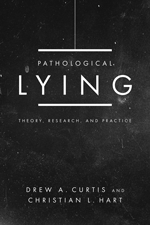
In addition to Big Liars, he has also authored the reference book, Pathological Lying: Theory, Research, and Practice, with APA and is a contributor to Psychology Today.
Drew A. Curtis, PhD is a Texas licensed psychologist, Rodgers Distinguished Faculty, and the director of the PsyD and MS counseling psychology programs at Angelo State University (ASU). He is proudly serving as the executive officer and past-president for the Southwestern Psychological Association and president for Psychological Association of Greater West Texas.
Dr. Curtis established and currently oversees the Clinical Science and Deception lab at ASU.
In addition to Big Liars, he has published an abnormal psychology textbook, a book about psychopathology, the reference book, Pathological Lying: Theory, Research, and Practice, and several papers on deception.
Dr. Curtis has received grants and awards for his research.
If you have ever wondered about what makes some people lie, or if you have had trouble with a “Big Liar” in your life, in a romantic relationship, at work, or a scam artist, this book will answer all your questions. Hart and Curtis expertly present scientific evidence about prolific liars and tips on how to deal with such individuals. This book is engaging, very readable, and full of fascinating case stories.
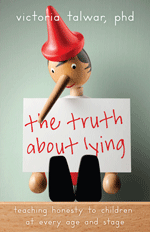
—Victoria Talwar, PhD, Author of The Truth About Lying: Teaching Honesty to Children at Every Age and State
Hart and Curtis provide new insights into the understudied topic of big liars. This work provides an accessible account of the psychology of unusually deceptive people.
—Timothy R. Levine, PhD, Author of Duped: Truth-Default Theory and the Social Science of Lying and Deception