Methodological Issues and Strategies in Clinical Research
Available formats
Also available from
Now in its fifth edition, this classic text helps readers learn how to design, conduct, analyze, and report high-quality clinical studies.
Alan E. Kazdin brings together a wide array of authoritative articles with his own expert insights to illustrate fundamental issues research in an accessible manner, including generating ideas, selecting participants, randomization, selecting assessment measures, analyzing data, and evaluating the implications of and publishing the results.
New to this edition are articles emphasizing the importance of diversity in research, not only cultural diversity among study participants but also in methodology (including quantitative, qualitative, and mixed methods); the role of big data; using technology such as artificial intelligence and apps; and strategies to improve transparency and accessibility, including open science practices, replication, and preregistration.
From generating hypotheses for study and selecting appropriate assessments to interpreting data and presenting findings, readers will come to better understand the whole research process as well as the importance of ethics and scientific integrity.
Preface
Part I. Introduction: Overview and Background
- Chapter 1. Methodology: What It Is and Why It Is So Important
Alan E. Kazdin
Part II. Beginning the Research Process
- Chapter 2. Beginning the Process: Key Concepts and Questions to Guide Research
Alan E. Kazdin - Chapter 3. Getting Out of Our Conceptual Ruts: Strategies for Expanding Conceptual Frameworks
Allan W. Wicker
- Chapter 4. In Defense of External Invalidity
Douglas G. Mook - Chapter 5. When Small Effects Are Impressive
Deborah A. Prentice and Dale T. Miller
Part III. Participants in Research
- Chapter 6. A WEIRD View of Human Nature Skews Psychologists' Studies
Dan Jones - Chapter 7. Toward a Psychology of Homo Sapiens: Making Psychological Science More Representative of the Human Population
Mostafa Salari Rad, Alison Jane Martingano, and Jeremy Ginges
Diversity of Participants
- Chapter 8. On Becoming Multicultural in a Monocultural Research World: A Conceptual Approach to Studying Ethnocultural Diversity
Gordon C. Nagayama Hall, Tiffany Yip, and Michael A. Zárate - Chapter 9. Designing Studies for Sex and Gender Analyses: How Research Can Derive Clinically Useful Knowledge for Women's Health
Ruth Klap and Keith Humphreys
Part IV. Design Options With and Without Randomization
Research Designs Options
- Chapter 10. Experimental and Observational Designs: An Overview
Alan E. Kazdin - Chapter 11. Observational Studies and Their Utility for Practice
Julia F. M. Gilmartin-Thomas, Danny Liew, and Ingrid Hopper
Randomization and Randomized Controlled Trials
- Chapter 12. Random Sampling, Randomization, and Equivalence of Contrasted Groups in Psychotherapy Outcome Research
Louis M. Hsu - Chapter 13. Randomized Controlled Trials: Characteristics, Options, and Challenges
Alan E. Kazdin
Part V. Assessment
Core Concepts and Considerations in Developing and Selecting Measures
- Chapter 14. Constructing Validity: New Developments in Creating Objective Measuring Instruments
Lee Anna Clark and David Watson - Chapter 15. Selecting Measures for Research Investigations
Alan E. Kazdin
Novel Measurement Options
- Chapter 16. Computer-Enhanced Practice: The Benefits of Computer-Assisted Assessment in Applied Clinical Practice
Stephanie Ruth Young, Danika L. S. Maddocks, and Jacqueline M. Caemmerer - Chapter 17. Ecological Momentary Assessment (EMA) in Studies of Substance Use
Saul Shiffman - Chapter 18. AI in Mental Health
Simon D’Alfonso
Part VI. Data Analysis, Evaluation, and Presentation
Background and Underpinnings of Data Analyses
- Chapter 19. A Power Primer
Jacob Cohen - Chapter 20. Abandon Statistical Significance
Blakeley B. McShane, David Gal, Andrew Gelman, Christian Robert, and Jennifer L. Tackett - Chapter 21. Ethical Concerns in Statistical Analyses: Implications for Clinical Research and Practice
Owen J. Gaasedelen
Data Exploration and Multiple Methods of Data Analyses
- Chapter 22. Exploratory Data Analysis as a Foundation of Inductive Research
Andrew T. Jebb, Scott Parrigon, and Sang Eun Woo - Chapter 23. When Should We Use One-Tailed Hypothesis Testing?
Graeme D. Ruxton and Markus Neuhäuser - Chapter 24. The Proof of the Pudding: An Illustration of the Relative Strengths of Null Hypothesis, Meta-Analysis, and Bayesian Analysis
George S. Howard, Scott E. Maxwell, and Kevin J. Fleming
Data Presentation
- Chapter 25. Designing Better Graphs by Including Distributional Information and Integrating Words, Numbers, and Images
David M. Lane and Anikó Sándor
Part VII. Special Topics: Evaluation in Clinical Practice and Research
Evaluating Clinical Effects of Treatment
- Chapter 26. Routine Outcome Monitoring (ROM) and Feedback: Research Review and Recommendations
Michael Barkham, Kim De Jong, Jaime Delgadillo, and Wolfgang Lutz - Chapter 27. Revisiting and Reenvisioning the Outcome Problem in Psychotherapy: An Argument to Include Individualized and Qualitative Measurement
Clara E. Hill, Harold Chui, and Ellen Baumann
Extending Treatments
- Chapter 28. Beyond Efficacy and Effectiveness: A Multifaceted Approach to Treatment Evaluation
Timothy D. Nelson and Ric G. Steele - Chapter 29. Testing Psychosocial Interventions in the Contexts They Are Meant to be Delivered
Rinad S. Beidas, Lisa Saldana, and Rachel C. Shelton
Part VIII. Multiple Methodologies and Levels of Data Analysis
Beyond Quantitative Methods
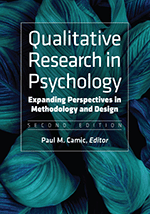
- Chapter 30. What Can Qualitative Psychology Contribute to Psychological Knowledge?
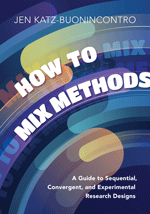
Carla Willig - Chapter 31. Mixed Methods Research in Psychology
Timothy C. Guetterman and Analay Perez - Chapter 32. Single-Case Experimental Research Designs
Alan E. Kazdin
Big Data, Secondary Data Sets, and Collaborative Science
- Chapter 33. Big Data in Psychology: A Framework for Research Advancement
Idris Adjerid and Ken Kelley - Chapter 34. Getting Started: Working With Secondary Data
Amy M. Pienta, JoAnne McFarland O'Rourke, and Melissa M. Franks - Chapter 35. How to Build Up Big Team Science: A Practical Guide for Large-Scale Collaborations
Heidi A. Baumgartner, Nicolás Alessandroni, Krista Byers-Heinlein, Michael C. Frank, J. Kiley Hamlin, Melanie Soderstrom, Jan G. Voelkel, Robb Willer, Francis Yuen, and Nicholas A. Coles
Part IX. Ethics and Scientific Integrity
Guidelines and Codes
- Chapter 36. Ethical Principles of Psychologists and Code of Conduct
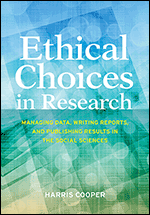
American Psychological Association - Chapter 37. Research Ethics: How to Treat People Who Participate in Research
Ezekiel Emanuel, Emily Abdoler, and Leanne Stunkel
Professional Responsibilities for the Conduct of Research
- Chapter 38. International Recommendations to Guide Multiple Facets of the Research and Publication Process
Alan E. Kazdin - Chapter 39. False-Positive Psychology: Undisclosed Flexibility in Data Collection and Analysis Allows Presenting Anything as Significant
Joseph P. Simmons, Leif D. Nelson, and Uri Simonsohn - Chapter 40. Best Practices for Allocating Appropriate Credit and Responsibility to Authors of Multi-Authored Articles
Lucas D. Eggert
Part X. Open Science, Replication, and Research Practices
Open Science
- Chapter 41. A Manifesto for Reproducible Science
Marcus R. Munafò, Brian A. Nosek, Dorothy V. M. Bishop, Katherine S. Button, Christopher D. Chambers, Nathalie Percie du Sert, Uri Simonsohn, Eric-Jan Wagenmakers, Jennifer J. Ware, and John P. A. Ioannidis - Chapter 42. Replicate Others as You Would Like to Be Replicated Yourself
Nicole Janz and Jeremy Freese
Practices to Improve Research
- Chapter 43. A Template for Preregistration of Quantitative Research in Psychology: Report of the Joint Psychological Societies Preregistration Task Force
Michael Bosnjak, Christian J. Fiebach, David Mellor, Stefanie Mueller, Daryl B. O’Connor, Frederick L. Oswald, and Rosemarie I. Sokol - Chapter 44. Responsible Practices for Data Sharing
George Alter and Richard Gonzalez
Part XI. Publication and Communication of Research
Reporting Standards: What to Cover and Include in an Article
- Chapter 45. Journal Article Reporting Standards for Quantitative Research in Psychology: The APA Publications and Communications Board Task Force Report
Mark Appelbaum, Harris Cooper, Rex B. Kline, Evan Mayo-Wilson, Arthur M. Nezu, and Stephen M. Rao
Communicating Research Findings
- Chapter 46. Publication and Communication of Research Findings
Alan E. Kazdin
Part XII. Perspectives on Methodology
- Chapter 47. Methodology: Perspectives and General Lessons to Guide Research
Alan E. Kazdin
Index
About the Editor
Alan E. Kazdin, PhD, is a research scientist and sterling professor of psychology and child psychiatry at Yale University where he also served as chairman of the psychology department, director of the Child Study Center, director of child psychiatric services, and chair of the publications committee.
He has published 50 books on methodology, parenting and child-rearing, psychosocial interventions, interpersonal violence, and novel treatment delivery models.
His awards include the Research Scientist and MERIT Awards from the National Institute of Mental Health and the Gold Medal Award for Life Achievement in the Science of Psychology from the American Psychological Foundation.
This book is a must-read for all students and trainees in clinical and counseling psychology and the go-to resource for everyone interested in clinical science. It is an updated classic from the foremost leader in clinical psychological science. Kazdin assembled the best works in psychological methods to walk us through all stages of the research process emphasizing the importance of using science to understand and treat clinical disorders while at the same time addressing the challenges and pitfalls head-on. This updated masterpiece will be required reading in the training of the next generation of clinical scientists.
—Jutta Joormann, PhD, Richard Ely Professor and Chair of Psychology, Yale University, New Haven, CT
Once again, Alan E. Kazdin has interwoven his own research design and methodological contributions with those of leading scholars across a variety of relevant areas to describe and clarify research and methodological issues in scientific inquiry. The result—an expanded and updated contemporary fifth edition of a book that will continue to serve as the model for informing and addressing methodological issues. It simply sets the standard in this arena for both academic and clinical readers.
—W. Edward Craighead, PhD, ABPP, J. Rex Fuqua Professor and Vice Chair, Department of Psychiatry and Behavioral Sciences and Department of Psychology, Emory University, Atlanta, GA