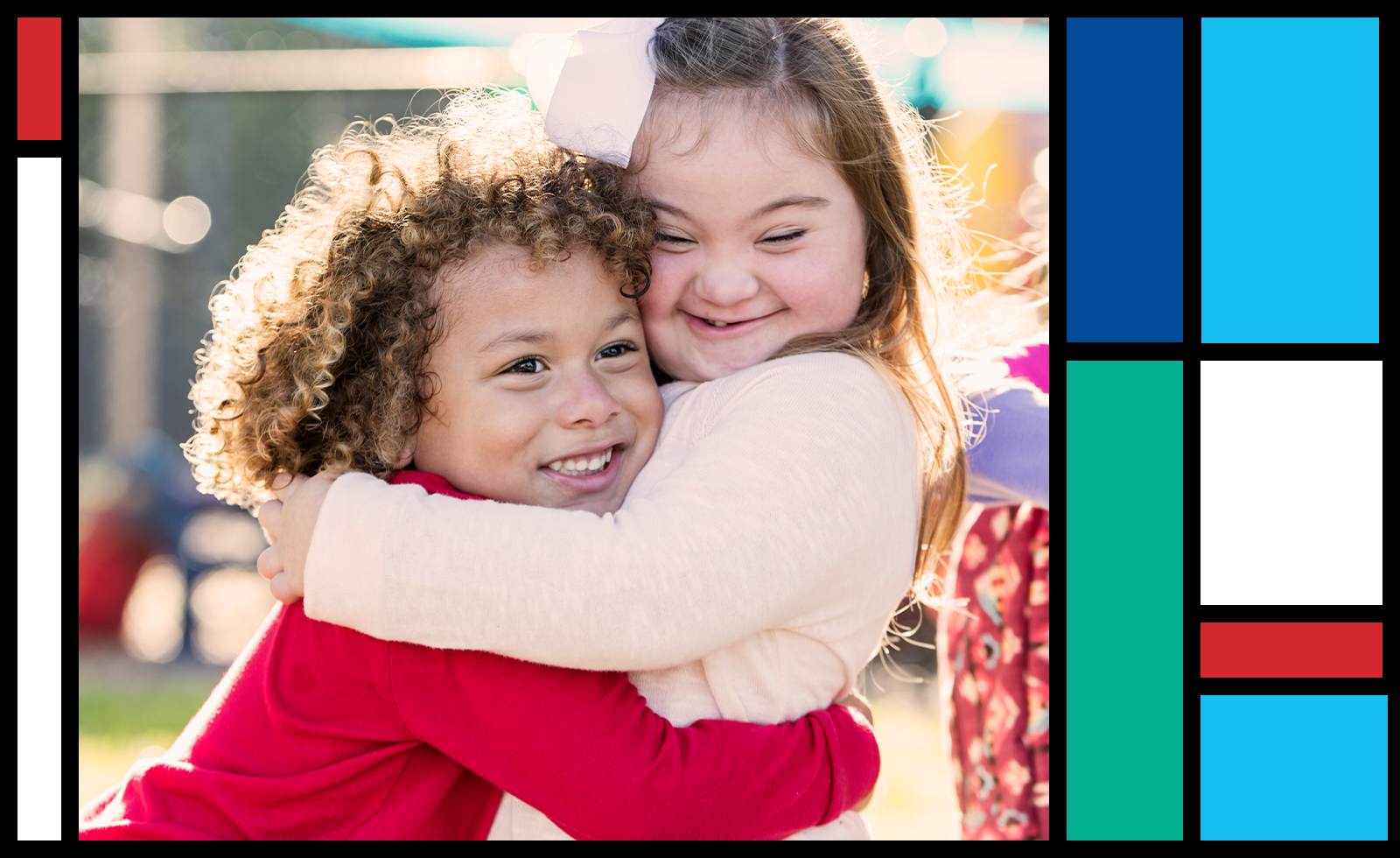
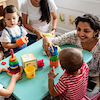
Why are social context, interpersonal relationships, and emotional well-being important to children’s well-being? Principles 13–15 relate to the social context and emotional dimensions that affect learning
Principle 13: Learning is situated within multiple social contexts.
Given the variation in cultural experiences that children bring with them, it is critical that early childhood educators facilitate a “classroom culture” that ensures shared meanings, values, beliefs, and behavioral expectations and provides a safe and secure environment for all young children.
Tips for teachers
The more teachers know about the cultural backgrounds of children and how differences in values, beliefs, language and behavioral expectations can influence behavior, the better they can effectively facilitate teaching and learning in structured educational settings.
Early childhood educators can relate the curriculum to children’s cultural backgrounds.
Establishing connections with families and local communities can help enhance understanding of children’s cultural experiences and facilitate shared understandings about learning.
Seeking opportunities for children to participate in the local community can help connect the relevance of learning to everyday lives and enhance educators’ understanding of the cultural backgrounds and experiences of the young children in the classroom.
Principle 14: Interpersonal relationships and communication are critical to both the teaching–learning process and the social development of children.
The teaching–learning process in early childhood learning environments is inherently interpersonal, encompassing both educator-child and peer connections. Structured learning environments provide a critical context for teaching social skills, such as emotion identification and regulation, communication/self-expression, and respect. Developing successful relationships with peers and adults depends highly on one’s ability to communicate verbally and nonverbally.
Tips for teachers
A safe and secure environment, both physical and social, and shared learning culture provide the foundation for healthy educator-child and peer relationships.
Learning effective social skills must include planned instruction and opportunities for practice and feedback.
Early childhood educators are responsible for ensuring that a positive social climate is maintained through cooperative and supportive norms and promoting a peaceful resolution of peer conflicts.
Educators may incorporate lessons in communication basics as part of the routine curriculum.
Principle 15: Emotional well-being influences educational performance, learning, and development.
Children’s emotional well-being can influence the quality of their participation in the teaching–learning process, their interpersonal relationships, the effectiveness of their communication, their responsiveness to the classroom learning environment, and the way they interact with the atmosphere established there.
Tips for teachers
Help children build their emotional vocabulary by having a chart with facial expressions.
Help children regulate their emotions. For example, a teacher can help a child who is having a meltdown breathe deeply while modeling this behavior for them.
Encourage and teach appropriate language to use when children feel upset.
Encourage children to resolve their conflicts and forgive each other, while engaging in a conversation about what they could do differently in the future, creating some space if children feel they need it, and then helping them to rejoin their friends when they feel ready.