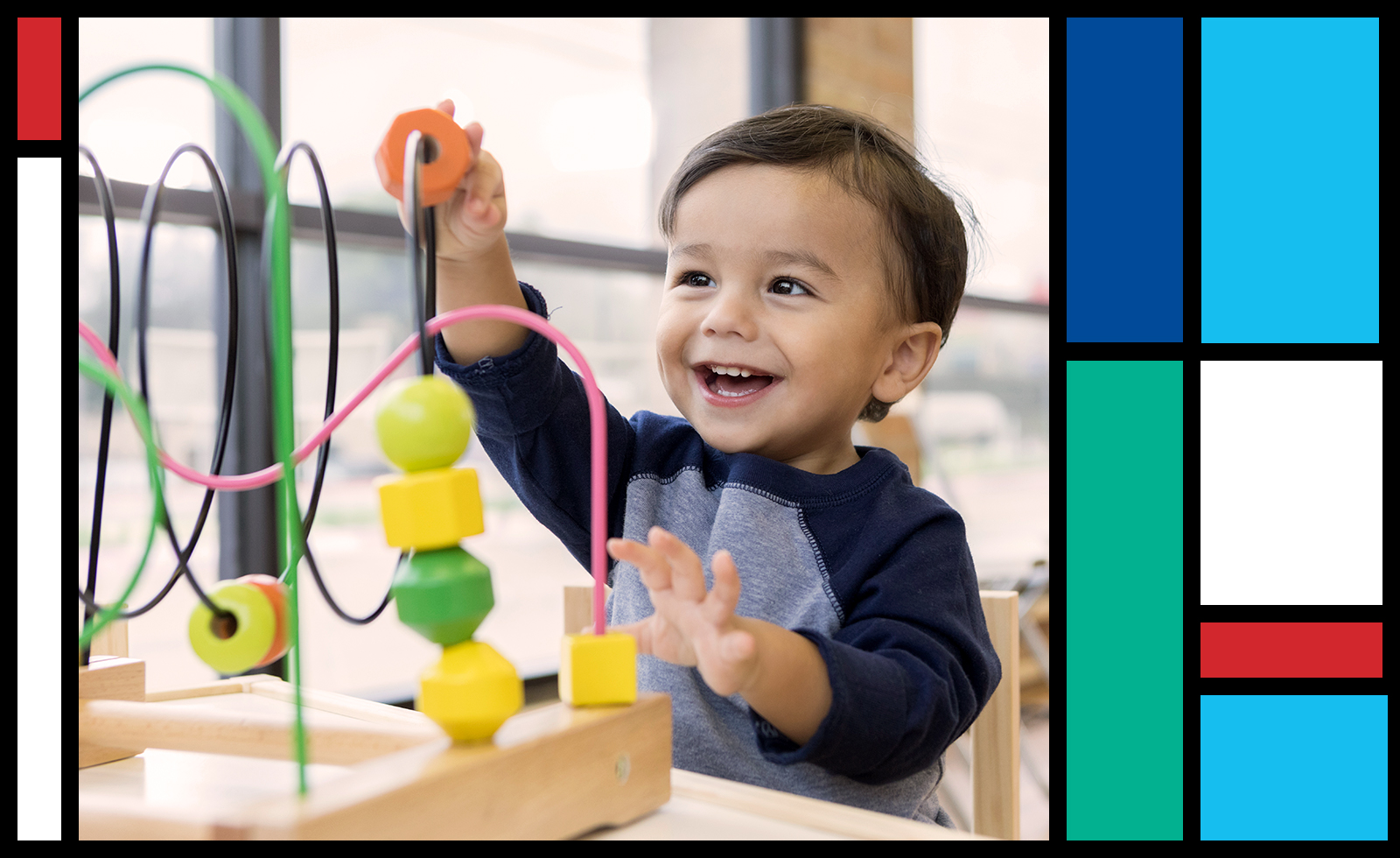
How do children think and learn? Principles 1–8 relate to thinking and learning
Principle 1: Children’s beliefs or perceptions about intelligence and ability affect their cognitive functioning and learning
There are educational implications to the beliefs children develop about intelligence. Children with a growth mindset, as compared to a fixed mindset, are generally more willing to engage in challenging tasks that test and expand their intelligence.
Tips for teachers
Teachers can foster children’s beliefs that their intelligence and ability can be developed through effort and exercising various strategies:
Provide young children with different types of play opportunities that help them learn to solve problems in different ways.
Give children tasks that provide them with some challenges,this can help children learn to approach problems using different strategies or methods.
Reframe a challenge to help children see their progress rather than their immediate ability to meet a performance benchmark.
Be careful not to give indirect and subtle cutes about low ability. For example, unsolicited assistance and sympathy may communicate the teacher’s belief that the child does not have the ability to succeed.
Principle 2: What children already know affects their learning.
Children bring their previous knowledge and experiences into their early childhood classrooms. Accordingly, learning consists of either adding to existing knowledge, which is known as conceptual growth; or transforming or revising knowledge, known as conceptual change.
Tips for teachers
Teachers can be instrumental in achieving both conceptual growth and conceptual change in children.
Assess children’s current level of knowledge and previous experience before teaching a topic.
When young children do not have sufficient first-hand or background knowledge about a topic, teachers should provide activities that present background information before they teach new information.
Teachers can present children with credible information or data that run counter to their misconceptions.
Principle 3: Children’s cognitive development and learning are not limited by general stages of development.
Stages of development are not linked to a particular age or grade level. Children are capable of higher-level thinking and behavior when:
There is some biological base (early competency) for knowledge in the domain.
They already have some familiarity or expertise with a knowledge domain.
They interact with more capable others or with challenging materials.
They are in sociocultural contexts from which they become familiar with that topic through experience.
Tips for teachers
Age is not the main or sole determiner of what a child is capable of knowing or reasoning. In designing instruction, teachers can facilitate children’s reasoning in the following ways:
Encourage children’s reasoning in knowledge domains and contexts where they already have knowledge and interest.
The perfect level of entry for new material is providing information that is not too elementary to be easily understood and not too complex to be out-of-range of understanding even with assistance.
Place children in mixed-ability groups for learning allow for interaction with children who have different abilities and problem-solving approaches.
Principle 4: Learning is based on context, so generalizing learning to new contexts is not spontaneous but instead needs to be facilitated.
Learning occurs in multiple contexts. Children do not automatically transfer or generalize their knowledge from one context or situation to new contexts or situations. In fact, the more dissimilar the new context is from the original learning context, the more difficulty children will experience. Children’s ability to transfer learning is an important indicator of the quality of their learning – its depth, adaptability and flexibility.
Tips for teachers
The challenge is for teachers to provide children with opportunities to transfer their knowledge and form connections across different contexts – from highly similar to highly dissimilar contexts. This can be achieved by the following:
Asking children to make connections between what they learn at school and their lives at home.
Teachers can help children to generalize/apply their knowledge by regularly providing real-life instances of the academic behaviors in which they are engaged.
Identifying and building on strengths and experiences that children bring to a learning situation.
Principle 5: Acquiring long-term knowledge and skill is largely dependent on practice.
What children know (their knowledge base) is etched into long-term memory. Most information, particularly when related to school-based knowledge and highly skilled activities, must be processed in some way before being stored in long-term memory. The transfer of information from short-term to long-term memory occurs when children use different strategies, and practice is key to this transfer process.
Studies comparing the performance of experts and novices have shown important distinctions between purposeful practice and other activities, such as play or “drill and kill” repetition. Purposeful practice involves attention, rehearsal, and repetition over time and leads to new knowledge or skills that can later be developed into more complex knowledge and skills.
Tips for teachers
Examples that early childhood educators can use to ensure the acquisition of long-term knowledge are as follows:
Rote learning experiences can be incorporated into everyday activities.
Support young children’s learning in multiple contexts whenever possible, not just in the classroom.
Teachers could use music and movement activities to help children acquire long-term knowledge through songs, which physically engage children.
Principle 6: Clear, explanatory, and timely feedback is important for learning.
Learning can increase when children receive regular, specific, explanatory and timely feedback on their work. Clear learning goals help to increase the effectiveness of feedback to children because the comments can tie directly to the goals, and regular feedback prevents children from getting off track in their learning.
Tips for teachers
Teachers can provide feedback to children incorporating earlier learning with current learning goals.
Children tend to respond better if feedback minimizes negativity and focuses on what they might wish to change.
When children are learning a new task or struggling with an existing one, frequent praise following small degrees of improvement is very important, and when progress is evident, encouragement to persist can matter a great deal.
Principle 7: Children’s self-regulation assists learning, and self-regulatory skills can be taught.
Self-regulation refers to sets of skills that facilitate goal-directed behavior, including the ability to inhibit impulsive behavior, control one’s emotions, and solve problems. In the early childhood classroom, self-regulatory skills allow children to pay attention to the teacher, follow directions, and manage behavior so they can learn. These skills can be taught or enhanced, specifically through direct instruction, modeling, support and classroom organization and structure.
Tips for teachers
Giving children some autonomy and including them in decision-making about their behavior is better for promoting executive functioning than just giving children explicit directions.
Play that involves moderate to vigorous physical activity is also associated with increases in children’s self-regulation.
Children’s executive function skills can also be enhanced through mindfulness practices, such as deep breathing, focused listening and attention, and body/emotion self-monitoring and self-awareness exercises.
An organized classroom environment with clear, consistent expectations, rules and routines can also help enhance children’s self-regulation.
Principle 8: Children’s creativity can be fostered.
Creativity – defined as the generation of ideas that are new and useful in a particular situation – is a critical skill for children. Creative approaches to caregiving and teaching can inspire enthusiasm and joy in the learning process by increasing children’s engagement in various activities, situations and learning contexts. Contrary to the conventional wisdom that creativity is a stable trait (you either have it or you don’t), creative thinking can be cultivated in children.
Tips for teachers
Emphasize the value of diverse perspectives as fuel for creativity.
Allow for a wide range of approaches to completing tasks, engaging in activities, and solving problems, realizing that each child might bring a unique approach to every situation.
Provide children with opportunities to solve problems in groups and to communicate their creative ideas to a wide range of audiences.
Vary activities by including opportunities for play and the use of prompts such as, imagine if, create, invent, discover and predict.
Share with children your creative ideas. Modeling can show children how creative solutions are not necessary for all situations, which may help children to develop an improved sense of confidence in their judgment as to when it is appropriate to focus on getting one right answer, and when it is appropriate to pursue alternative approaches.