skip to main content
Breakthrough Psychological Science

The Stroop effect’s long (and colorful) influence

How a simple strategy for studying interference became an endlessly versatile tool for exploring cognition. “Stroop just keeps gaining strength”
APA Style leaf logo Cite This Article in APA Style
Weir, K. (2025, March 24). The Stroop effect’s long (and colorful) influence. https://www.apa.org/research-practice/conduct-research/stroop-effect

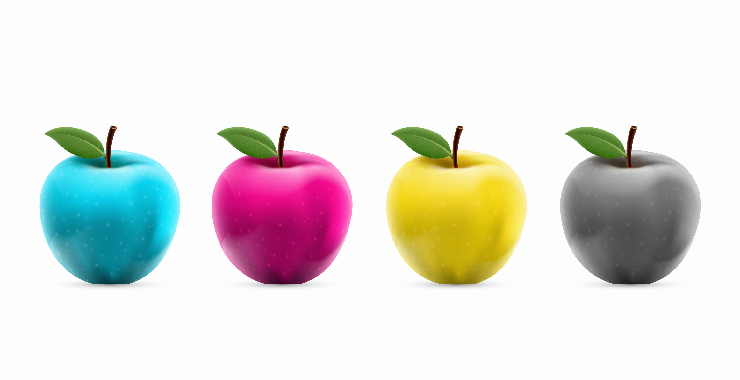
Four apples, one is blue, one is pink, one is yellow, one is grey

For more than 100 years, APA’s journals, books, and databases have provided top-quality psychological research content to scholars around the world. The Breakthrough Research series revisits key papers published in APA journals that continue to shape the field decades later. 

In each article, you’ll learn about the original research—its inspiration and impact—and hear from psychological scientists who are building on that foundational work today, demonstrating its enduring and evolving relevance.

The breakthrough

In 1935, as the Great Depression dragged on and fascism was rising in Europe, a young psychologist quietly published the results of his dissertation. As an experimental psychology student at George Peabody College in Nashville (now a school within Vanderbilt University), John Ridley Stroop, PhD, had developed a colorful strategy for studying interference between conflicting psychological processes—in this case, color identification and word reading. 

Stroop showed study participants a series of cards with color words printed in black ink or in contrasting “incongruent” ink colors (such as the word brown printed in purple ink). Asked to read the color names, participants’ response times were similar whether the words were in black or in incongruent colors. But when he asked participants to name the ink color instead of reading the words (using colored squares as the control), participants took considerably longer to reply—and made more errors—when words were printed in incongruent colors. In other words, he showed just how hard it is to overcome an automatic cognitive process like reading. That difficulty—slower and more error-prone responses—is known as the “interference effect” or the “congruency effect.”


View a full-size version with detailed description of the color word task infographic

Stroop published only a handful of other papers, turning away from experimental psychology toward teaching and religion. “For several decades after it was published, the Stroop task collected dust,” said Colin M. MacLeod, PhD, Distinguished Professor Emeritus at the University of Waterloo, who long studied the task in his lab and published a review of the first 50 years of Stroop-related research in 1991 (Psychological Bulletinopens in new window, Vol. 109, No. 2).

Despite the slow start, Stroop had left an indelible stamp on psychology. In the 1960s, researchers dusted off the experiment and realized its broad value for studying interference in attention. Now, nearly a century after its publication, the Stroop test endures as staple of intro psychology textbooks­—and an invaluable tool for exploring cognition.

The paper

Stroop, J. R. (1935). Studies of interference in serial verbal reactionsopens in new window. Journal of Experimental Psychology, 18(6), 643–662. 

Foundations of discovery

At the time of Stroop’s paper, the field of psychology was immersed in the behaviorist tradition, and Stroop approached his research from that lens. People processed conflicting words and colors more slowly, he concluded, because they were so well-practiced at reading. “It was the 1930s, and everyone was studying learning,” MacLeod said. “He saw this as a learning paper.” 

Yet it turned out to be much more. In the 1960s, psychologist George Klein, PhD, revisited the Stroop phenomenon and showed that the more meaningful the conflicting word, the more people’s reaction times slowed. Asked to name the color of words printed in blue ink, for example, the word take caused less interference than the word lemon, which interfered still less than the word yellow. With Klein’s study, researchers realized the task’s utility for studying a broad range of mental processes, including selective attention, processing speed, working memory, and cognitive flexibility. And those who used it quickly discovered just how reliable the methodology was. “You can count on observing the interference effect if you administer almost any version of the Stroop task to almost any sample,” said Julie Bugg, PhD, a professor of psychological and brain sciences at Washington University in St. Louis. 
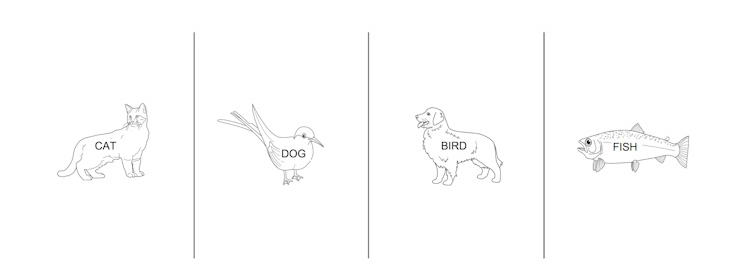

View a full-size version with detailed description of the picture word task infographic

From there the test took off, soon aided by the advent of new technology and the ease of administering the Stroop task on a computer. Researchers tweaked the test in countless ways—printing only the first few letters of the word, replacing text with pictures, and eventually creating entirely new offshoots, such as one that replaced color words and hues with emotion words and pictures of faces. 

The Stroop task has been used in clinical settings, such as neuropsychological tests to assess cognitive decline or the effects of traumatic brain injuries, for instance. But its biggest impact has been in cognitive psychology research, where scientists continue to use the test to peel back the mechanisms involved in attention and behavior regulation. “Part of the secret of why the Stroop test has been so enduring is that it's an elegant demonstration of the fact that it’s not easy to override a habitual behavior,” said Tobias Egner, PhD, a professor of psychology and neuroscience at Duke University. “We can do it, but it comes at a cost.” 

Stroop today: Cognitive control

Reading is an ingrained, learned behavior. Overriding that habitual behavior to achieve a task—such as naming the ink color of the word you’re reading—requires mental effort. That effort is a form of cognitive control, the ability to direct your thinking and behavior to achieve a goal. The more practiced a given behavior is, the greater the amount of cognitive control it takes to override it. By measuring interference, the Stroop test serves as a handy indicator of cognitive control. “It is a vehicle that has allowed us a rich characterization of the different learning mechanisms that drive cognitive control,” Egner said.

Tobias Egner, PhD
Tobias Egner, PhD
Yet the task does more than measure how habitual processing interferes with goal-directed behavior. “Nowadays, people have started to play around with the relative composition of Stroop trials to explore more dynamic behavior,” Egner said. To study changes in attention over time, for example, participants might be presented with a series of consecutive Stroop trials, some harder (with many mismatched, incongruent color-word pairs) and others easier (mostly congruent stimuli, like the word red printed in red). “It turns out you’re better at responding to incongruent stimuli if the previous trials were also incongruent. You form an expectation of how difficult the task is, and upregulate your attention,” Egner explained. “It’s as if the brain says, ‘This was hard, let’s tune up our attention so we don’t get caught out.’”


This response—ramping up your attention to face what you anticipate will be a tricky task—is an example of proactive control. The Stroop task is also used to study how attention changes in response to a specific stimulus that you’ve found difficult to cope with in the past, an effect known as reactive control. In such an experiment, the color blue might usually be paired with a conflicting word. Though participants aren’t consciously aware of it, they implicitly start to associate the color with difficulty—and experience a boost of attention whenever they see the color blue. In other words, proactive control heightens attention to prevent interference, while reactive control kicks in to resolve interference as it arises.

Egner and his colleagues have used variations of the Stroop task to explore differences between proactive and reactive control. In one example, they showed that giving participants feedback on their performance—telling them whether they responded correctly or incorrectly to each item—increased their proactive control when facing harder trials but had little effect on reactive control (Journal of Experimental Psychology: Human Perception and Performanceopens in new window, Vol. 46, No. 4, 2020). The finding has potential real-world applications: In people whose proactive control is impaired, such as people with schizophrenia, performance feedback could be tailored to shore up attention ahead of a challenging task.

Stroop today: Cognition and aging

Julie Bugg, PhD
Julie Bugg, PhD
Bugg has also explored differences in proactive and reactive control. In one study, she and her former postdoctoral researcher Jihyun Suh, PhD, manipulated participants’ working memory load by asking them to remember a number ranging from one to six digits. Then, they administered a variant of the Stroop task designed to highlight reactive control. They found that reactive control seemed to be triggered automatically, even when people’s attention was focused on remembering a long string of digits. The finding flew in the face of the traditional idea that cognitive control is both effortful and strategic (Journal of Experimental Psychology: Human Perception and Performanceopens in new window, Vol. 47, No. 7, 2021).


Much of Bugg’s work focuses on aging and cognition in older adults. Traditionally, cognitive control is thought to decline with aging. Her research, however, suggests that’s not always true. With help from Stroop, she showed that proactive control declines with age, while reactive control does not (Psychology and Agingopens in new window, Vol. 29, No. 1, 2014). “It’s intriguing that older adults are just as able as younger adults to harness reactive control in this fashion,” Bugg said. “It points to the importance of our experiences in shaping where we direct our attention and what makes certain distractions easier (or more difficult) to ignore.” The finding, she added, could have implications for designing environments that enable older adults to rely more on reactive control as they age.

Other lines of her research could have practical applications for aging adults. With her former post-doc Matt Welhaf, PhD, and colleagues, Bugg found that simply reminding older adults to name the color and not the word during a Stroop test significantly reduced interference, improving their response times (Psychology and Aging,opens in new window advance online publication, 2025). “The finding may open up interesting avenues such as apps that could be designed to deliver reminders to older adults during times in which it is important not to be distracted,” she said.

Future focus

 Colin M. MacLeod, PhD
Colin M. MacLeod, PhD
Stroop has plainly left a lasting impression on cognitive psychology, yet that’s just one slice of its impact. “In social psychology, developmental psychology, industrial-organizational psychology, and more, people can point to ways that Stroop has been used as a tool,” MacLeod said. Though not all those studies stand up to modern scrutiny, he added, “many uses have been very informative and moved the field forward.”


The test’s influence extends beyond the lab. It’s embraced as a fun demonstration of cognitive processes in high school and college classrooms. Clinical neuropsychologists use the test to identify executive function deficits in people with conditions like attention-deficit/hyperactivity disorder and Alzheimer’s disease. Even advertisers have borrowed the idea of conflicting colors and text to get consumers to do a double take when they look at an ad.

And still the task has much to teach us about the brain and behavior. “There are very few phenomena in psychology where you find that the number of papers per year keeps going up this many years after the original,” MacLeod said. “Stroop just keeps gaining strength.”

Dig deeper

Measuring adaptive control in conflict tasks
Braem, S., et al.
Trends in Cognitive Science, 2019

Editorial: The locus of the Stroop effect
Parris, B. A., et al.
Frontiers in Psychology, 2019

John Ridley Stroop: Creator of a landmark cognitive task
MacLeod, C. M.
Canadian Psychology/Psychologie canadienne, 1991

Breakthrough Research series

For more than 100 years, APA’s journals, books, and databases have provided top-quality psychological research content to scholars around the world. This series revisits key papers published in APA journals that continue to shape the field decades later.

See the additional articles in this series.

Recommended Reading

You may also like