


As the largest scientific and professional association of psychologists in the world, APA is the leading source for psychological science. APA advances, promotes, and applies psychological science to help improve lives and benefit society.
From supporting groundbreaking research to translating scientific discoveries into practical tools, resources, and partnerships, APA helps ensure psychological science informs learning, health, work, public policy, and communities around the world.
This page is divided into sections summarizing how APA and APA Services, Inc. (APA’s partner organization devoted to advocacy on behalf of APA members) are elevating science: In the lab, On the Hill, On the career path, Across the field, In the public, and In the world.
Learn how our work is helping psychological scientists—and how you can get involved!
In 2025, APA members include over 30,000 scientists who are actively contributing to the research literature.
On this page:

In the Lab
APA helps make science stronger, more accessible, and easier to conduct:
APA provides researchers with trainings, resources, and standards that improve their ability to conduct and disseminate credible research and foster career development. We support researchers at all career levels, and our activity in 2025 and 2026 has solidified our commitment to high-quality training and standards in psychological science.
Free training sessions
We offer Science Training Sessions, led by leaders in the field, to help the field stay up to date with the most advanced scientific methods. In addition, Essential Science Conversations bring experts together for open discussions on emerging issues, opportunities, and challenges in psychological science, helping the field stay informed, connected, and responsive to a changing research landscape. You can watch more than 40 training sessions and 35 conversations on demand.
Resources for authors and editors
APA provides many resources to help authors prepare manuscripts, determine authorship, hear from APA journal editors, and understand peer review. These resources include standardization guides that help promote consistency in how research is conducted and communicated, strengthening the transparency and reproducibility of psychological science. APA Style has helped standardizing scientific discourse in psychology and many other scientific disciplines; the APA Style Journal Article Reporting Standards feature longstanding guidelines for quantitative and qualitative research, meta-analyses, and systematic reviews; and the new Journal Article Reporting Standards for Race, Ethnicity, and Culture provide guidance on the thoughtful and transparent reporting of race, ethnicity, and culture, helping to increase transparency, reproducibility, and avoidance of false generalizability claims. Journal editors foster an editorial process that includes all people, leading to a psychological science that more fully reflects the human experience.
Ethical codes and guidelines
We establish, maintain, and update ethical codes to guide psychological science. APA has produced research- and practice-related guidelines, including the Guidelines for Ethical Conduct in the Care and Use of Nonhuman Animals in Research and The Standards for Educational and Psychological Testing—a product of the American Educational Research Association, APA, the National Council on Measurement in Education.
Keep up with the science
APA PsycInfo is a personalized notification service so scientists can get weekly updates about published papers in their areas of interest. Science Spotlight is a biweekly newsletter that includes selected new research, a calendar of trainings and opportunities, along with the latest news on funding and other issues that matter for scientists. Editor’s Choice is a weekly newsletter that highlights notable new articles selected by APA journal editors for their quality, relevance, and potential impact on the field.
APA promotes open science:
APA advances open science by promoting research and editorial practices that increase the transparency, credibility, and reproducibility of psychological science.
- We offer 34 APA journals that adhere to the Transparency and Openness Promotion Guidelines.
- APA regularly publishes registered reports in 22 APA journals and publishing replications in 41 APA journals.
- Twenty-seven APA journals offer open science badges, for Open Data, Open Materials, and Preregistration.
- In 64 journals, author contributions are published via CRediT (Contributor Roles Taxonomy).
- We publish action editor names on manuscripts in all core APA journals.
- APA has established an Open Science and Methodology Expert Panel to advise editors and staff on open science practices.
- APA offers free trainings to help scholars use open science practices through APA’s Essential Science Conversation series.

How does this work help you?
- increases the quality of science in our discipline.
- helps training students to better conduct scientific work and create, interpret, and disseminate psychological science.
- guides the future of psychological science.
Get involved
Your participation helps us strengthen our science. Work with us by:
- participating in the trainings offered by APA;
- contacting APA staff with suggestions for new topics and resources to include;
- submitting your work to APA journals;
- adopting open science practices;
- using APA's tools to help you with your work;
- reviewing the resources mentioned to change how you conduct, report, review, and disseminate psychological research;
- offering feedback and input on APA's work;
- including APA's tools in your work as a teacher and mentor.

On the Hill
APA educates policymakers in all branches of government about psychological science every day
APA maintains a constant presence in all branches of government to educate policymakers about the value of psychological science. Our engagement in 2025 and 2026 has been marked by unprecedented grassroots action.
Grassroots advocacy
In the first half of 2026 alone, psychologists sent more than 22,000 messages to Congress on critical issues. This builds on the 100,000 messages sent by psychologist advocates in 2025. Specific 2026 campaigns included more than 4,800 messages in support of appropriations requests, more than 5,400 messages on the Office of Management and Budget proposed rule to both Congress and the administration, and more than 2,800 elevating Advocacy’s Council Hill Day asks of support for NIH, NSF, and AI legislation.
Direct engagement
APA staff and members held approximately 1,000 meetings with legislators in 2025 and over 500 congressional meetings in the first half of 2026 to educate policymakers on topics like the importance of psychological science funding and the effects of AI. APA was invited to testify before Congress on behalf of psychologists three times in 2025.
Led coalition efforts to defend federal programs essential to psychological science, including defending a diverse student pathway into psychology through advocacy for graduate student loans and Public Service Loan Forgiveness (PSLF), defending funding for the National Institutes of Health (NIH) and the Agency for Healthcare Research and Quality (AHRQ) to support research on diverse groups, and led more than 90 organizations through the United Science Alliance to defend the gold standard of science from politically motivated attacks.
Expert guidance
APA provides expert input to policymakers year-round. This includes submitting psychological science in testimony for House and Senate panels about 15 times a year and filing over 35 regulatory comments in 2025. Since 1962, APA has filed nearly 210 amicus briefs with the U.S. Supreme Court.

Keep abreast of APA's work to defend science and research funding within this rapidly changing federal environment at the APA/APASI Response Center.
APA fights for science funding and research
A core part of our mission is fighting for robust federal science funding and ensuring policy is grounded in sound psychological science.
Securing federal funds
We actively advocate for increased federal funding for agencies including the NIH, NSF, DoD, and CDC. In 2025, we cosponsored the Rally for Medical Research, which supported a budget of at least $51.3 billion for the NIH. We also continued to advocate for the Youth Mental Health Research Act, which would invest $500 million over 5 years in NIH institutes.
Informing policy on artificial intelligence (AI)
APA has become a leader in informing national AI policy. We provided expert input to Congress and the White House on AI's impact on youth, data privacy, and responsible development. In a significant victory, we joined a coalition to defeat a provision that would have frozen the enforcement of state-level AI safety laws.
Bringing science to Capitol Hill
We collaborate with partner organizations to bring psychological science directly to policymakers. APA led the creation of “Unweathered: A Black Women and Girls Guide to Wellness and Resilience” with the Congressional Caucus on Black Women and Girls. We also hold at least two Science Advocacy Days per year to train scientists to meet with congressional staff.
Defending ethical animal research
APA works closely with coalitions and partners to defend the ethical and scientific importance of humane animal research. Through coordinated advocacy and direct engagement—including visits to Capital Hill—APA has helped educate policymakers and push back on legislative and regulatory threats. These efforts have reinforced the critical role of humane animal research in advancing psychological science.

Our advocacy efforts directly support you and your work by:
- amplifying the visibility of our discipline;
- propelling the impact of your scientific work;
- helping to fund your work through protected and increased federal grants.
Get involved
Your expertise is our most powerful tool. You can strengthen our collective voice by:
- sending scientific findings to APA staff when relevant to policy via our form;
- volunteering to meet with policymakers to share your knowledge and research findings;
- joining the Psychology Advocacy Network;
- staying informed about APA/APASI’s response to recent federal policy changes affecting psychology via the APA/APASI Response Center;
- nominating a colleague or yourself to serve on the APA Advocacy Coordinating Committee.

On the Career Path
APA supports students and educators with resources that help foster the next generation of psychological scientists:
APA helps researchers, educators, and students advance their careers throughout the educational pipeline by providing evidence-based teaching tools, training, career development resources, mentorship opportunities, and guidance that help build the next generation of psychological scientists.
Resources for educators
We pioneered PsycLearn, an online, evidence-based learning approach for undergraduate teaching that moves beyond textbooks and offers personalized, interactive opportunities for courses in the psychology major; APA also maintains OPL, APA’s Online Psychology Laboratory, a free resource offering experiments and data sets that instructors can use to teach psychological science at the high school and college level; and APA Project Assessment is a digital library of learning assessments (e.g., assignments, quizzes, evaluations) designed to help psychology instructors demonstrate evidence of teaching and learning effectiveness.
Resources for students
We support APAGS, the largest group of organized graduate psychology students worldwide, that develops, endorses, and disseminates information to students about relevant education, training, and career issues in the field; APA publishes the Psychology Student Network, a free biannual online newsletter for undergraduate psychology students with over 30,000 subscribers that introduces students to innovative ideas in psychology and showcases the wide range of career paths available in the field; we have updated the Skillful Psychology Student (PDF, 56KB)opens in new window, a resource to help students understand the skills they develop as a psychology major.
Career development and guidance
We have created a free guide, Explore the Wide Range of Psychological Science Careers (PDF, 1.7MB)opens in new window, that includes a summary of what psychological science says about factors that lead to job satisfaction and fulfillment and detailed information about science jobs in academia, business and industry, nonprofit organizations, and government; the Becoming a Psychological Scientist video series, which offers free advice and strategies for navigating all the steps of the application process for doctoral programs for psychological science, discusses important considerations for selecting a program, and highlights resources for funding graduate education.
Funding opportunities
APA offers Summer Undergraduate Psychology Experience in Research Fellowships which promote access among undergraduate students considering research as a career by expanding opportunities to laboratory training and mentorship to those who may not have had the opportunity to lead psychological science research. We also fund new leadership opportunities to increase representation and expertise among gatekeepers of psychological science dissemination through our Editorial Fellowship Program.
Information about the workforce and education
APA collects, analyzes, and disseminates data about the psychology workforce and education system. We regularly share educational policies and resources to support the teaching of introductory psychology, offer guidance on the knowledge and skills that undergraduate psychology majors should acquire (PDF, 1MB)opens in new window through degree programs, and advance the implementation of principles for high-quality, equitable education in psychology. In addition, APA supports 7,000 high school psychology educators through curriculum, professional learning, student engagement initiatives, and national programs that promote psychological literacy and inspire the next generation of psychologists via APA’s Teachers of Psychology in Secondary School program.

APA provides resources and curricula to 7,000 high school psychology teachers across the U.S. through our Teachers of Psychology in Secondary Schools (TOPSS) program.
APA increases pathways for more psychological scientists to advance in their careers
Through training and information-sharing APA is committed to serve early-career researchers and students.
Training
APA offers substantial training support for student researchers, including dissertation awards, undergraduate laboratory fellowships, and opportunities to learn next-generation methods. See also the free Science Trainings and Essential Science Conversations offered by APA.
Professional development
Besides paid programs, APA also provides free professional development resources through its Continuing Education program. In partnership with Council of Graduate Departments of Psychology (COGDOP), APA has created the APA Task Force Report on Promotion, Tenure and Retention of Faculty of Color in Psychology (PDF, 1.5MB)opens in new window to address systemic barriers in academia.
Awareness about diverse career paths
The How Did You Get That Job? webinar series shares information about different career opportunities for psychological scientists; the Careers in Applied Psychology video series introduces students and young professionals to careers involving the application of psychological science outside the lab and outside the classroom. See also the free guide, Explore the Wide Range of Psychological Science Careers (PDF, 1.7MB)opens in new window.

How does this work help you?
- helps fund your students.
- helps teach your students psychological science.
- helps educate your students about psychological careers.
- helps psychological scientists advance in their careers.
Get involved
Make the most of these resources and help building the future of psychological science by:
- disseminating these resources and funding opportunities to your students;
- participating in the trainings mentioned above;
- contacting APA staff with suggestions for new topics and resources to include.

Across the Field
APA fights for the recognition of psychology as a science
Through strategic advocacy and partnerships, we have advanced the role of psychological science in educational standards, federal research funding opportunities, and stem-related policies.
Educational guidance
We have successfully fought to integrate psychological science into the educational guidance and standards that inform the teaching of high school (PDF, 1.1MB)opens in new window and introductory psychology, prompting College Board to change its framework and exam to align with APA recommendations. These guidelines have the potential to transform these courses which are taken by over 300,000 high school students and 1.5 million college students annually.
Securing funding for psychological science
In partnership with Federation of Associations in Behavioral and Brain Sciences and Association for Psychological Science, we fought to ensure psychological and behavioral sciences were eligible for funding through new National Science Foundation (NSF) and Advanced Research Projects Agency funding opportunities.
APA unites and connects the subdisciplines of psychology:
APA serves as a hub for psychological science, bringing together researchers from across the field to exchange knowledge, collaborate on shared priorities, and inform future directions for research. Our activities in 2025 and 2026 have continued to strengthen connections across subdisciplines and create opportunities for scientific engagement and collaboration.
Engaging with and facilitating dialogue among fields
We offer 54 divisions forums to share psychological science, engage in crosscutting psychological science projects, and engage in open dialogue across the field. APA Science also partners with more than 30 science leaders, each representing an APA division, to facilitate idea-sharing, strengthen cross-collaboration, and amplify scientific expertise and initiatives across APA.
Sharing research from diverse subfields
We publish the Editor’s Choice newsletter, a free channel offering access to new research findings selected by editors of 71 APA journals; in Science Spotlight we also share a curated selection of the latest research, translated to be accessible to readers from any fields. In addition, we offer Science Summits at APA’s annual convention, which include panels of scientists across a range of subdisciplines all discussing topics of greatest societal concern, and research agendas for future work.
Seeking expertise and sharing information across subdisciplines
We regularly send out requests for scientific expertise and information on opportunities available to scientists and leadership of all 54 APA divisions via our Science Channel.
APA celebrates scientists’ achievements
We ensure that outstanding contributions to psychological science are recognized, celebrated, and shared across the field. We have elevated scientific achievement through prestigious awards, formal recognition of service, and broader dissemination of exemplary research.
Awards
APA presents Distinguished Contribution Awards and Distinguished Contribution Awards for Early Career Psychologists—the most prestigious honors available to psychological scientists, recognizing excellence and impact in over 10 domains of psychological science.
Formal recognition
We send letters to scientists and department chairs to offer public recognition of psychologists’ contributions to APA’s work.
Dissemination of outstanding research
We invite APA journal editors to elevate outstanding papers via selection to the Editor’s Choice newsletter, which is disseminated to over 22,000 subscribers for greater impact and education of the field.

How does this work help you?
- legitimizes psychology as science.
- increases visibility of psychological science.
- creates more opportunities for funding.
- unites the field, creates innovative collaborations, and promotes broader impact.
- assists the careers of psychological scientists.
Get involved
Make a difference in the field of psychological science by:
- assisting APA with its work in advocacy, education, and science;
- subscribing to APA's newsletters Editor's Choice and Science Spotlight;
- attending APA 2027 in San Francisco;
- nominating or appling for APA awards and fellowships.

In the Public
APA educates the public about psychological science
APA advances public understanding of psychological science by translating research into accessible, evidence-based information for the public, media, educators, practitioners, and policymakers. Our activities in 2025 and 2026 have expanded the reach and visibility of psychological science through communications, partnerships, and public engagement.
Media and public engagement
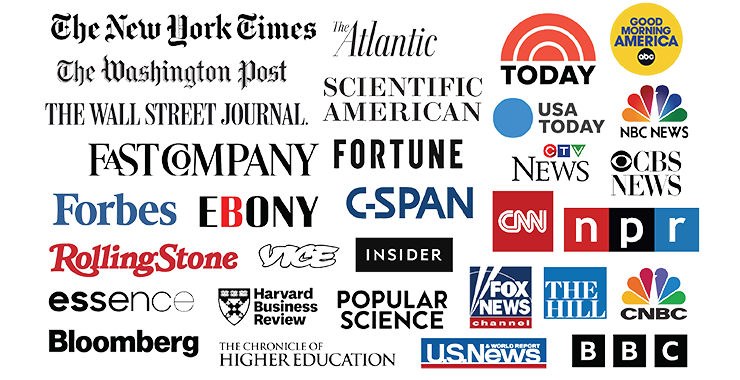
We pitch psychological science and scientists to print, digital, and on-air media outlets (e.g., The New York Times, NPR, The Washington Post, etc.)—media mentions have increased in the last 6 years more than 988%; our dissemination efforts generated over 3,405 media clips featuring research from APA journals with a combined audience reach of 21.8 billion in 2024. The APA podcast Speaking of Psychology features leading psychological scientists and has reached listeners via more than 3.1 million downloads in 2024.
Advisories and reports
APA convenes panels of experts to rapidly address societal issues and offer actionable evidence-based advice to the public and policy makers. We have issued a Health Advisory on Social Media Use in Adolescence; a set of APA Recommendations for Healthy Teen Video Viewing; a Health Advisory on Artificial intelligence and adolescent well-being; a Health Advisory on the Use of generative AI chatbots and wellness applications for mental health; and a report on Mental Health and Our Changing Climate: Impacts, Inequities, Responses.
Original research, dissemination, and implementation
We present original survey data through APA’s annual Work in America and Stress in America surveys to inform media coverage and decision-making on issues that affect health, well-being, learning, and quality of life. APA has developed a research-based toolkit to help fire departments promote well-being among their members; and we have supported evidence-based approaches that promote student and educator well-being and mental health and strengthen learning environments.
Partnerships and collaborations
We work with the National Academy of Sciences NAW Entertainment Exchange to teach Hollywood writers and producers about psychological science and how to depict our field.
Additionally, we regularly collaborate with a range of groups and organizations to apply the latest psychological science across disciplines, including:
- The National Press Club to combat mis- and disinformation;
- the Association of American Colleges and Universities (AAC&U) to help educators address the use of generative AI in the classroom;
- the National Academies of Sciences’ (NAS) Board on Human System Integration (BOHSI) to address the effect of AI on the future of work;
- the American Society of Association Executives (ASAE) to support associations and nonprofits in prioritizing employee well-being;
- the National Volunteer Firefighter Council to help volunteer fire departments build psychological capital among volunteers and to help volunteers navigate the complexities of mental health and wellness apps;
- the Notre Dame-IBM Tech Ethics Lab to examine the preservation of human dignity and agency as agentic AI systems are shift workplace AI from decision support toward delegated authority in areas such as hiring, task allocation, performance evaluation, and workforce monitoring;
- the American Geophysical Union (AGU) to highlight the intersection of geosciences and human well-being;
- the Surgeon General to address mental health in the workplace, misinformation, the youth mental health crisis, and the effects of social media.
Training and resources for scientists
We offer media and communications trainings (e.g., Essential Science Conversation sessions and Science Training sessions) to help psychological scientists explain their science to the public; we also provide other resources to teach scientists how to interact with the media; and offer scientists access to the “kudos” service to help create media pitches from their psychological science findings and articles;
Media mentions have increased almost 1000%
since 2018

How does this work help you?
- amplifies the visibility of the discipline and propels the impact of scientists’ work.
- educates the public about the range of topics that psychological science can address.
Get involved
Help to educate the public about the vast field of psychological science by:
- subscribing to APA's Media Watch newsletter to learn about media coverage of psychological science;
- applying to APA's Media Referral Service to be included in our database of experts for media referrals on a variety of timely issues;
- sending suggestions for Speaking of Psychology podcast guests;
- participating in the media/communications trainings offered by APA.

In the World
APA promotes psychological science as a solution to global challenges
APA works with governments, international organizations, nonprofits, educators, and industry leaders to apply psychological science to real-world challenges.
Consulting regularly with agencies and stakeholder groups
APA helps groups to summarize and apply psychological science by collaborations with:
- the White House to address health equity;
- Sesame Street to teach children about equity and inclusion;
- the United Nations and ecoAmerica to promote sustainability and combat climate change;
- the World Wildlife Fund to promote the role of psychological resilience in environmental conservation and highlight nature’s role in human well-being;
- the World Health Organization and the United Nations to highlight mental health and psychosocial supports for vulnerable populations across the globe;
- the Federal Trade Commission and the World Health Organization to address the science of youths’ social media use and misinformation.
Unifying psychological science across the globe
APA has signed 67 memoranda of understanding (MOU) with psychological associations around the world to work together to disseminate psychological science, share resources, and support the creation of a unified global psychology. APA is part of the Global Psychology Alliance and the Global Learning Leadership Institute which include over 70 national, regional, and international associations committed to move science into action on shared challenges:
- organizing a 2023 Population Health Science Summit to engage national thought leaders on a substantial shift in the mental health care system;
- organizing an annual Global Learning Leadership Institute and which has trained approximately 30 early career psychologists from every continent on the globe;
- partnering with the Consumer Technology Association®, to launch PsyTech at the 2024 Consumer Electronics Show (CES)opens in new window and engage with tech innovators about how psychological science intersects with and influences technology on topics such as the ethics of artificial intelligence, protecting kids online, harnessing digital interventions to improve health, and more.

APA fields 25,000-plus papers for review a year, completes 40,000 reviews, and publishes more than 5,000 manuscripts annually in APA journals.
APA makes psychological science available to the world
APA supports the creation, dissemination, and discoverability of high-quality research. Our activities in 2025 and 2026 have expanded access to psychological science through trusted publications, databases, and scholarly resources used worldwide.
Publishing
APA funds editorships and associated editorships, and a publishing infrastructure, to support 90 journals of psychological science (the impact factors for its core journals are within the top-tier for each category of science); this infrastructure fields 25,000-plus papers for review a year and publishes more than 5,000 manuscripts annually in APA journals; APA also publishes 50-60 academic books a year to synthesize and promote high quality psychological science; and 20-30 Magination Press books each year translate psychological science into accessible, youth-facing content that addresses issues relevant to child development.
Facilitating searches
We created and maintain APA PsycInfo to ensure that psychological science across 2,500-plus journals is indexed and searchable for more than 43,700 institutional subscribers around the world.

How does this work help you?
- ensures your work has the greatest impact to improve human lives.
- creates opportunities for scientists to meet with and educate stakeholders and leaders.
- increases recognition of our science as essential and rigorous.
- increases the global impact of your publications.
- indirectly increases funding allocations for our science as it becomes more well-known and more frequently cited.
Get involved
Your involvement increases our global reach. Help us take psychological science to improve more lives globally by:
- sharing our newsletters with your networks;
- sending scientific findings to APA staff when relevant to policy via our form;
- joining APA's Media Referral Service;
- volunteering to meet with stakeholders;
- submitting to APA journals;
- becoming a consulting, associate editor, or editor in chief;
- joining APA's Publications and Communications Board.

|

|
Subscribe
APA is proud to introduce Science Spotlight, a new newsletter for psychological scientists. Subscribe today!
And keep up with top research findings in psychological science by subscribing to the Editor’s Choice newsletter!