

skip to main content

Assessment

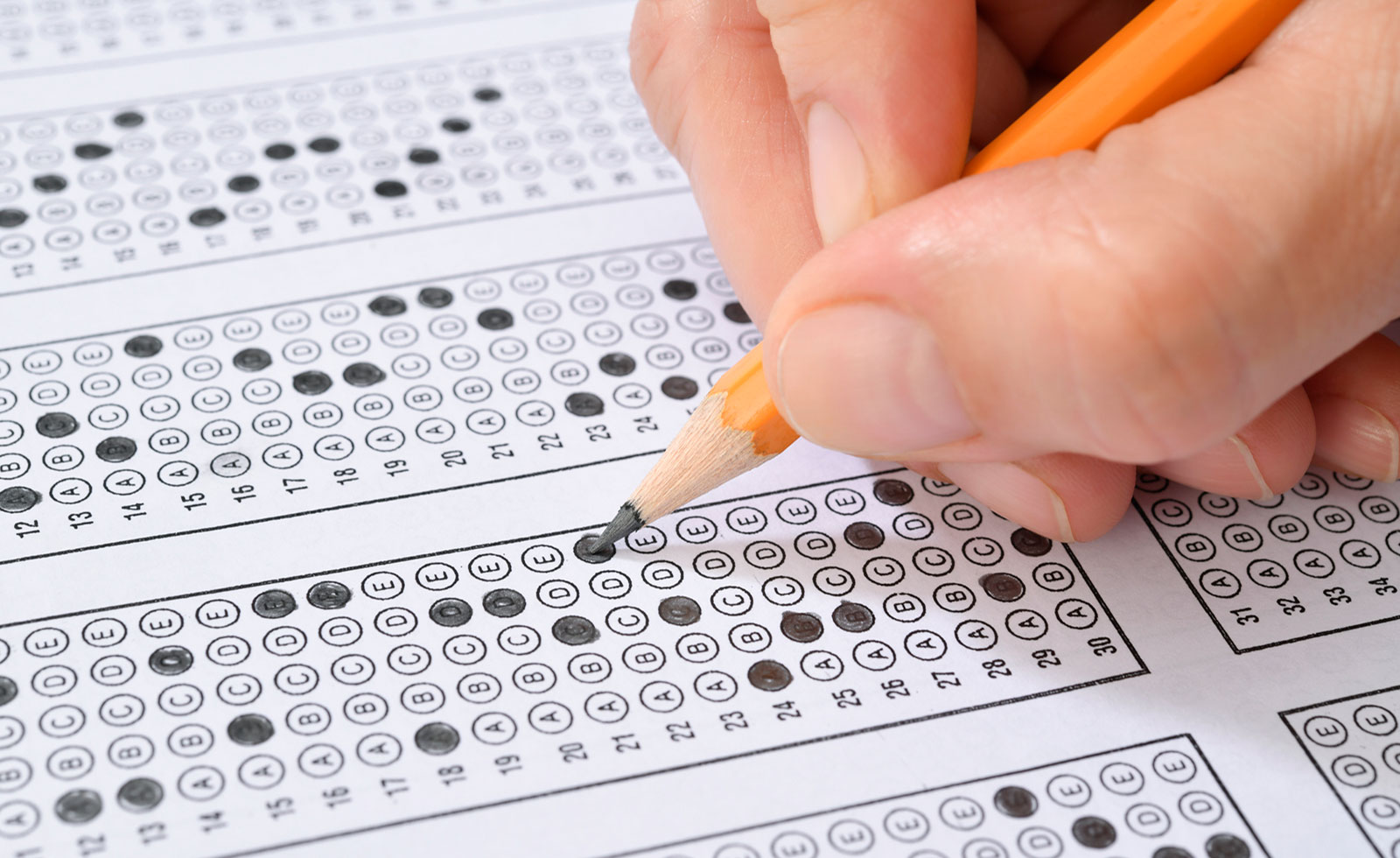
Hand holding pencil fills in scantron exam sheet.

Unpacking the Assessment domain

Assessment includes three key principles that highlight the importance and distinctiveness of formative and summative assessments; the effectiveness of assessment processes rooted in psychological science with well-defined standards for quality and fairness in measuring students’ skills, knowledge, and abilities, and the necessity of clear, appropriate; and fair interpretation for making sense of assessment data. Each principle is accompanied by a detailed explanation and a description of its relevance for teachers, providing evidence of how psychological science enhances teaching and learning.

Learn more about how teachers can effectively assess student progress

Video: Assessment (Module 1)

Learn about formative, interim and summative assessments. Consideration and practice of these principles should be integrated across the professional continuum, from educator preparation programs to professional development for practicing teachers.

Video: Assessment (Module 2)

Learn about assessment standards for quality and fairness. Consideration and practice of these principles should be integrated across the professional continuum, from educator preparation programs to professional development for practicing teachers.

Video: Assessment (Module 3)

Learn about how to make sense of data from educational assessments. Consideration and practice of these principles should be integrated across the professional continuum, from educator preparation programs to professional development for practicing teachers.

Top 20 Principles: Download the full report

Assessment (Principles 18–20)

Principle 18
Formative and summative assessments are both important and useful, but require different approaches and interpretations.

Formative assessments are used to guide and shape classroom instruction directly. Summative assessments are used to produce an overall judgment of student learning progress or the effectiveness of educational programs. The approach used to collect information is likely to differ between the two types of assessment as well, given their different purposes. Both formative and summative assessments can be developed by teachers or those outside of the classroom. The goal of both types of assessments is to produce valid, fair, useful and reliable sources of information.

Tips for teachers  
Teachers can increase student learning through the use of formative assessments by:

  • Clearly communicating the purpose of each lesson.
  • Using lessons and other classroom experiences to collect evidence on student learning.
  • Use such collected evidence to help understand what students know and promptly redirect students as needed.

Teachers can improve the effectiveness of formative assessments when they:

  • Focus systematically on setting goals for their students.
  • Keep track of student progress toward these goals.
  • Consider how data derived from formative assessments can be used to improve their instruction in the future.
  • Keep the length of time between formative assessment and subsequent interventions relatively short.
Principle 19
Student skills, knowledge and abilities are best measured with assessment processes grounded in psychological science with well-defined standards for quality and fairness.

Pre-K to 12 teachers and leaders are working in an era when assessments are a constant topic of discussion and debate. Assessments that are reliable, valid and fair help test score users make appropriate inferences about students' knowledge, skills and abilities.

Tips for teachers  
Teachers can improve the quality of the assessments they use and create by:

  • Carefully aligning assessment with what is being taught.
  • Using a sufficient number and variety of questions on the same topic to assess mastery.
  • Using item analysis to target questions that appear to be too hard or too easy.
  • Being mindful of tests that are valid in some settings and not in others.
  • Making high stakes decisions on multiple measures.
  • Monitoring student outcome to look for consistent discrepancies in outcomes from students from different cultural groups.
Principle 20
Making sense of assessment data depends on clear, appropriate and fair interpretation.

The meaning of assessment outcomes depends on clear, appropriate and fair interpretation. Scores from any assessment should generally be used only for the specific purposes for which they were designed.

Tips for teachers  
To interpret assessment data most effectively, teachers should pay special attention to the following about any assessment they use:

  • What was the assessment intended to measure?
  • Are students being compared to each other, to a norm or to students' past performance?
  • What are the criteria for cut-points or standards such as pass/fail or letter grades?
Last updated: November 2024Date created: 2018