skip to main content
Career

Bringing psychological expertise into AI development

Psychologists are uniquely positioned to shape AI. Here’s how to move from advisory roles into leadership positions

APA Style leaf logo Cite This Article in APA Style
Palmer, C. (2026, June 1). Bringing psychological expertise into AI development. Monitor on Psychology, 57(4). https://www.apa.org/monitor/2026/06/psychological-expertise-ai-development

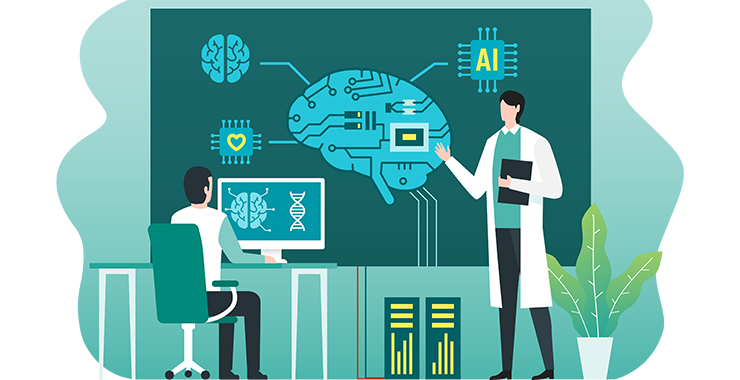
graphic of two researchers

When a well-known tech company attempted to build an AI-powered résumé-screening system several years ago, its developers discovered what a century of industrial and organizational (I/O) psychology research could have predicted from the start: Stripping obvious demographic markers like names from résumés didn’t eliminate discriminatory bias. Information such as college affiliations, word choices, and even formatting preferences was enough to perpetuate discriminatory patterns.

“They spent a huge amount of money and time trying to sort out these models, and it never worked,” said Richard Landers, an I/O psychologist at the University of Minnesota who has consulted with numerous tech companies. “[Psychological scientists] have spent decades upon decades trying to refine exactly what we’re asking people for and why, specifically to avoid exactly that problem in hiring.”

This scenario illustrates why psychological expertise needs to be brought into the AI development process from conception, before fundamental design decisions have been made. To do otherwise risks expensive failures that waste resources while potentially causing harm.

The AI revolution isn’t just transforming work and communication—it’s reshaping who gets to build the future. For psychological scientists, particularly those trained in understanding human behavior, cognition, and well-being, this moment presents what may be an unprecedented opportunity to play a more central role in technological innovation.

But seizing that opportunity requires understanding both the unique value psychologists bring to AI development and how to navigate the cultural chasm between psychological science and Silicon Valley.

What psychological scientists bring to AI

At its core, AI development is about understanding and predicting human behavior, making psychological science essential rather than optional. Psychological scientists’ knowledge spans multiple critical domains that extend well beyond mental health applications and health services. Researchers and practitioners can contribute to better conception, design, implementation, and deployment of AI.

Understanding human complexity. Engineers are trained to identify specific problems, define key metrics, and iterate toward optimization. “The assumption from an engineering standpoint is: If we can’t identify a metric for it, it doesn’t really matter,” Landers said. “Whereas a psychologist is immediately going to say, ‘Well, there’s this web of complexity that could erupt from what you’re doing, and we need to understand that better before we charge forward.’”

This perspective has proved crucial in Landers’s work developing an AI coaching chatbot for the U.S. Naval Academy. For example, when a computer scientist on his team suggested simply replicating coaching conversations to train the model, Landers pushed back, as those exchanges are rarely recorded because of their private and sensitive nature. And even if the team did get some transcripts, coaching conversations have so much variability that thousands of examples would be required to create a data set that is broadly representative of “real” coaching.

Risk identification and mitigation. Psychological scientists’ training in ethics and their “do no harm” orientation make them attuned to potential dangers that technologists might undervalue or even dismiss altogether. When developing the Naval Academy coaching chatbot, Landers’s team proactively built a separate AI model to detect moderate risk scenarios—including indications of potential self-harm—so that trained professionals could intervene when necessary.

“From a tech perspective, they say, ‘Oh, that sounds expensive. Let’s just not do that until it’s a problem,’” Landers said. “And that’s how you end up with harm happening and people having to react to it rather than proactively trying to prevent it from the start.”

Notably, Landers’s technical partners took a back seat during this part of the project while the psychological scientists designed it themselves using an AI coding tool. “AI has become so accessible that we’ve actually been able to prototype on our own in a way that’s way faster than if we had to go through our tech team,” Landers said.

Alison Cerezo, chief science officer at mpathic, a conversation analytics company focused on AI safety, emphasizes that psychological scientists should apply the same scrutiny to AI systems as they would to human colleagues. “If I were going to add a new clinician to my clinical team, I would want to know about their background and training experiences,” they said. “We should be using that same framework with AI systems to ask, what is your training data? How are you being benchmarked? How are you being fine-tuned over time?”

Meaningful assessment. Margaret Morris, a clinical psychologist and affiliate professor in the Information School at the University of Washington who has worked with Intel, Amazon, and other companies on health technology, points to expertise in assessment as being particularly valuable. “Psychologists can find ways to embed assessments that used to be done infrequently and in the clinic into everyday interactions with technology.”

For example, social psychologists in particular can be experts on how humans tend to make biased decisions and how bounded human rationality is. Without their insights, AI models will more likely replicate such biases, leading to poor and discriminatory decision-making. This is applicable to AI decisions about things like job candidates, medical treatments, or even product choices.

The way AI responds to assessment results also benefits from psychology experts’ input. For example, AI chatbots may be particularly attuned to detecting negative emotions and encourage people to ignore or suppress them. Cognitive psychologists understand this bias, as it replicates a human tendency to focus on negative information, where clinical psychologists understand that negative emotions are a part of daily life and that, in certain contexts, people can benefit from sitting with and even exploring such emotions.


Psychology across the AI life cycle

From framing the right research questions to evaluating real-world impact, psychological scientists play distinct roles across the AI development life cycle.

Initial design. At this stage, team members decide on a project’s goals. Xuhai “Orson” Xu, a computer scientist at Columbia University’s Department of Biomedical Informatics who regularly collaborates with psychological scientists, emphasizes involving experts from the start. For a project involving mental health prediction from wearable data, Xu’s team consulted psychologists during study design to ensure they measured the right constructs with the right instruments. “What is the appropriate thing to measure? What are the right ecological momentary assessment short questionnaires? How can we make sure people can answer but are not also overburdened? There are many details we need to check with experts from the beginning.”

Data processing. Once data collection begins, psychological expertise guides the data processing stage—the selection of information to extract. For the wearable devices used in his work, for example, Xu has to consider which variables to track, such as sleep and activity level. Rather than a purely data-driven approach, psychological scientists can draw on domain knowledge grounded in established theory.

Model interpretation. During this stage, team members evaluate their model’s performance. When AI systems generate predictions, psychologists can help determine whether results align with scientific understanding. Experts can make comments such as “Okay, this is aligned with the existing literature or domain consensus,” or “This is something that is misaligned but may be interesting to explore further,” Xu said.

Implementation. The implementation stage is when research findings get translated to practical applications. Cerezo’s work at mpathic illustrates how psychological principles can inform real-world deployment. Their team has developed more than 200 detection capabilities for monitoring AI conversations, from identifying clinical risk to assessing therapeutic rapport. The company works with about 100 psychologists with different areas of expertise to create training data, safety evaluation rubrics, and other critical tools to ensure AI safety systems are designed to handle the full range of human experience.

Ongoing monitoring. Morris emphasizes that psychological scientists’ roles don’t end at product launch but may involve monitoring use over time. She argues that psychologists should check in on interactions between users and AI tools to prioritize long-term well-being over short-term engagement, to prevent users from developing dependency on the tools, and to ensure that the tools don’t develop biases or violate user privacy.

Auditing, benchmarking, and red teaming

AI-related roles that psychologists can perform at technology companies include the following:

Psychological auditing involves evaluating AI systems against established psychological and ethical standards.

Human benchmarking compares AI outputs to expert human judgment rather than other AI systems. Landers’s team on the Naval Academy project is bringing in clinical psychologists and professional coaches to rate the transcripts of its AI coaching chatbot, providing both quantitative and qualitative feedback that simple technical metrics cannot capture.

Red teaming involves deliberately simulating problematic or dangerous conversations to make AI systems fail or behave inappropriately. Originally a military term referring to the practice of a group taking on the role of the enemy to simulate attacks, red teaming requires a team member with the expertise and authority to know when to pause development and pressure test the system to say, “This is a conversation where human intervention is needed,” Landers said. In the same training project, he used red teaming to identify danger signs in conversations with the chatbot. This led to the creation of a second AI model to monitor conversations between the chatbot and trainees to detect even moderate risk scenarios that should be handed over to human coaches.

Bridging the gap

Though still a nascent industry, a growing number of training programs are emerging to help both psychologists in training and working professionals gain the skills needed to contribute meaningfully to AI development. These range from certifications and microcredentials to master’s degrees, postdoctoral programs, and continuing-education courses. Examples include initiatives at Northwestern Universityopens in new window, Tilburg Universityopens in new window, Oregon State Universityopens in new window, the University of Pennsylvaniaopens in new window, Johns Hopkins Universityopens in new window, Brown Universityopens in new window, Harvard Universityopens in new window, and the University of Zurichopens in new window. (These programs are provided for readers’ awareness; their inclusion does not constitute endorsement.)

In addition, APA’s Ethical Emotionally Intelligent AI Chatbot Design program seeks to bridge the gap between psychological science and technology by giving chatbot designers psychological frameworks while equipping psychologists to take on stronger leadership roles within AI development. “With the right frameworks and shared language, psychologists don’t have to remain in advisory roles,” said Bernadette Han, PhD, an organizational psychologist at APA who develops enterprise-level learning initiatives for public-, organizational-, and technology-facing audiences. “They can serve as full partners—or even lead—by guiding teams through the psychological foundations of how AI systems are designed.”

Practical advice for psychological scientists

For psychological scientists ready to engage with AI developers and succeed once they’ve begun a collaboration, here are some key recommendations:

Learn the basics. You don’t need to become a programmer, but understanding fundamental concepts helps communication. Courses on different topics aimed at varying levels of depth abound on LinkedIn, YouTube, Coursera, and other platforms. In addition, most AI chatbots offer free versions with intuitive user interfaces.

Be flexible and curious. Morris advocates for “flexibility and curiosity” as essential qualities for psychologists to successfully collaborate with technologists, who tend to work in a nimbler iterative style that relies less on formal theory and more on tinkering. Likewise, ask questions when something is unclear or you hear an unfamiliar acronym, for example.

Calibrate expectations. Understand AI’s current capabilities and limitations alike.

Stay current. AI technology evolves at a pace that can be surprisingly quick.

Network strategically. Xu’s approach includes asking colleagues for connections, searching departmental websites for relevant specialists, and talking with people at conferences.

Present your expertise. Share relevant research at conferences and with computer science departments. Propose collaborations with university students doing capstone projects.

Find the applications that match your knowledge base. Psychological expertise can be valuable to everything from retail chatbots and educational tools that scaffold support and minimize extraneous mental load to digital assistants and talent acquisition platforms. Psychological scientists can contribute to several steps in the conception of these AI products, from their development and deployment to their continued evaluation.

Consider various roles. Opportunities range from academic collaborations to consulting gigs to full-time positions at tech companies.

Navigating projects. Insist on human-centeredness. Morris emphasizes that there should be a relentless focus on what’s going to be meaningful to the end user.

Advocate for proper testing. Don’t let pressure to ship a product quickly override safety concerns.

Balance rigor with pragmatism. Respect the complexity of the human mind and experiences—but not to the point of considering every possible contingency.

Document limitations. Be clear about what your psychological knowledge can and cannot determine.

The path forward

The integration of psychological science into AI development isn’t just about making better products—it’s about ensuring AI systems embody human values, respond to human complexity, and serve genuine human needs.

“I imagine what would’ve happened if in the early days of social media, psychologists had been on the original development teams asking, how will people benefit from interacting in this environment? What risks are there?” Landers said. “The road we’re on would be quite different.”

The stakes are similarly high for AI development, with AI systems increasingly mediating human interactions and even providing mental health support.

“We need more bold people doing that kind of work,” Landers said. “There’s never been a better time for psychologists to identify key drivers of human flourishing and develop platforms to improve it.”

Cerezo sees immense potential. “I’m really excited about the future,” they said. “If we lead with ethics and do our homework to understand how these systems are developed, there’s no limit to what we can do.”

Recommended Reading

Speaking of Psychology

Subscribe to APA’s audio podcast series highlighting some of the most important and relevant psychological research being conducted today.

Subscribe to Speaking of Psychology and download via:

Appleopens in new window
Apple podcast logo

Spotifyopens in new window
Spotify logo

Related and recent