Demand for anxiety and depression treatment remains high, according to the survey results, while demand for treatment for trauma- and stress-related disorders and substance use disorders has grown. There is also increasing demand for mental health services from populations of color, younger people, and health care workers in particular. Increases in demand over the prior year built upon consistently reported increases in demand compared with before the Covid-19 pandemic.
Psychologists’ workload and patient load have continued to rise in response to increased demand. Most practitioners report that they no longer have openings for new patients and have longer waitlists than before the pandemic. Burnout among psychologists is persistently high, and almost half of respondents reported not being able to meet the demand from their patients. Most psychologists have sought peer consultation/support to manage burnout. They also report practicing self-care and working to maintain a positive work-life balance.
APA’s 2022 Covid-19 Practitioner Impact Survey looked at how psychologists’ practice has evolved since the pandemic. This survey, which has been fielded annually since 2020, was distributed to approximately 62,900 doctoral-level active licensed psychologists in the United States from September 20 to October 7, 2022. A total of 2,295 responded to the survey.
Demand for anxiety and depression treatment remains high
Demand for anxiety and depression treatment remains high while trauma- and stressor-related disorders and substance use disorders continue to increase.
The percentage of psychologists reporting patient increases in anxiety disorders (79%), depressive disorders (66%), and trauma-related and stressor-related disorders (64%) remained high in 2022, despite small decreases in demand for anxiety and depression treatment compared with 2021. Continued increases were observed for trauma- and stressor-related disorders (51% in 2020, 62% in 2021, and 64% in 2022), obsessive-compulsive and related disorders (31%, 42%, and 43%), and substance-related and addictive disorders (29%, 43%, and 47%) compared with prepandemic. Two-thirds of psychologists (65%) reported seeing an increase in the severity of symptoms among patients in 2022.

Increase in demand for treatment from populations of color and younger populations
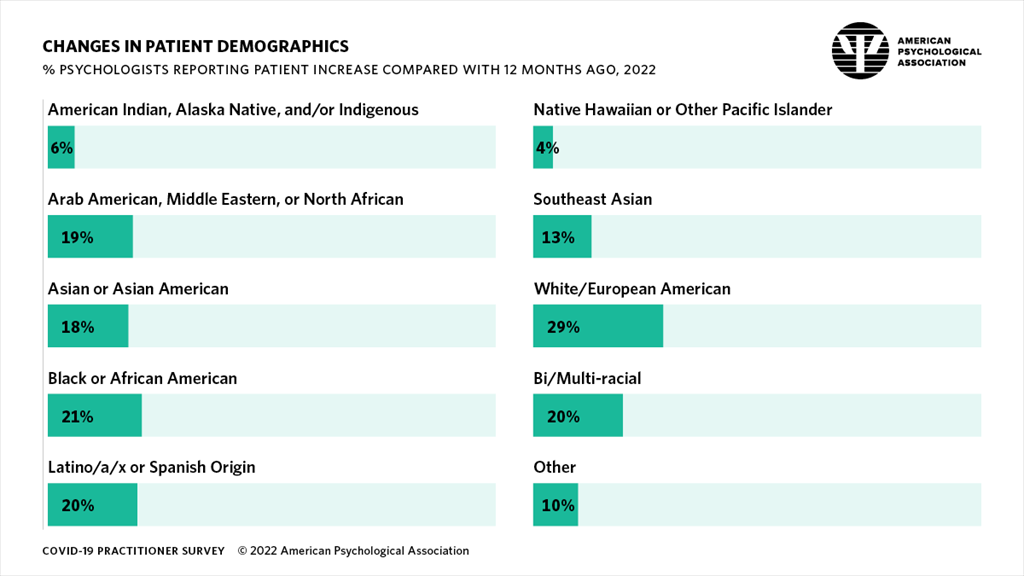
Approximately one in five psychologists reported increases in at least one of the following racial/ethnic groups during the prior 12 months:
- Arab American, Middle Eastern or North African patients (19%)
- Asian or Asian American patients (18%)
- Black or African American patients (21%)
- patients of Latino/a/x or Spanish origin (20%)
- biracial/multiracial patients (20%)
Almost three in 10 psychologists (29%) reported an increase in White/European American patients over the last 12 months, down from 42% reporting an increase since the start of the pandemic.
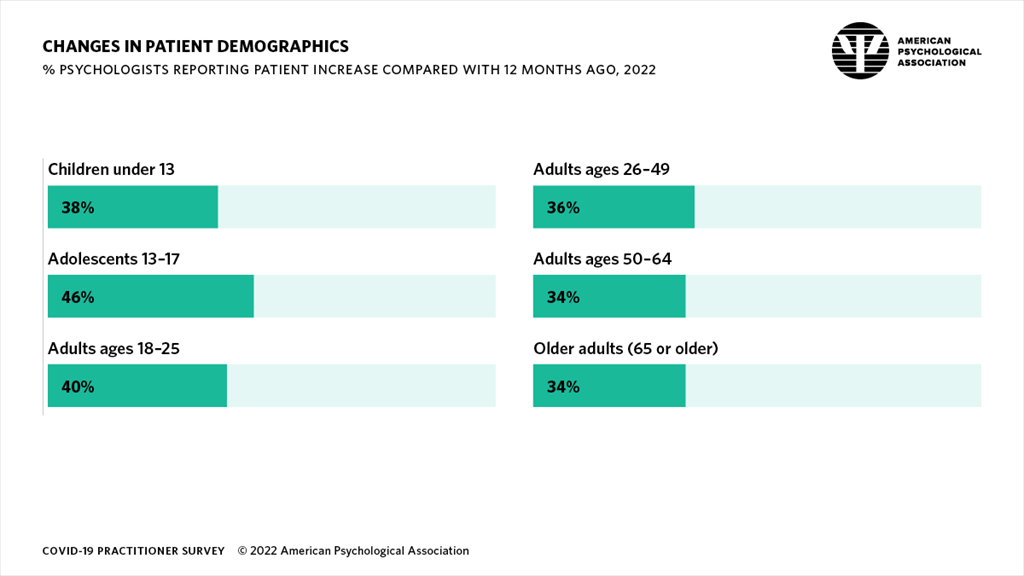
Across age groups, the largest increase in patients was among adolescents (13–17), with 46% of psychologists reporting increases over the last 12 months and 51% reporting increases since the pandemic began. Psychologists also reported large increases in patients ages 18–25 (40%) and children under 13 (38%) over the last 12 months.
In addition, many psychologists reported patient increases in the following population groups over the prior 12 months:
- transgender and gender nonconforming populations (38%)
- populations living with chronic illnesses (35%)
- populations living with chronic pain (31%)
- unemployed population (27%)

A total of 46% of psychologists reported an increase in health care workers seeking treatment since the beginning of the pandemic, up from 37% in 2021.
Increased workload and longer waitlists
Psychologists’ workload and patient load have continued to rise in response to the increased demand. The percentage of psychologists working more than they did before the pandemic increased from 31% in 2020 to 38% in 2022. More than half of psychologists (53%) reported working more than they did 12 months ago. The percentage of psychologists seeing more patients than they did before the pandemic increased from 15% in 2020 to 38% in 2021 to 43% in 2022.
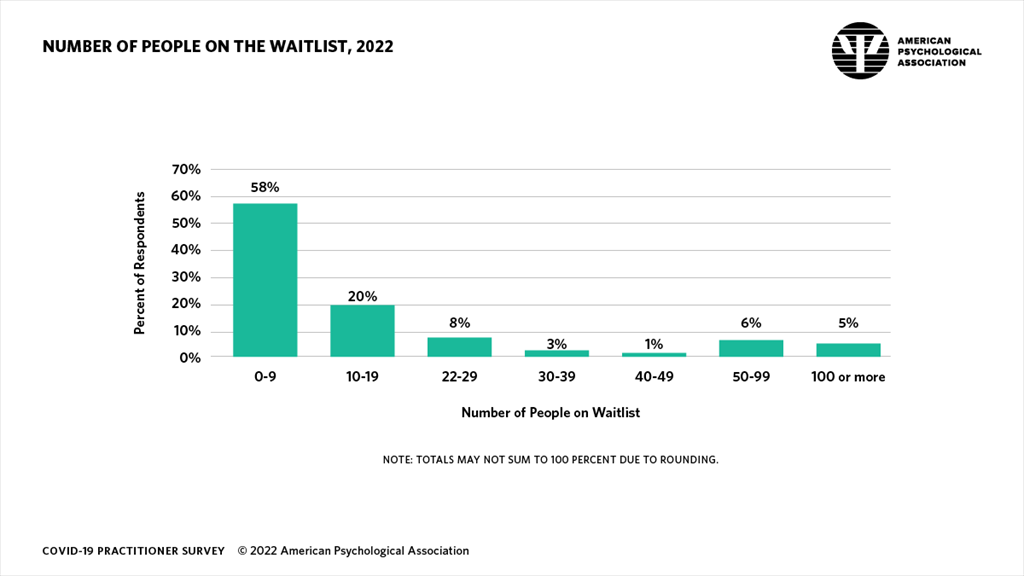
Sixty percent of psychologists reported having no openings for new patients, slightly down from 65% in 2021. Nearly four in 10 psychologists (38%) maintained a waitlist, with a large variation in length. While more than half (58%) of those with waitlists reported waitlists of fewer than 10 people, 32% reported waitlists with 10–49 people, but 10% said their waitlists numbered 50 or more, including 5% with 100 or more prospective patients. Of those with waitlists, 72% reported having longer waitlists since the start of the pandemic.
For psychologists who reported not having a waitlist, 37% cited not having the capacity to manage one, and 20% cited too many people requesting services as the reason for not having a waitlist. Psychologists reported being contacted for services by a mean of 15.7 people (median=10, SD=27.67) per month (excluding their existing patients).

Burnout remains high as psychologists practice self-care
Amid increasing workload, more psychologists reported not being able to meet the demand for treatment from their patients—going from 30% in 2020 to 46% in 2022. The percentage of psychologists who agreed or strongly agreed they felt burned out (45%) was similar to the level reported in 2021 (48%), both higher than the number reporting burnout in 2020 (41%).
However, most psychologists have sought peer consultation/support to manage burnout (60%), were able to practice self-care (77%), and have maintained a positive work-life balance (63%). On a scale of 1 (little or no stress) to 10 (a great deal of stress), psychologists reported an average stress level of 4.94, down from 5.89 in 2020 and 5.99 in 2021.

Continuation of telehealth beyond the pandemic
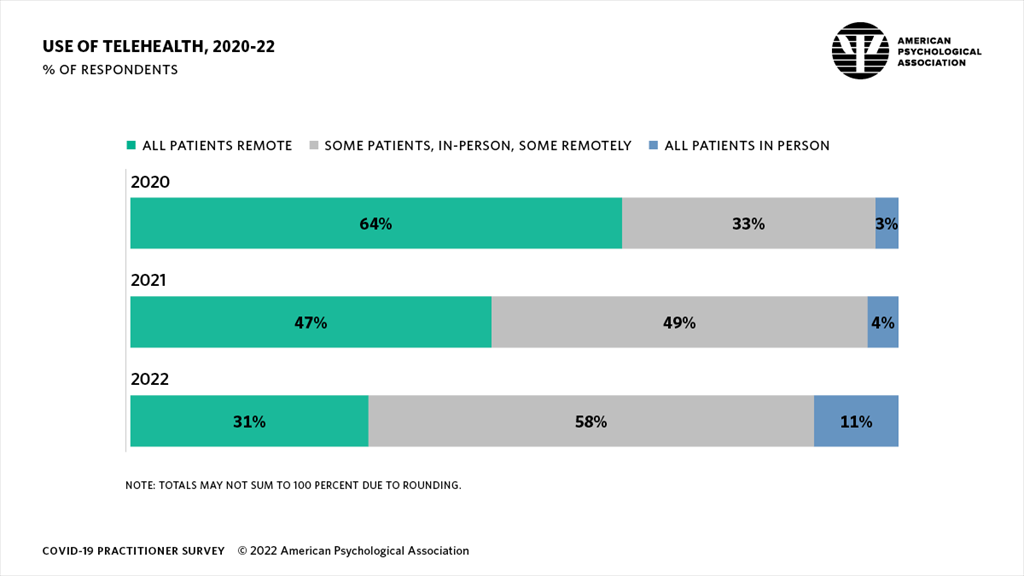
Almost three years since the beginning of the pandemic as in-person interactions have become more common in everyday life, more than half of psychologists (58%) have pivoted to a hybrid model of treating some patients remotely and some in person. The percentage of psychologists seeing all patients remotely dropped sharply from almost half in 2021 (47%) to less than a third in 2022 (31%). The percentage of those seeing all patients in person has increased from 4% in 2021 to 11% in 2022.
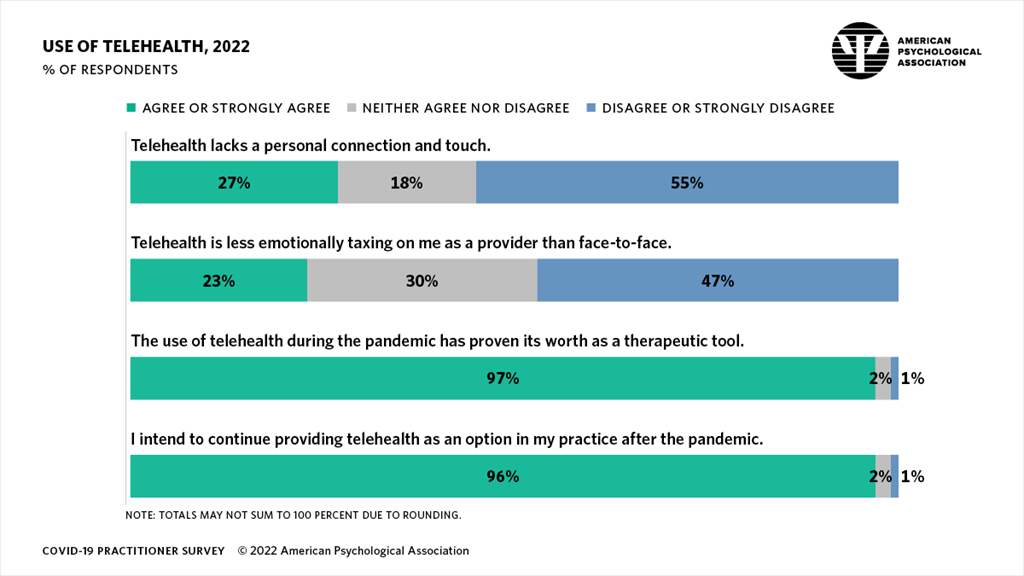
The percentage of psychologists reporting patients experiencing telehealth challenges has been steadily decreasing—from 84% in 2020 to 79% in 2021 to 71% in 2022. Internet access or connectivity (48%), general technical difficulties (46%), and difficulties finding a private place to connect (44%) remained the most cited challenges or barriers to telehealth. While 55% of psychologists disagreed with the statement that telehealth lacks a personal connection and touch, 27% agreed with it. Almost half of psychologists (47%) did not agree that telehealth is less emotionally taxing on them than face-to-face, but 23% thought otherwise.
Despite these differences, virtually all psychologists (96%) said they believed the use of telehealth during the pandemic has proven its worth as a therapeutic tool, and the same proportion would continue to provide telehealth services after the pandemic. Payment/reimbursement issues (55%), cross-jurisdictional issues (50%), and patient access to technology (31%) were cited as top challenges to continuing telehealth after the pandemic.